

IoT platforms are not a panacea for the complex inter-workings of industrial IoT systems. They are over-the-top interfaces, which just introduce another layer of complexity to the market. The IoT sector will only hit pay-dirt when there are easier mechanisms to fashion bespoke solutions for an unknowably wide range of rather narrow concerns.
This is the view of Wienke Giezeman, chief executive at Netherlands-based LoRaWAN group The Things Network. The market needs garage-like work tools, he says, to make and remake IoT for a multitude of niche purposes. IoT platforms are a smokescreen, effectively, he suggests; the work to scale the market must take place at a more fundamental level.
“The future of IoT is a toolbox and a workbench; it is not a platform,” he says.

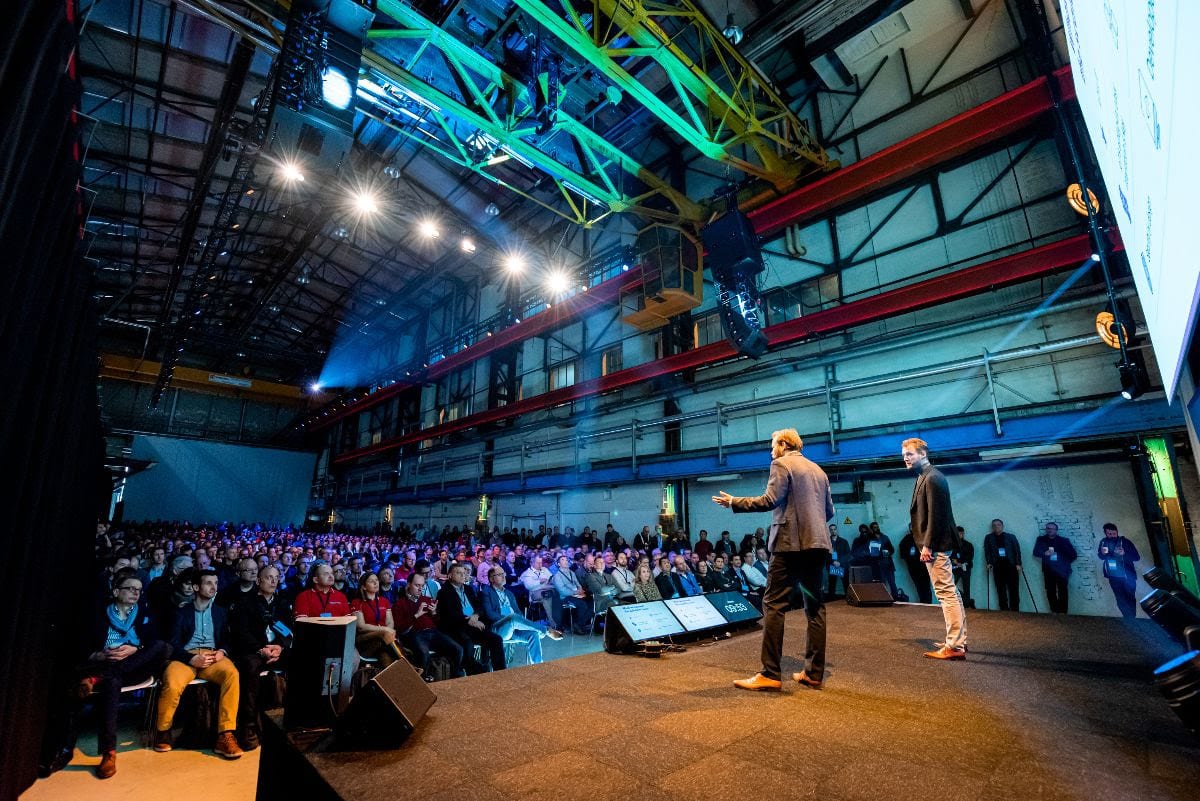
Giezeman – The Things Network offers a platform for startups to set up LoRaWAN-based networks and solutions
Giezeman has a good vantage point from which to observe the minutiae of IoT development; his Netherlands-based collective, which also runs The Things Industries, provider of backend cloud gubbins for private LoRaWAN networks, is seeking to foster commonality and community in its own corner of the IoT world.
He has it in for IoT platforms; they go against the kind of root-level DIY approach required to easily multiply across disparate business requirements and fragmented technology solutions. “These fix-all platforms are just more technology components,” he says, in conversation a couple of weeks back about the logic of hybrid IoT solutions (look out for the report, out next month).
He is candid and thoughtful, as always. The continent is in lockdown, still, even as the coronavirus pandemic has slowed down in Europe. Will it be the spark to light a fire for digital change, struck for smarter healthcare? Or has it put the kibosh on experimentation, with the shutdown of supply chains and the squeeze on budgets?
He references The Innovator’s Dilemma, the go-to text on disruptive technologies, by US professor and businessman Clayton Christensen, which seeks to explain how to fix businesses that are not technically broken, in order to catch sail on new waves of innovation.
He reflects: “It’s that hard choice, about disrupting your own business or being disrupted by others. A lot of innovation in IoT struggles to find a positive business case, because it is disruptive to enterprises. But all of a sudden these business cases have become positive. It is an interesting time for minds to open up.”
But the IoT industry gets stuck in development, too often. The only way for it to grasp even a fraction of the value it has been promised – in problematic forecasts about future growth by research companies, he says – is by delivering easily scalable technologies. But IoT is designed for all of society’s wheezes, which are too varied to be so easily cured.
The suggestion about cloud-based IoT platforms, in general, is they are only windows into the chaos of the market-place, and that they do not solve its inherent complexity – nor a platform for innovators to make their technologies relevant to a wider audience, as a means to achieve positive disruption in their businesses.
“They don’t comply with the over-hyped financial opportunity that has been shot into the market by research firms. Because the principle behind this idea of billions of IoT messages is that the market is easily accessible, and it isn’t. It is highly fragmented. There will never be a Mark Zuckerberg of IoT; it just won’t happen.”
It is a line we have heard before from Giezeman. The point, again, is that scalability is hard in IoT. Industrial use cases are complex by their nature, in terms of both the multi-faceted demands they make and the criss-cross solutions they require; success will only come by making the engineering of solutions simpler, he says.
“Every use case is different. The scope of a typical IoT application is immense: silicon, sensor, network, cloud, application. There aren’t that many people that can bring all of that together. There are 25 million developers out there – out of a population of seven billion. And 10 million of them are legacy Java developers,” he explains.
“This market is only going to be solved by abstracting a lot of complexity away from developers in order to make it easy for them to integrate, not just tools or software, but services as well, so things work together. This is where the market is heading, which is an anti-platform approach.”
He adds: “A workbench is not a platform; a workbench is agnostic. It is designed to enable the maker, and not to lock them into a technology or marry them with one silo or ecosystem.”
Where does that leave Giezeman, among LoRaWAN agitators? Is The Things Collective (Network / Industries) happy to be a tool in the box, or a workbench for a set of tools? Or is there an ambition to be a workbench for the whole piece? “No, we don’t want to be a workbench for the whole market,” he says.
“The complexity of the LoRaWAN piece alone is high enough. Our plan is to keep focus on LoRaWAN, to help solve that particular niche. I just hope someone does what we are doing for cellular. Because then the synergy will start to work. We are super complementary technologies.”
Indeed, he bristles, a little, about the perceived rivalry in the low-power wide-area (LPWA) space, between the likes of LoRaWAN and Sigfox as non-cellular IoT technologies in the blue corner, and cellular-based NB-IoT and LTE-M in the red corner (see full editorial report on this subject, for download here). One way or another, cellular connectivity is a default choice for backhaul from LoRaWAN gateways, he observes.
“I don’t believe NB-IoT, LTE-M and LoRaWAN are any competition at all. I just don’t see it in the field… The strength of enterprise-grade cellular comes with the SIM cards, which provide a really good firewall. That is super nice; it means you have secure, closed connectivity – like a virtual private network – to the cloud.”
He adds: “The whole idea this is a winner-takes-all market is great, if only it was that simple. But it’s not; it isn’t a zero-sum game. Yes, there is some over-fragmentation based on the fact the market is hard to grasp, and people are building silos and duplicate technologies, and frustrating the market. But the world is fragmented. There is always another technology that fits.”
There is always another application, another business model, another distribution channel, Giezeman maintains, which serves another use case. It goes for connectivity, too. But most of the LPWA market, as a workhorse sub-set of the IoT sector, thinks the numbers will consolidate, and certain technologies will rule, at least for certain use cases or vertical sectors. Can he square that for us?
He laughs a little, and points the finger at the media and analyst community, strapping read-me headlines to the top of articles and reports, and seeing jeopardy sometimes where there isn’t any. “Yes, the market thinks that – but it thinks that because of people like you, painting us into these blue and red corners.”
What about Sigfox? Is there really room for everyone? Giezeman is diplomatic, and even complementary. “That’s hard for me to answer because I am biased. I am also not properly informed. I work with LoRa everyday; I don’t know the latest with Sigfox because I don’t have hands-on experience with it. So that is the disclaimer.
“But, you know, I think Sigfox is an awesome technology. If you look at its latest numbers, it is doing great. If you look at how it is pushing the concept of LPWA networks, it’s awesome as well. But it has a closed business model, from a technology perspective, and it is not very flexible on a workbench.”
Back to the workbench, then. Is he saying that IoT solutions should be tweaked to spec, even built from scratch, in response to every use case? Because that is a complex proposition for the market, which goes against the messaging from other parts of it. Is there a rule-of-thumb to match technologies and use cases, or will enterprises make choices based on previous investments?
“There is not a lot of legacy out there because there has not been a lot of capital invested in IoT so far. With LoRaWAN, the capital expense is pretty low, and operational expense is even lower. So the question becomes, where is the silver bullet? And it is not there; there isn’t one. That has been the big mistake.”
The IoT market is a hostage to a fortune that will never come, it seems. As mentioned above, it has formed around a number of over-blown forecasts. Arguably the most infamous was about 50 billion connected devices by 2020; it is a line once trotted out by both Ericsson and Cisco, at various times. (There are about half that number, presently, reckon most analysts.) Giezeman has his own favourite.
“Gartner’s wishful thinking predicts however-many billion IoT devices by 2020 – I don’t know how many, and I don’t care. Because that same logic says a piece of technology that fits into the chain here, at this price, can take this much of the market, and will therefore make $200-$300 million. But that high-level thinking does not follow the market. It is not based in reality. There is more to it than that.”
The implication is the IoT ecosystem is being constructed by a colony of ant-like innovators, pulling towards a common goal; the big beasts of industry cannot so easily reduce its complexity to gain mastery. The old distribution channels have fragmented, as well. It needs an ant-hill mob to carry the market forward.
Giezeman remarks: “Go to Electronica or Embedded World, and all these white males in their 50s with their old-man thinking will still say you have to go via these distribution channels. But that’s not the way with IoT; there isn’t a single mechanism to grasp a chunk of the market. It is too fragmented – just like the real-world problems it is trying to solve.”
But it feels like we are going around in circles. Is it just going to take hard work and open systems to crack it open? Will the winners in the market be those with the hardest work ethic and the most collaborative approach? “People will start to be winners in their niches – and I mean in their application niches, and not their technology niches,” responds Giezeman.
He goes on: “People will start to become winners in condition monitoring, say, in asset tracking, in application platforms. Look at your phone; how many conferencing apps do you have? I have 10, or something. It will be the same. It will be a fragmented IoT app ecosystem.”
What about over in the red corner? Is it falling into place for the LoRaWAN community, where it has one application-group sewn up, and for the cellular operators over there, and for Sigfox somewhere else?
The Things Network and The Things Industries are focusing on private LoRaWAN deployments for industry, he says, leveraging a combination of secure provisioning and low power, backed by encrypted cellular backhaul in most cases. The wide-area functionality of LPWA networking is rarely a factor in local-area networks.
“That is what drives the business case,” he says. “The long range is nice to have – five to 10 kilometres, sure – but it is rarely used.”
He zooms out. “The market has not started yet, really. We are close to the beginning – we are at the end of the dip in this ‘trough of disillusionment’,” he says, referencing the post-buzz downer in Gartner’s hype-cycle of new technologies. “But I don’t think it’s a race, actually. Or rather, winning depends on where the finish is, and which race you’re running.”
A series of boxing matches, then, rather than a single knockout bout.

