
RCR Wireless
  • News
  • Channels
    • 5G
    • 6G
    • BSS OSS
    • Carriers
    • IoT
    • Network Infrastructure
    • Open RAN
    • Private 5G
    • Telco AI
    • Telco Cloud
    • Test & Measurement
  • Resources
    • Reports
    • Webinars
    • White papers
    • AI Fundamentals
    • Analyst Angle
    • Editorial Calendar
    • Fundamentals
      • 5G NR Release 17
      • AI
        • Telco AI in 2025
    • Podcasts
      • Let’s Get Digital with Carrie Charles
      • Wireless Connectivity to Enable Industry 4.0 for the Middleprise
      • Well Technically…
      • Will 5G Change the World
      • Accelerating Industry 4.0 Digitalization
  • AI Infrastructure
  • Programs
  • Events
  • RCRtv
  • Advertise
  • Subscribe
Saturday, August 1, 2026
RCR Wireless
  • News
  • Channels
    • 5G
    • 6G
    • BSS OSS
    • Carriers
    • IoT
    • Network Infrastructure
    • Open RAN
    • Private 5G
    • Telco AI
    • Telco Cloud
    • Test & Measurement
  • Resources
    • Reports
    • Webinars
    • White papers
    • AI Fundamentals
    • Analyst Angle
    • Editorial Calendar
    • Fundamentals
      • 5G NR Release 17
      • AI
        • Telco AI in 2025
    • Podcasts
      • Let’s Get Digital with Carrie Charles
      • Wireless Connectivity to Enable Industry 4.0 for the Middleprise
      • Well Technically…
      • Will 5G Change the World
      • Accelerating Industry 4.0 Digitalization
  • AI Infrastructure
  • Programs
  • Events
  • RCRtv
  • Advertise
  • Subscribe
Add RCR Wireless as a preferred source on Google
  • Qualcomm 6G Insights
  • Huawei Content Hub
  • Qualcomm – 6G Vision
  • OSS/BSS Channel
  • RCRTech Roundtable: AI Infrastructure
RCR Wireless
RCR Wireless
  • Advanced Mimo
  • Mobile mmWave
  • 5G Positioning
  • Green Networks
  • Metaverse
  • Automotive
  • Industrial and Wide-area IoT
Copyright 2021 - All Right Reserved
Home - Reader Forum: How eSIMs will power the wearables revolution
OpinionReader Forum

Reader Forum: How eSIMs will power the wearables revolution

by Reader Forum April 11, 2016
written by Reader Forum April 11, 2016 Share
LinkedinEmail
Share 0LinkedinEmail
eSIMs
109

Gemalto notes ecosystem-wide benefits to the use of eSIMs in wearables

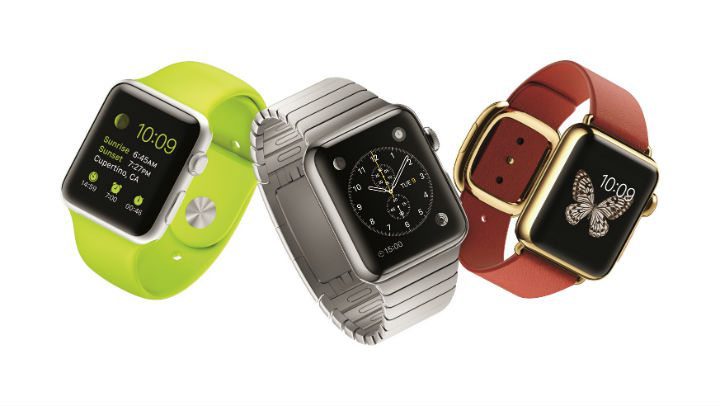
Since the launch of smartwatches – first Pebble, then Samsung Gear and now Apple Watch – the wearables market has expanded beyond mobile health and fitness trackers to mass consumer devices that are packed with cool features and capabilities. Prices are coming down, simplified software development tools are enticing developers to create apps, and devices are more powerful and user friendly than ever before. IDC estimates 72.1 million wearable devices will be shipped in 2015, up more than 173% from 2014. The compound annual growth rate is projected at 42.6% over five years reaching nearly 156 million units shipped in 2019.

While wearables are making an impact and look promising for device makers and developers, would-be adopters are still uncertain how all these new devices and form factors will fit into their increasingly digital lives. Some are questioning if wearables will add value or simply add complexity with additional screens and service plans to manage.

Pebble and Apple initially addressed this challenge by tethering wearable wristwatches to smartphones, reserving certain smartwatch capabilities only when in close proximity to the “parent” device. For device makers, this solves the connectivity challenge and eliminates the dilemma of bundling carrier services in each device. The tethered approach also keeps it simple for the consumer by combining all devices onto one subscription and avoids the cost of an additional service plan. However, one of the greatest benefits of wearables is that they are always with you, even when a smartphone may be forgotten in the office or car. What happens when consumers want to use their wearable device whenever and wherever they are – in lieu of a smartphone? As an example, Samsung moved in this direction for their recently launched Gear S2 smartwatch that allows consumers to make voice and data calls, check email, retrieve notifications or access applications directly from their wrist, without being tethered to their smartphones.

In theory, the simple solution is to add a SIM card (also known as a UICC) and a communication module to enable native device connectivity. But, in practice it’s not that simple and it leads to a host of new challenges to overcome. For instance, wearable devices are miniaturized for comfort, portability and to capture an aesthetic more common in high fashion than high tech. In addition, they are ruggedized to stand up to a variety of demanding environmental conditions not encountered by your typical tablet or smartphone such as humidity, sweat, vibration and shock. Adding a traditional SIM card slot to a smartwatch design would take up too much space, and asking a consumer to crack open the ruggedized form factor would jeopardize the integrity of the device and create a nightmare for the warranty and repair department.

To address these challenges, leading-edge device makers and network operators innovated miniaturized and reprogrammable SIMs, also known as eSIMs. This technology has its roots in the industrial machine-to-machine market where operators like T-Mobile US have already launched an eSIM product for their customers to simplify inventory management and logistics. As wearables have started to gain traction in the consumer market, so too has the eSIM. They can be soldered into the device at the time of manufacturing as an alternative to the pluggable SIM card, which saves space in device design and improves the durability of the device at the same time. However, if an eSIM has been soldered into the device, it cannot be removed easily and replaced with another device. Since SIM cards house carrier-specific credentials, security algorithms and software, this creates new headaches for manufacturing, reverse logistics and the secondhand market as different device variants would be needed for each potential carrier partner, i.e., one version for Verizon Wireless, one for AT&T Mobility, T-Mobile US, etc. Forecasting and producing carrier-specific devices is something device makers have to deal with on a regular basis, but it does put excess strain on the business plan as the risk of a forecasting error will have a direct impact on profitability as the complexity of refurbishment, warehousing and distribution would rise.

In response to this challenge, the GSMA is working on a new set of specifications for a solution that allows secure over-the-air downloading of carrier data to an eSIM. These would have the same functionality as removable SIMs – providing encryption capabilities and secure connectivity to wireless networks, and with this new solution, subscriptions can be remotely provisioned and managed. This subscription management solution simplifies and streamlines one step in the process of onboarding a device on the network and eliminates one of the hurdles device makers face in the design and manufacture of a single device variant for all carrier partners.

This dynamic technology duo – eSIM and subscription management – impacts all members of the ecosystem: device makers, consumers and mobile network operators. For device makers, these technologies make it possible to develop one device design compatible with many global networks – greatly simplifying manufacturing, warehousing and distribution for greater cost efficiency. For the consumer, the user experience is improved by making it easier to add devices to existing services plans centralizing a household’s fleet of new gadgets and reducing time spent waiting in line at retail stores or on customer service calls. For the carrier, this also opens the door to provide existing and new services to customers seamlessly across multiple wireless devices.

The eSIM and subscription management technology are revolutionizing the way connectivity is delivered to wireless devices by implementing a streamlined remote and dynamic provisioning process while ensuring secure user authentication and data handling. This simplified technology provides benefits across the entire wireless ecosystem, creating an important building block to support exponential growth in the wearable and “Internet of Things” marketplace.

Editor’s Note: In an attempt to broaden our interaction with our readers we have created this Reader Forum for those with something meaningful to say to the wireless industry. We want to keep this as open as possible, but we maintain some editorial control to keep it free of commercials or attacks. Please send along submissions for this section to our editors at: [email protected].

You Might Also Like
  • Ensuring colocation success by eliminating network observability blind spots (Reader Forum)
  • Thursday (telco diary) | Vodafone resets, AT&T reloads
  • Japan’s private 5G market is finally moving beyond demo experiments (Analyst Angle)
  • Wednesday (telco diary) | Orange leads Euro telco revival
  • The rise of agentic infra – why NetOps must outpace AI ambitions (Reader Forum)
  • The 6G AI uplink panic (Analyst Angle)
Share 0 LinkedinEmail
Reader Forum

Submit Reader Forum articles to [email protected]. Articles submitted to RCR Wireless News become property of RCR Wireless News and will be subject to editorial review and copy edit. Posting of submitted Reader Forum articles shall be at RCR Wireless News sole discretion.

previous post
Five Wi-Fi market predictions
next post
Reader Forum: How improving network QoE can help providers anticipate challenges of tomorrow

White Papers

  • Norton eBook: The 2026 Telco Playbook

  • Enea White Paper: Why Intelligent AAA is the Swiss Army Knife of Telecom

  • CSG White Paper: Telco AI Enabler: Mediation’s Defining Role

  • Enea White Paper: Scalable Database Design for 5G and Beyond

  • Supermicro and NVIDIA Whitepaper: Powering sovereign AI at scale

Editorial Reports

  • Market Pulse Report: Telco AI in 2026 – Trends, Challenges and Opportunities

  • Nvidia Report: The State of AI in Telecommunications: 2026 Trends

  • Report: Scaling Optical Networks For The Hyperscale And AI Era

Webinars

  • Webinar: Building 6G — aligning technology, policy and purpose

  • SIMCom Webinar: Scaling your next deployment – from plastic to provisioning

  • Webinar: Rethinking the RAN as AI, cloud and openness converge

  • Webinar: Scale-Up, Scale-Out, Scale-Across – Building AI-Era Network Fabrics

  • Webinar: NTN in motion – evolving standards, expanding services

Since 1982, RCR Wireless News has been providing wireless and mobile industry news, insights, and analysis to mobile and wireless industry professionals, decision makers, policy makers, analysts and investors.

Facebook Twitter Youtube Linkedin Envelope Rss

Useful Links

  • Subscribe
  • About RCR Wireless News
  • Contact Us
  • Advertise
  • Editorial Calendar
  • Archive
  • RSS
  • Wireless News Archive
  • Subscribe
  • About RCR Wireless News
  • Contact Us
  • Advertise
  • Editorial Calendar
  • Archive
  • RSS
  • Wireless News Archive

Edtior's Picks

Building the AI backbone, waiting on the AI billions
Ensuring colocation success by eliminating network observability blind spots (Reader Forum)
Thursday (telco diary) | Vodafone resets, AT&T reloads

Latest Articles

Building the AI backbone, waiting on the AI billions
Ensuring colocation success by eliminating network observability blind spots (Reader Forum)
Thursday (telco diary) | Vodafone resets, AT&T reloads
SK Telecom’s A.X K2 is South Korea’s biggest bet yet on sovereign AI

© 2026 RCR Wireless News All Right Reserved. Developed by Eight Hats.

Cookie Policy | Privacy Policy

RCR Wireless
  • News
  • Channels
    • 5G
    • 6G
    • BSS OSS
    • Carriers
    • IoT
    • Network Infrastructure
    • Open RAN
    • Private 5G
    • Telco AI
    • Telco Cloud
    • Test & Measurement
  • Resources
    • Reports
    • Webinars
    • White papers
    • AI Fundamentals
    • Analyst Angle
    • Editorial Calendar
    • Fundamentals
      • 5G NR Release 17
      • AI
        • Telco AI in 2025
    • Podcasts
      • Let’s Get Digital with Carrie Charles
      • Wireless Connectivity to Enable Industry 4.0 for the Middleprise
      • Well Technically…
      • Will 5G Change the World
      • Accelerating Industry 4.0 Digitalization
  • AI Infrastructure
  • Programs
  • Events
  • RCRtv
  • Advertise
  • Subscribe
RCR Wireless
  • News
  • Channels
    • 5G
    • 6G
    • BSS OSS
    • Carriers
    • IoT
    • Network Infrastructure
    • Open RAN
    • Private 5G
    • Telco AI
    • Telco Cloud
    • Test & Measurement
  • Resources
    • Reports
    • Webinars
    • White papers
    • AI Fundamentals
    • Analyst Angle
    • Editorial Calendar
    • Fundamentals
      • 5G NR Release 17
      • AI
        • Telco AI in 2025
    • Podcasts
      • Let’s Get Digital with Carrie Charles
      • Wireless Connectivity to Enable Industry 4.0 for the Middleprise
      • Well Technically…
      • Will 5G Change the World
      • Accelerating Industry 4.0 Digitalization
  • AI Infrastructure
  • Programs
  • Events
  • RCRtv
  • Advertise
  • Subscribe
@2020 - All Right Reserved. Designed and Developed by PenciDesign