

RCR Wireless
  • News
  • Channels
    • 5G
    • 6G
    • BSS OSS
    • Carriers
    • IoT
    • Network Infrastructure
    • Open RAN
    • Private 5G
    • Telco AI
    • Telco Cloud
    • Test & Measurement
  • Resources
    • Reports
    • Webinars
    • White papers
    • AI Fundamentals
    • Analyst Angle
    • Editorial Calendar
    • Fundamentals
      • 5G NR Release 17
      • AI
        • Telco AI in 2025
    • Podcasts
      • Let’s Get Digital with Carrie Charles
      • Wireless Connectivity to Enable Industry 4.0 for the Middleprise
      • Well Technically…
      • Will 5G Change the World
      • Accelerating Industry 4.0 Digitalization
  • AI Infrastructure
  • Programs
  • Events
  • RCRtv
  • Advertise
  • Subscribe
Wednesday, July 29, 2026
RCR Wireless
  • News
  • Channels
    • 5G
    • 6G
    • BSS OSS
    • Carriers
    • IoT
    • Network Infrastructure
    • Open RAN
    • Private 5G
    • Telco AI
    • Telco Cloud
    • Test & Measurement
  • Resources
    • Reports
    • Webinars
    • White papers
    • AI Fundamentals
    • Analyst Angle
    • Editorial Calendar
    • Fundamentals
      • 5G NR Release 17
      • AI
        • Telco AI in 2025
    • Podcasts
      • Let’s Get Digital with Carrie Charles
      • Wireless Connectivity to Enable Industry 4.0 for the Middleprise
      • Well Technically…
      • Will 5G Change the World
      • Accelerating Industry 4.0 Digitalization
  • AI Infrastructure
  • Programs
  • Events
  • RCRtv
  • Advertise
  • Subscribe
Add RCR Wireless as a preferred source on Google
  • Qualcomm 6G Insights
  • Huawei Content Hub
  • Qualcomm – 6G Vision
  • OSS/BSS Channel
  • RCRTech Roundtable: AI Infrastructure
RCR Wireless
RCR Wireless
  • Advanced Mimo
  • Mobile mmWave
  • 5G Positioning
  • Green Networks
  • Metaverse
  • Automotive
  • Industrial and Wide-area IoT
Copyright 2021 - All Right Reserved
Home - Google bringing proprietary tech to Open Compute Project
FeaturedNetwork Infrastructure

Google bringing proprietary tech to Open Compute Project

by Sean Kinney, Principal Analyst March 9, 2016
written by Sean Kinney, Principal Analyst March 9, 2016 Share
LinkedinEmail
Share 0LinkedinEmail
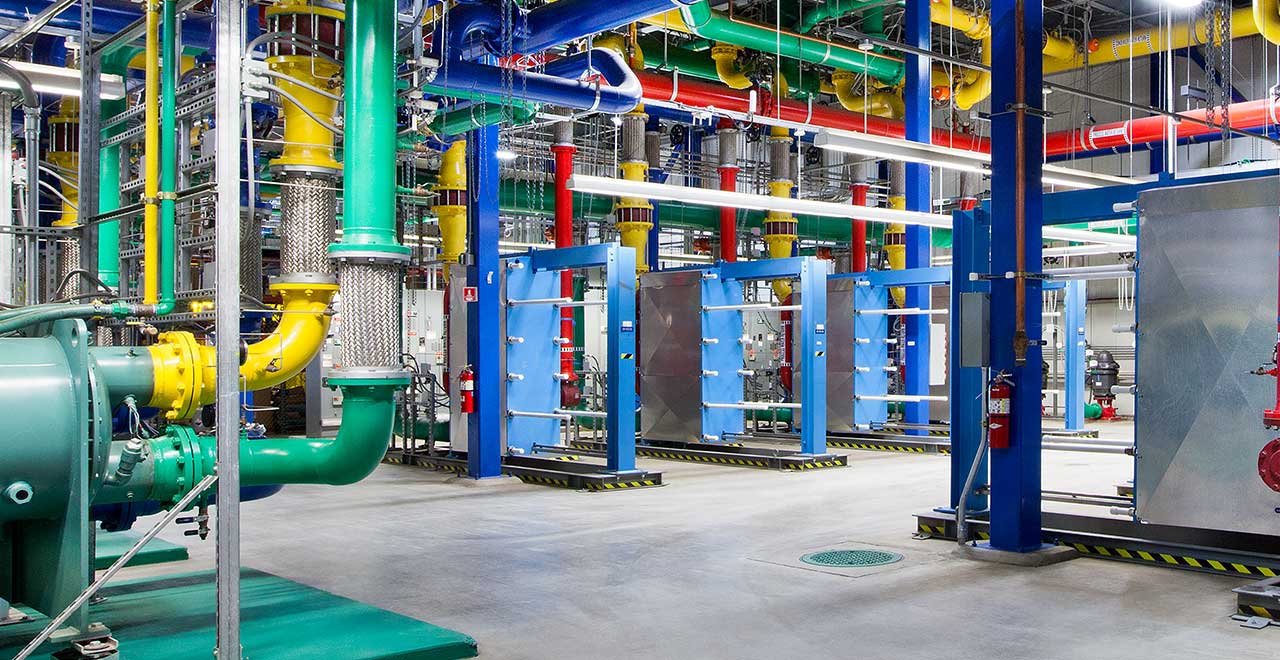
google data center
Image: Google Cloud
126

Facebook CEO calls addition of Google a ‘strong symbolic move’

SAN JOSE, California – The Open Compute Project, started by Facebook in 2011, has grown to encompass some of the biggest names in tech hardware including Microsoft, Intel, Ericsson, and now Google.

The announcement came on March 9, the first day of the Open Compute Project Summit being held in San Jose, California. Google Technical Program Manager John Zipfel explained the move in a post to the Google Cloud Platform blog.

“The Open Compute community is an established collection of consumers and producers, and we see an opportunity to contribute our experience and expand the Open Rack specification,” Zipfel wrote. “We’re collaborating with Facebook on a common 48V rack that we intend to submit for consideration by OCP. … Today’s launch is a first step in a larger effort. We think there are other areas of possible collaboration with OCP. We’ve recently begun engaging the industry to identify better disk solutions for cloud based applications. And we think that we can work with OCP to go even further, looking up the software stack to standardize server and networking management systems.”

Back to that 48-volt rack. The Google-developed specification includes the 48-volt power distribution and a form factor designed to allow racks based on Open Compute Project standards to fit into Google data centers. Google has been focused on data center power efficiency for some time; in 2006 the company released details of its 12-volt architecture. As the company’s power needs grew, researches developed the 48-volt rack power distribution in 2010, which resulted in a claimed 30% boost in energy efficiency.

“Energy efficiency in computing is a topic that has been near and dear to our hearts since the early days,” Google noted. “We began advocating for efficient power supplies in 2003, and in 2006 shared details of our 12-volt architecture for racks inside our data centers – the infrastructure that supports and powers rows upon rows of our servers. … Our 48V architecture has since evolved and includes servers with 48V to point-of-load designs, and rack-level 48V [lithium-ion] UPS systems. Google has been designing and using 48V infrastructure at scale for several years, and we feel comfortable with the robustness of the design and its reliability.”

Facebook CEO Mark Zuckerberg, in a post to, well, Facebook, said Google has lots of in-house expertise that can benefit the larger industry, and stressed the importance of increasing compute power considering burgeoning applications like virtual reality and artificial intelligence.

“Google has always built some of the best infrastructure in the industry, so this is strong symbolic move that our open model of development is the best way forward for everyone,” Zuckerberg wrote. “Google has always built some of the best infrastructure in the industry, so this is strong symbolic move that our open model of development is the best way forward for everyone. Over the next decade, we’re going to build experiences that rely more on technology like artificial intelligence and virtual reality. These will require a lot more computing power, and through efforts like OCP, we’re developing a global infrastructure to enable everyone to enjoy them.”


You Might Also Like
  • The 6G AI uplink panic (Analyst Angle)
  • Tuesday (telco diary) | D2D in 3D – Amazon appeals to telcos
  • Network agents are “ready” for commercial use, but are telcos? (Analyst Angle)
  • Monday (telco diary) | ‘A new telco growth profile’?
  • Verizon strikes $1bn DCI deal with Google; AI cloud and edge sales to ramp in 2027
  • Friday (telco diary) | The AI penny-drop for telcos
Share 0 LinkedinEmail
Sean Kinney
Sean Kinney, Principal Analyst

Sean focuses on multiple subject areas including 5G, 6G, Open RAN, hybrid cloud, edge computing, and Industry 4.0. Prior to his work at RCR, Sean studied journalism and literature at the University of Mississippi then spent six years based in Key West, Florida, working as a reporter for the Miami Herald Media Company. He currently lives in Fayetteville, Arkansas.

previous post
FCC looks to add broadband to Lifeline program
next post
KPN unveils strategy to save $329M per year

White Papers

  • Norton eBook: The 2026 Telco Playbook

  • Enea White Paper: Why Intelligent AAA is the Swiss Army Knife of Telecom

  • CSG White Paper: Telco AI Enabler: Mediation’s Defining Role

  • Enea White Paper: Scalable Database Design for 5G and Beyond

  • Supermicro and NVIDIA Whitepaper: Powering sovereign AI at scale

Editorial Reports

  • Market Pulse Report: Telco AI in 2026 – Trends, Challenges and Opportunities

  • Nvidia Report: The State of AI in Telecommunications: 2026 Trends

  • Report: Scaling Optical Networks For The Hyperscale And AI Era

Webinars

  • Webinar: Building 6G — aligning technology, policy and purpose

  • SIMCom Webinar: Scaling your next deployment – from plastic to provisioning

  • Webinar: Rethinking the RAN as AI, cloud and openness converge

  • Webinar: Scale-Up, Scale-Out, Scale-Across – Building AI-Era Network Fabrics

  • Webinar: NTN in motion – evolving standards, expanding services

Since 1982, RCR Wireless News has been providing wireless and mobile industry news, insights, and analysis to mobile and wireless industry professionals, decision makers, policy makers, analysts and investors.

Facebook Twitter Youtube Linkedin Envelope Rss

Useful Links

  • Subscribe
  • About RCR Wireless News
  • Contact Us
  • Advertise
  • Editorial Calendar
  • Archive
  • RSS
  • Wireless News Archive
  • Subscribe
  • About RCR Wireless News
  • Contact Us
  • Advertise
  • Editorial Calendar
  • Archive
  • RSS
  • Wireless News Archive

Edtior's Picks

Beyond the Hype: Ilissa Miller on Responsible Growth, Data Centers and AI
The rise of agentic infra – why NetOps must outpace AI ambitions (Reader...
The 6G AI uplink panic (Analyst Angle)

Latest Articles

Beyond the Hype: Ilissa Miller on Responsible Growth, Data Centers and AI
The rise of agentic infra – why NetOps must outpace AI ambitions (Reader Forum)
The 6G AI uplink panic (Analyst Angle)
Tuesday (telco diary) | D2D in 3D – Amazon appeals to telcos

© 2026 RCR Wireless News All Right Reserved. Developed by Eight Hats.

Cookie Policy | Privacy Policy

RCR Wireless
  • News
  • Channels
    • 5G
    • 6G
    • BSS OSS
    • Carriers
    • IoT
    • Network Infrastructure
    • Open RAN
    • Private 5G
    • Telco AI
    • Telco Cloud
    • Test & Measurement
  • Resources
    • Reports
    • Webinars
    • White papers
    • AI Fundamentals
    • Analyst Angle
    • Editorial Calendar
    • Fundamentals
      • 5G NR Release 17
      • AI
        • Telco AI in 2025
    • Podcasts
      • Let’s Get Digital with Carrie Charles
      • Wireless Connectivity to Enable Industry 4.0 for the Middleprise
      • Well Technically…
      • Will 5G Change the World
      • Accelerating Industry 4.0 Digitalization
  • AI Infrastructure
  • Programs
  • Events
  • RCRtv
  • Advertise
  • Subscribe
RCR Wireless
  • News
  • Channels
    • 5G
    • 6G
    • BSS OSS
    • Carriers
    • IoT
    • Network Infrastructure
    • Open RAN
    • Private 5G
    • Telco AI
    • Telco Cloud
    • Test & Measurement
  • Resources
    • Reports
    • Webinars
    • White papers
    • AI Fundamentals
    • Analyst Angle
    • Editorial Calendar
    • Fundamentals
      • 5G NR Release 17
      • AI
        • Telco AI in 2025
    • Podcasts
      • Let’s Get Digital with Carrie Charles
      • Wireless Connectivity to Enable Industry 4.0 for the Middleprise
      • Well Technically…
      • Will 5G Change the World
      • Accelerating Industry 4.0 Digitalization
  • AI Infrastructure
  • Programs
  • Events
  • RCRtv
  • Advertise
  • Subscribe
@2020 - All Right Reserved. Designed and Developed by PenciDesign