

RCR Wireless
  • News
  • Channels
    • 5G
    • 6G
    • BSS OSS
    • Carriers
    • IoT
    • Network Infrastructure
    • Open RAN
    • Private 5G
    • Telco AI
    • Telco Cloud
    • Test & Measurement
  • Resources
    • Reports
    • Webinars
    • White papers
    • AI Fundamentals
    • Analyst Angle
    • Editorial Calendar
    • Fundamentals
      • 5G NR Release 17
      • AI
        • Telco AI in 2025
    • Podcasts
      • Let’s Get Digital with Carrie Charles
      • Wireless Connectivity to Enable Industry 4.0 for the Middleprise
      • Well Technically…
      • Will 5G Change the World
      • Accelerating Industry 4.0 Digitalization
  • AI Infrastructure
  • Programs
  • Events
  • RCRtv
  • Advertise
  • Subscribe
Monday, July 27, 2026
RCR Wireless
  • News
  • Channels
    • 5G
    • 6G
    • BSS OSS
    • Carriers
    • IoT
    • Network Infrastructure
    • Open RAN
    • Private 5G
    • Telco AI
    • Telco Cloud
    • Test & Measurement
  • Resources
    • Reports
    • Webinars
    • White papers
    • AI Fundamentals
    • Analyst Angle
    • Editorial Calendar
    • Fundamentals
      • 5G NR Release 17
      • AI
        • Telco AI in 2025
    • Podcasts
      • Let’s Get Digital with Carrie Charles
      • Wireless Connectivity to Enable Industry 4.0 for the Middleprise
      • Well Technically…
      • Will 5G Change the World
      • Accelerating Industry 4.0 Digitalization
  • AI Infrastructure
  • Programs
  • Events
  • RCRtv
  • Advertise
  • Subscribe
Add RCR Wireless as a preferred source on Google
  • Qualcomm 6G Insights
  • Huawei Content Hub
  • Qualcomm – 6G Vision
  • OSS/BSS Channel
  • RCRTech Roundtable: AI Infrastructure
RCR Wireless
RCR Wireless
  • Advanced Mimo
  • Mobile mmWave
  • 5G Positioning
  • Green Networks
  • Metaverse
  • Automotive
  • Industrial and Wide-area IoT
Copyright 2021 - All Right Reserved
Home - What role can signal boosters play in small cell networks?
FeaturedFundamentalsNetwork Infrastructure

What role can signal boosters play in small cell networks?

by Kelly Hill February 24, 2016
written by Kelly Hill February 24, 2016 Share
LinkedinEmail
Share 0LinkedinEmail
signal booster
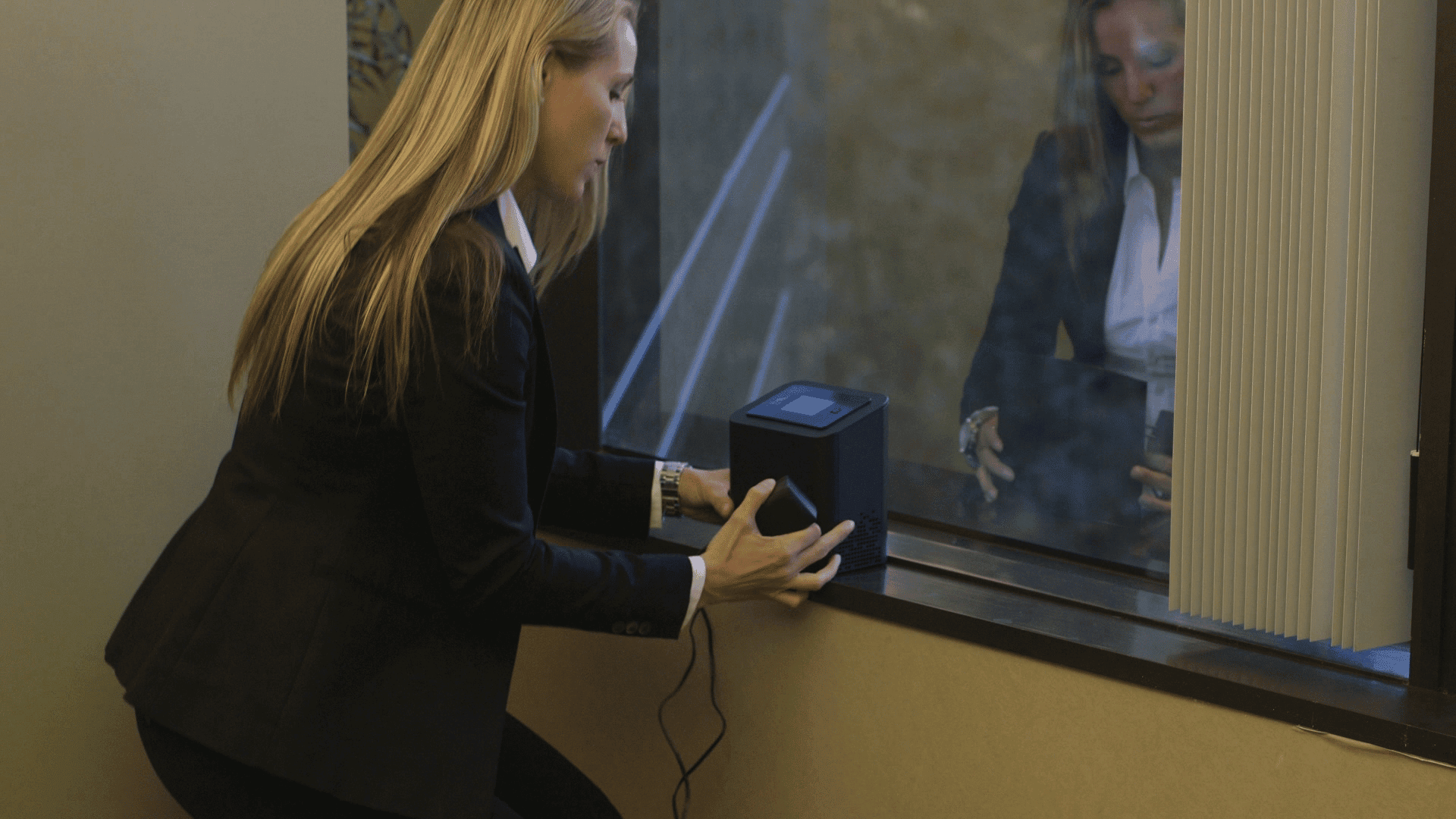
What role can signal boosters play in small cell networks? (Image: Cel-Fi smart signal booster, courtesy Nextivity)
91

Cellular signal boosters have often been viewed as consumer product nuisances that can cause major interference to mobile operators’ networks. However, operators have sometimes made use of so-called “industrial” signal boosters: rural operators have used them to enhance their coverage in areas with few towers, and they have been used in conjunction with distributed antenna systems.

New Federal Communications Commission rules went into effect in early 2014 officially enabling signal boosters to become licensed, permitted parts of mobile networks for improving consumer, multi-user and public safety coverage – so long as the spectrum licensee grants permission for them to be used and the boosters are registered with the operator. So far, most carriers (including all four U.S. national operators) have authorized the use of new, FCC-compliant signal boosters. The FCC specifically provided for a category of “industrial” signal boosters for multi-use applications designed to be professionally installed. This was already common industry practice, but the new FCC rules have helped make the technology “much more mainstream than they were before,” according to Werner Seivers, CEO of Nextivity. British telecom regulator Ofcom and Australia’s ACMA also recognize “smart repeaters.”

Nextivity manufactures consumer and industrial signal boosters for use on AT&T Mobility and T-Mobile US networks, as well as 170 other operators, and its Cel-Fi solution is claimed to be the only “smart signal booster” offering for the industrial segment in line with Small Cell Forum’s guidance for such SSBs, Sievers said. Because industrial boosters have significantly higher power than consumer boosters, he noted, they can create larger swathes of coverage – but also create more risk for interference, hence the need for greater intelligence and better integration with carrier networks.

The Small Cell Forum included smart signal boosters as an alternative architecture option in its enterprise-focused Release Two, in which SSBs can automatically sense the surrounding environment and self-organize, “[adapting] its operating parameters to adjust to the small cell network, the macro network as well as other SSBs that are used to extend coverage in the same area.” In particular, the Small Cell Forum noted SSBs can be leveraged in situations where an enterprise does not have usable or good quality backhaul, or in situations where small cells are primarily deployed for coverage rather than capacity.

Nextivity’s main objective, Sievers said, is getting smart signal boosters accepted by more carriers and to the point where they “can be integrated and used freely, without constraint, within [operators’] heterogeneous network plans.” Those authorizations are said to be complex and can take years to get; Nextivity has taken the tack of parsing all applicable regulations in a market before even approaching a carrier, Sievers added.

With more intelligent equipment design, Sievers said, operators can use signal boosters as a legitimate network element in hetnets, and he also sees opportunity for signal boosters in “Internet of Things” applications.

“It goes without saying that you need to be able to play with femto [cells], micro [cells] and Wi-Fi access points,” said Sievers.

Nextivity CTO Michiel Lotter, told RCR Wireless News such diverse network elements are becoming commonplace in modern networks, but legacy repeaters “are quite incompatible with the classic heterogeneous network. … The primary reason for that is their tendency to create interference between network elements.”

Sievers said even today, with operators often seeking to root out signal boosters that interfere with their networks, there is also motivation to leverage the technology to address their own coverage issues – particularly in the enterprise environment. The Small Cell Forum specifically notes situations such as in large warehouses where signal boosters can extend the reach of small cells and thereby reduce the total number of small cells that need to be installed. Sievers said Nextivity’s products have been used in targeted churn reduction and also in enterprise situations where there may be several months of lag before small cells can be deployed. In the meantime, a signal booster can be placed rapidly to improve coverage, and that booster is often integrated into the final small cell network design, he added.

Watch the full HetNet Happenings interview with Sievers and Lotter below:

[embedyt] http://www.youtube.com/watch?v=qcwAtB8AhCU[/embedyt]

You Might Also Like
  • Verizon strikes $1bn DCI deal with Google; AI cloud and edge sales to ramp in 2027
  • Friday (telco diary) | The AI penny-drop for telcos
  • Spectrum supercycle – US opens floodgates; UK shares it out
  • Thursday (telco diary) | Telco pieces in the AI jigsaw
  • Nokia nips and tucks, and sees supercycle upside – as AI and cloud orders double
  • Wednesday (telco diary) | What AT&T and Lumen tell us about the AI fiber build-out
Share 0 LinkedinEmail
Kelly Hill

Kelly Hill reports on network test and measurement, AI infrastructure and regulatory issues, including spectrum, for RCR Wireless News. She began covering the wireless industry in 2005, focusing on carriers and MVNOs, then took a few years’ hiatus and returned to RCR Wireless News to write about heterogeneous networks (remember those?) and network infrastructure. Kelly is an Ohio native with a masters degree in journalism from the University of California, Berkeley, where she focused on science writing and multimedia. She has written for the San Francisco Chronicle, The Oregonian and The Canton Repository. She lives in northern Virginia, not far from Data Center Alley.

previous post
Sprint financials questioned
next post
Sprint, T-Mobile, AT&T and Verizon target Galaxy S7 launch

White Papers

  • Norton eBook: The 2026 Telco Playbook

  • Enea White Paper: Why Intelligent AAA is the Swiss Army Knife of Telecom

  • CSG White Paper: Telco AI Enabler: Mediation’s Defining Role

  • Enea White Paper: Scalable Database Design for 5G and Beyond

  • Supermicro and NVIDIA Whitepaper: Powering sovereign AI at scale

Editorial Reports

  • Market Pulse Report: Telco AI in 2026 – Trends, Challenges and Opportunities

  • Nvidia Report: The State of AI in Telecommunications: 2026 Trends

  • Report: Scaling Optical Networks For The Hyperscale And AI Era

Webinars

  • Webinar: Building 6G — aligning technology, policy and purpose

  • SIMCom Webinar: Scaling your next deployment – from plastic to provisioning

  • Webinar: Rethinking the RAN as AI, cloud and openness converge

  • Webinar: Scale-Up, Scale-Out, Scale-Across – Building AI-Era Network Fabrics

  • Webinar: NTN in motion – evolving standards, expanding services

Since 1982, RCR Wireless News has been providing wireless and mobile industry news, insights, and analysis to mobile and wireless industry professionals, decision makers, policy makers, analysts and investors.

Facebook Twitter Youtube Linkedin Envelope Rss

Useful Links

  • Subscribe
  • About RCR Wireless News
  • Contact Us
  • Advertise
  • Editorial Calendar
  • Archive
  • RSS
  • Wireless News Archive
  • Subscribe
  • About RCR Wireless News
  • Contact Us
  • Advertise
  • Editorial Calendar
  • Archive
  • RSS
  • Wireless News Archive

Edtior's Picks

Verizon strikes $1bn DCI deal with Google; AI cloud and edge sales to...
SK Telecom launches dedicated AI infra company
Hollow-core fiber won’t hit cost parity for a decade – regarding HKT’s 3.2Tbps...

Latest Articles

Verizon strikes $1bn DCI deal with Google; AI cloud and edge sales to ramp in 2027
SK Telecom launches dedicated AI infra company
Hollow-core fiber won’t hit cost parity for a decade – regarding HKT’s 3.2Tbps DCI ‘superhighway’
Friday (telco diary) | The AI penny-drop for telcos

© 2026 RCR Wireless News All Right Reserved. Developed by Eight Hats.

Cookie Policy | Privacy Policy

RCR Wireless
  • News
  • Channels
    • 5G
    • 6G
    • BSS OSS
    • Carriers
    • IoT
    • Network Infrastructure
    • Open RAN
    • Private 5G
    • Telco AI
    • Telco Cloud
    • Test & Measurement
  • Resources
    • Reports
    • Webinars
    • White papers
    • AI Fundamentals
    • Analyst Angle
    • Editorial Calendar
    • Fundamentals
      • 5G NR Release 17
      • AI
        • Telco AI in 2025
    • Podcasts
      • Let’s Get Digital with Carrie Charles
      • Wireless Connectivity to Enable Industry 4.0 for the Middleprise
      • Well Technically…
      • Will 5G Change the World
      • Accelerating Industry 4.0 Digitalization
  • AI Infrastructure
  • Programs
  • Events
  • RCRtv
  • Advertise
  • Subscribe
RCR Wireless
  • News
  • Channels
    • 5G
    • 6G
    • BSS OSS
    • Carriers
    • IoT
    • Network Infrastructure
    • Open RAN
    • Private 5G
    • Telco AI
    • Telco Cloud
    • Test & Measurement
  • Resources
    • Reports
    • Webinars
    • White papers
    • AI Fundamentals
    • Analyst Angle
    • Editorial Calendar
    • Fundamentals
      • 5G NR Release 17
      • AI
        • Telco AI in 2025
    • Podcasts
      • Let’s Get Digital with Carrie Charles
      • Wireless Connectivity to Enable Industry 4.0 for the Middleprise
      • Well Technically…
      • Will 5G Change the World
      • Accelerating Industry 4.0 Digitalization
  • AI Infrastructure
  • Programs
  • Events
  • RCRtv
  • Advertise
  • Subscribe
@2020 - All Right Reserved. Designed and Developed by PenciDesign
