
RCR Wireless
  • News
  • Channels
    • 5G
    • 6G
    • BSS OSS
    • Carriers
    • IoT
    • Network Infrastructure
    • Open RAN
    • Private 5G
    • Telco AI
    • Telco Cloud
    • Test & Measurement
  • Resources
    • Reports
    • Webinars
    • White papers
    • AI Fundamentals
    • Analyst Angle
    • Editorial Calendar
    • Fundamentals
      • 5G NR Release 17
      • AI
        • Telco AI in 2025
    • Podcasts
      • Let’s Get Digital with Carrie Charles
      • Wireless Connectivity to Enable Industry 4.0 for the Middleprise
      • Well Technically…
      • Will 5G Change the World
      • Accelerating Industry 4.0 Digitalization
  • AI Infrastructure
  • Programs
  • Events
  • RCRtv
  • Advertise
  • Subscribe
Wednesday, August 12, 2026
RCR Wireless
  • News
  • Channels
    • 5G
    • 6G
    • BSS OSS
    • Carriers
    • IoT
    • Network Infrastructure
    • Open RAN
    • Private 5G
    • Telco AI
    • Telco Cloud
    • Test & Measurement
  • Resources
    • Reports
    • Webinars
    • White papers
    • AI Fundamentals
    • Analyst Angle
    • Editorial Calendar
    • Fundamentals
      • 5G NR Release 17
      • AI
        • Telco AI in 2025
    • Podcasts
      • Let’s Get Digital with Carrie Charles
      • Wireless Connectivity to Enable Industry 4.0 for the Middleprise
      • Well Technically…
      • Will 5G Change the World
      • Accelerating Industry 4.0 Digitalization
  • AI Infrastructure
  • Programs
  • Events
  • RCRtv
  • Advertise
  • Subscribe
Add RCR Wireless as a preferred source on Google
  • Qualcomm 6G Insights
  • Huawei Content Hub
  • Qualcomm – 6G Vision
  • OSS/BSS Channel
  • RCRTech Roundtable: AI Infrastructure
RCR Wireless
RCR Wireless
  • Advanced Mimo
  • Mobile mmWave
  • 5G Positioning
  • Green Networks
  • Metaverse
  • Automotive
  • Industrial and Wide-area IoT
Copyright 2021 - All Right Reserved
Home - In-building wireless testing: Small cell strategies
FundamentalsTest and Measurement

In-building wireless testing: Small cell strategies

by Martha DeGrasse February 12, 2016
written by Martha DeGrasse February 12, 2016 Share
LinkedinEmail
Share 0LinkedinEmail
in-building wireless testing
120

In-building wireless testing can be more complex than outdoor network testing because there are more potential sources of interference, and more variables to coordinate. An indoor small cell environment can include multiple radios and antennas; when these are aligned they can help support one another, but when they do not communicate they can interfere with one another.

Interference with the macro network is another potential hurdle for indoor small cells. According to analyst Joe Madden of Mobile Experts, deployments that are initially independent of the macro network typically come online faster.

“The key is to divorce the in-building system from the macro network for the initial deployment, because the interaction between the two systems can be very complex,” said Madden. He thinks that if indoor deployments can be tested and optimized for different operators after deployment, the outlook for multi-operator small cells may improve. Madden noted that optimization after deployment is a model that has been successful for many DAS deployments, and he predicts that small cell installations will start to follow this model.

“DAS systems are generally deployed and then optimized for each individual operator to suit the unique characteristics of each operator’s macro penetration into the building, essentially adjusting the power levels at individual antenna locations for specific frequency bands,” said Madden. “Eventually, all multi-operator indoor solutions will need to implement this kind of process, with flexibility to adjust power levels for each operator at each frequency band.”

Backhaul is another challenge for in-building wireless testing of small cells. Scott Sumner of Accedian Networks pointed out that inadequate in-building backhaul can sabotage network performance, and said mobile operators may get the blame for equipment that they don’t own or control.

“The biggest problem we have seen with indoor small cells relates to the non-deterministic nature of backhauling over corporate LANs, and then often, the open internet,” said Sumner. “Latency and packet loss can quickly interfere with control-plane messages, so that hand-offs can fail. We have to remember the operator is being blamed by the user if the quality of experience falters, despite their lack of control over the backhaul in many cases.” Sumner added that operators will need to pay special attention to in-building wireless testing of small cells as they roll out voice over LTE.

“Initially, an assessment or audit of the performance of the existing backhaul and RAN is important,” he said. “By evaluating latency, packet loss, availability and throughput the operator will be able to predict whether voice calls will sound good, and whether the sync between sites allows for seamless hand-offs. Most early VoLTE trials and regional deployments failed because the network was not ready, properly configured or insufficient. If the proper class of service (QCI) is not established end-to-end over a bearer, the calls will not only sound bad, they will just stop. VoLTE is much less forgiving that circuit switched voice. It either works great, or not at all.”

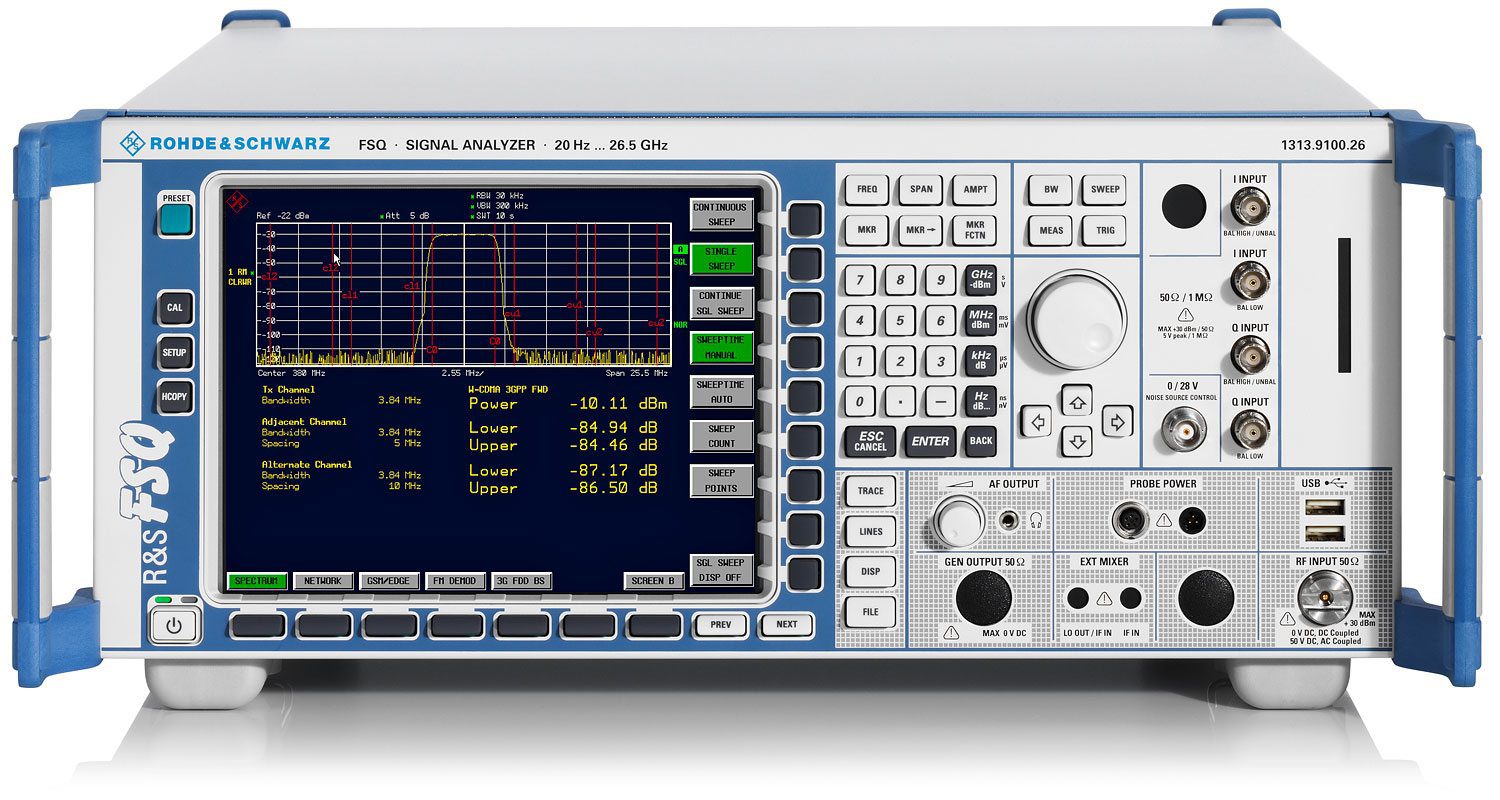
For test equipment makers like Accedian, Exfo, Anritsu and Rohde & Schwarz, small cells represent a new opportunity that must be met with new solutions. The equipment used to test the macro network is too expensive and time-consuming for effective use in a small cell environment.

“If an operator chooses to start with the procedures they’re using to deploy and turn up a macro cell, they quickly find out that this isn’t a scalable solution to all these tiny end points out there,” said Sumner. “Really the ROI of the business case of small cells can’t afford to have someone there for a full day doing a turn up test or carrying very expensive test equipment and these delay the rollouts quite a bit.”

Indeed, delays and cost overruns have plagued many small cell deployments to date. But operators and vendors are learning, and solutions are evolving.

“Single-operator small cells have been slow to ramp up over the past few years, partly due to the long time required for planning/installation/provisioning/testing/optimization,” said Madden. “However, some solutions have now emerged with very rapid in-building deployment cycles.”

Efficient test equipment is one major reason the deployment cycles are getting shorter. Vendors are working hard to combine lower-cost equipment with the software needed to optimize multiple small cells.

“You’re trying to find a way to get the least expensive piece of hardware out there that still has the precision to do these complex tests without having power supply requirements, racking requirements and the cost of deployment,” said Sumner. “That’s really how instrumentation has evolved to address these many end points today.”

Follow me on Twitter.

You Might Also Like
  • Real-world network emulation is critical for 5G deployments (Reader Forum)
  • Complexity, convergence, AI and the demand for trust are reshaping telecom testing
  • Test And Measurement Market Pulse Report
  • Anterix: ‘Terrific’ results from NTN testing with Lynk Global
  • Opensignal on fixed broadband: Cable upload speeds jump, FWA improves
  • What is AI-RRM in Wi-Fi 7?
Share 0 LinkedinEmail
Martha DeGrasse

Martha DeGrasse is the publisher of Network Builder Reports (nbreports.com). At RCR, Martha authored more than 20 in-depth feature reports and more than 2,400 news articles. She also created the Mobile Minute and the 5 Things to Know Today series. Prior to joining RCR Wireless News, Martha produced business and technology news for CNN and Dow Jones in New York and managed the online editorial group at Hoover’s Online before taking a number of years off to be at home when her children were young. Martha is the board president of Austin's Trinity Center and is a member of the Women's Wireless Leadership Forum.

previous post
Qualcomm talks mmWv, MulteFire, Wi-Fi 802.11ad
next post
Telefonica Argentina: Leaving the silos behind to embrace end-to-end optimization

White Papers

  • Norton eBook: The 2026 Telco Playbook

  • Enea White Paper: Why Intelligent AAA is the Swiss Army Knife of Telecom

  • CSG White Paper: Telco AI Enabler: Mediation’s Defining Role

  • Enea White Paper: Scalable Database Design for 5G and Beyond

  • Supermicro and NVIDIA Whitepaper: Powering sovereign AI at scale

Editorial Reports

  • Report: NTN in motion — evolving standards, expanding services

  • Market Pulse Report: Telco AI in 2026 – Trends, Challenges and Opportunities

  • Nvidia Report: The State of AI in Telecommunications: 2026 Trends

Webinars

  • Webinar: Building 6G — aligning technology, policy and purpose

  • SIMCom Webinar: Scaling your next deployment – from plastic to provisioning

  • Webinar: Rethinking the RAN as AI, cloud and openness converge

  • Webinar: Scale-Up, Scale-Out, Scale-Across – Building AI-Era Network Fabrics

  • Webinar: NTN in motion – evolving standards, expanding services

Since 1982, RCR Wireless News has been providing wireless and mobile industry news, insights, and analysis to mobile and wireless industry professionals, decision makers, policy makers, analysts and investors.

Facebook Twitter Youtube Linkedin Envelope Rss

Useful Links

  • Subscribe
  • About RCR Wireless News
  • Contact Us
  • Advertise
  • Editorial Calendar
  • Archive
  • RSS
  • Wireless News Archive
  • Subscribe
  • About RCR Wireless News
  • Contact Us
  • Advertise
  • Editorial Calendar
  • Archive
  • RSS
  • Wireless News Archive

Edtior's Picks

Telefónica embeds generative AI directly into business voice services in Spain
KDDI expands AI, cloud, and data center investment
Tuesday (telco diary) | About open RAN, c/o Dell’Oro…

Latest Articles

Telefónica embeds generative AI directly into business voice services in Spain
KDDI expands AI, cloud, and data center investment
Tuesday (telco diary) | About open RAN, c/o Dell’Oro…
Celona takes private 5G into the industrial Wi-Fi fight – with AI in the middle

© 2026 RCR Wireless News All Right Reserved. Developed by Eight Hats.

Cookie Policy | Privacy Policy

RCR Wireless
  • News
  • Channels
    • 5G
    • 6G
    • BSS OSS
    • Carriers
    • IoT
    • Network Infrastructure
    • Open RAN
    • Private 5G
    • Telco AI
    • Telco Cloud
    • Test & Measurement
  • Resources
    • Reports
    • Webinars
    • White papers
    • AI Fundamentals
    • Analyst Angle
    • Editorial Calendar
    • Fundamentals
      • 5G NR Release 17
      • AI
        • Telco AI in 2025
    • Podcasts
      • Let’s Get Digital with Carrie Charles
      • Wireless Connectivity to Enable Industry 4.0 for the Middleprise
      • Well Technically…
      • Will 5G Change the World
      • Accelerating Industry 4.0 Digitalization
  • AI Infrastructure
  • Programs
  • Events
  • RCRtv
  • Advertise
  • Subscribe
RCR Wireless
  • News
  • Channels
    • 5G
    • 6G
    • BSS OSS
    • Carriers
    • IoT
    • Network Infrastructure
    • Open RAN
    • Private 5G
    • Telco AI
    • Telco Cloud
    • Test & Measurement
  • Resources
    • Reports
    • Webinars
    • White papers
    • AI Fundamentals
    • Analyst Angle
    • Editorial Calendar
    • Fundamentals
      • 5G NR Release 17
      • AI
        • Telco AI in 2025
    • Podcasts
      • Let’s Get Digital with Carrie Charles
      • Wireless Connectivity to Enable Industry 4.0 for the Middleprise
      • Well Technically…
      • Will 5G Change the World
      • Accelerating Industry 4.0 Digitalization
  • AI Infrastructure
  • Programs
  • Events
  • RCRtv
  • Advertise
  • Subscribe
@2020 - All Right Reserved. Designed and Developed by PenciDesign