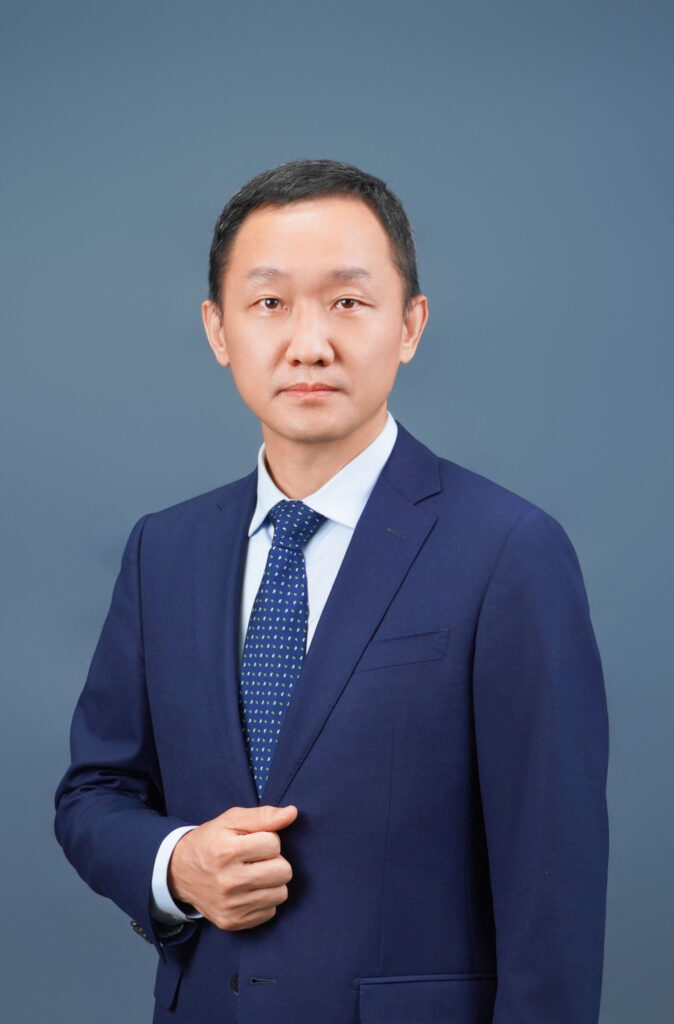
In an AI era defined by the explosive growth of intelligent applications, both technological and economic paradigms are undergoing systemic transformation, mobile networks must rapidly evolve from mere “traffic pipe” into “AI engines” , and the transformation of telecom operators (Telcos) into technology companies (Techcos) has become urgent. Seizing these historic opportunities and challenges, ZTE—guided by its Connectivity + AI strategy—has launched AIR MAX, a next-generation mobile network solution that optimizes three efficiencies: energy efficiency, labor efficiency, and investment efficiency. With an AI-native mindset, it re-architects the technological foundation, operation model, and business value of mobile networks,enabling operators in the new era to transform their operations and redefine value creation. In this article, ZTE Senior Vice President Zhang Wanchun offers a focused examination of how to reshape the mobile network paradigm.
Over the past three years, AI computing performance has surpassed human experts in the MMLU (Massive Multitask Language Understanding) benchmark, with computing costs dropping by a factor of 100, laying the foundation for large-scale AI applications. The emergence of products such as Doubao AI Phone, OpenClaw, and Gemini Shopping Assistant has further validated the usability and productivity potential of agent-based AI technologies, accelerating the rapid development of AI applications. In the AI era, under the new economic paradigm of “Bit + Token,” how to seize the opportunities presented by AI, transform mobile networks from data pipelines into AI engines, reduce energy and labor costs, enhance business value and return on investment, and build a sustainable “Create More, Save More” growth flywheel has become a core challenge for operators.
AIR MAX framework: Three-tier full stack AI capability
Built on a 10-block AI capability stack, AIR MAX systematically upgrades the mobile network framework for the AI era. It builds a three-layer capability framework comprising AI-native infrastructure, L4 autonomous network operations, and monetization engines. By continuously driving upgrades in technical architecture, production efficiency, and business models, ZTE AIR MAX reshapes mobile networks with a new paradigm called ‘serve AI with AI’, comprehensively empowering operators in capability evolution, service transformation, operational transition, and ecosystem reinvention for the AI era.
AI-native Infrastructure Layer – Technical Architecture Upgrade: ZTE’s AI-native infrastructure layer is built upon two fundamental principles. The first principle is that AI Native does not equate to GPU-centric architecture. Communication workloads are structurally diverse—some tasks are more efficiently handled by traditional algorithms, some require specialized AI acceleration, and others demand general-purpose AI computing power. Therefore, we adopt a heterogeneous computing architecture. The second principle is that communication AI models must be deeply optimized. Through techniques such as lightweight model design, model compression, sparsification, and FP4/FP8 mixed precision quantization, we compress models from the billion-parameter scale down to the million-parameter scale or even smaller, making real-time deployment feasible. Based on these principles, we build a high-performance, efficient, and scalable AI-native infrastructure through four key capabilities: embedded AI Radio, heterogeneous computing, AI-driven large-scale MIMO coordination, and AI-powered high-precision sensing.
- Embedded-AI Radio: Integrate AI deeply into wireless devices, leveraging AI-based DPD and related algorithms to reduce energy consumption by 35%–40%; utilize MIMO enhancement technologies such as AI-powered beam-forming and AI-powered channel equalization to improve spectral efficiency by 20%.
- Heterogeneous Computing: Based on ASIC AI + xPU heterogeneous computing, we build an efficient computing architecture tailored for diverse workloads, including deterministic communication logic processing, communication-specific AI acceleration, and computing for general AI workloads. Industry-leading products such as AIREngine, AI UPF, and AI Cube deliver efficient, flexible, and scalable computing power for AI4Net and Net4AI. Among them, AIR Engine has been deployed in over 150,000 sites globally.
- AI-Driven Massive MIMO Collaboration: Innovative AI-driven GigaMIMO large-scale antenna array collaboration solution, which has been verified in field trials with China Mobile. Intelligent centralized and distributed Massive MIMO achieves a cell throughput of 192 Gbps and consistent user experience, with edge-user rates improved by 6 times.
- AI-Driven High-Precision Sensing: Empower integrated sensing and communication (ISAC) with AI to achieve over 95% accuracy in drone detection, with both false alarm and missed detection rates below 5%.
L4 Autonomous Operation layer-Productivity Upgrade: Aiming at the overall goal of upgrading productivity from single-domain L4 to end-to-end L4, the autonomous operations layer consists of three core components: a low-hallucination 1+N model matrix, the industrial-grade reliable Co-Sight 2.0 agent factory, and the CoClaw digital employee for end-to-end autonomous task closure—enabling structured and measurable L4 capabilities.
- 1+N Model Matrix: ‘1’ refers to the general-purpose model foundation for the communications domain, enabling precise understanding of business scenarios; ‘N’represents a set of small-scale, structured models dedicated to specialized domain reasoning. The model achieves a 92% accuracy rate in autonomous decision-making—industry-leading—and 95% factual consistency in outputs, approaching near-zero hallucination. It has been deployed in 20 high-value autonomous scenarios.
- Co-Sight 2.0 Agent Factory: Agent development has evolved from “hand-crafted customization” to a “standardized assembly-line” process, enabling the production of trustworthy, auditable, and high-quality agents within minutes.Co-Sight agents ranked No.1 in both April and September 2025 on the GAIA benchmark.
- Co-Claw Digital Employees: Enables efficient human-machine collaboration and end-to-end collaboration among multiple agents, supporting reduced and even unmanned operation.
In the TMF Autonomous Network Level assessment, ZTE has jointly achieved industry-leading results in scenarios including RAN energy efficiency optimization, RAN network fault management, and service assurance of individual services. AIR MAX will continue to drive the evolution from domain L4 to end-to-end L4.
Monetization Engine-Business model upgrade: With the overarching vision of empowering operators to reshape their business paradigms and ecosystem positioning, ZTE continuously expands value boundaries in three key areas: experience monetization, AI service monetization, and AI ecosystem expansion—accelerating the operator’s evolution from a connectivity provider to an AI service provider and ultimately to a secured AI ecosystem hub.
AI Ecosystem Expansion: Build a secure and efficient intelligent agent service system, supporting capabilities such as eSIM-like authentication, on-demand subnet orchestration, teminal-edge-cloud collaborative computing, and proactive service delivery, driving open expansion and value sharing within the AI ecosystem.
Experience Monetization: By combining “first-class cabin-level services” with “scenario-based value-added packages,” ARPU is increased by over 20%, driving the strategic shift from “traffic-centric” to “experience-centric” operations, redefining connectivity value and accelerating commercial returns.
AI Service Monetization: Leveraging wide-area deterministic network connectivity, low-latency and cost-efficient heterogeneous distributed computing (flexibly enabled by AIR RAN, AI UPF, AI Cube, etc.), and massive real-time data generation and supply, we establish a high-value closed-loop AI capability to empower affordable and inclusive Token services.
Future outlook: From reshaping connectivity to transcending connectivity
AIR MAX is not just a technical upgrade, but a paradigm shift in the development philosophy of mobile networks. Evolving from “reshaping connectivity” to “transcending connectivity,” AIR MAX will continue to accelerate the comprehensive transformation of telecommunication service providers into technology companies, making mobile networks the core infrastructure of an intelligent society.
Moving forward, ZTE will work hand in hand with global operators and ecosystem partners, leveraging AIR MAX as the core enabler, to jointly build an AI-native future network and inject strong impetus into the development of the digital economy.