


The acquisitions of UScellular and Cox Communications largely spell the end of the medium-sized carrier
There are no more medium-sized wireless carriers and soon, there will no longer be any medium-sized cable companies. Also, the number of telcos of medium size has fallen. Increasingly, service is provided by giants, with modest, localized wireless competition coming from a falling number of small regional players.
UScellular exits the scene
For two decades, the competitive playing field for wireless changed little. There were four national carriers, numerous regional carriers, and one medium-sized carrier, UScellular. As of early 2025, UScellular was a publicly-traded carrier with a presence in 21 states and 4.4 million subscribers.
UScellular was in a class by itself as it was only a fraction of the size of the national carriers, but it was far larger than all other regional carriers, as none of them have more than 1 million subscribers and few have a presence in more than one state.
The largest regional carrier is now C Spire. C Spire is thought to have fewer than 1 million subscribers and it covers the state of Mississippi, with little wireless network presence outside of the Magnolia State.
Cox, the last medium-sized cable company
Comcast and Charter, the two top cable companies, combined have more than 60 million broadband subscribers and their subscribership is comparable in size. The #3 cableco is Cox Communications, which has 6.5 million customers, residential and business.
At the other end, there are the 700+ member companies of the NCTC. The NCTC is the National Content & Technology Cooperative, which was formerly known as the National Cable Television Cooperative. The NCTC operates as a trade association for cable companies, with most of them regional and small in size.
After the transaction, Optimum will be the #3 cable company, with 4.2 million broadband subscribers. The size differential will only increase, as Charter already has more than 30 million broadband subscribers and will grow by acquiring the 6.5 million customers that are currently served by Cox.
Consolidation among telcos
Verizon recently acquired Frontier. “Frontier’s 2.2 million fiber subscribers across 25 states will join Verizon’s approximately 7.4 million Fios connections in 9 states and Washington, D.C.,” Verizon announced in September 2024.
AT&T recently acquired a substantial part of the assets of a sizable telco. “AT&T will acquire substantially all of Lumen’s Mass Markets fiber business, which today totals about 1 million fiber customers and reaches more than 4 million fiber locations across 11 U.S. states,” AT&T announced in May 2025. The assets acquired by AT&T are largely consistent with the properties of what used to be US West. US West was the RBOC (regional Bell operating company) that operated local phone company operations across 14 largely western states in the aftermath of the breakup of the Bell System, which took place in 1984.
Saving grace: inter-sector competition
There are some negative impacts from this consolidation. UScellular provided competition with a local touch in parts of 21 states and it was a significant force in much of Iowa, Nebraska, Wisconsin, Oklahoma, and Maine. Vendors of everything from equipment to software solutions are also challenged. They will largely have to win the account of a telecom giant or settle for modest deals.
Yes, UScellular will be missed, especially in those five states, but the carrier’s network covered roughly 10% of the U.S. population, based on figures from Coverage Map. Also, T-Mobile is actively repurposing UScellular network assets to improve its coverage in legacy UScellular markets.
The disappearance of Cox will not have much competitive impact. I expect Charter to operate the same networks and keep Cox’s 138 stores operating as before. Branding will change from green to blue.
Competition will be fine, thanks for inter-sector competition. Nearly every large market has four wireless competitors — AT&T, Verizon, T-Mobile, and the cable company, which generally means Comcast or Charter. Concerning broadband, competition is actually improving, as the legacy cableco/telco duopoly is increasingly challenged by fixed wireless offerings from T-Mobile, Verizon, and AT&T.
Comcast and Charter do not operate nationwide wireless networks, but they have proven to be powerful wireless competitors. The two cablecos closed 2025 with more than 20 million wireless lines in service. They move roughly 90% of their mobile traffic via their own networks thanks to their relentless focus on Wi-Fi.
What about regional carriers?
One negative note is that the number of small, regional wireless carriers has tumbled. Credit is due to regional carriers such as C Spire, GCI, Viaero, Cellcom, Carolina West Wireless, Appalachian Wireless, and others that continue to operate.
However, regional carriers such as Alltel, Dobson Cellular, Bluegrass Cellular, Cincinnati Bell Wireless, Shentel, iWireless, ClearTalk, Plateau Wireless, and many others have long since been acquired by the national carriers. Years ago, Alltel was another medium-sized carrier.
Conclusion: The end of the medium-sized carrier
The acquisitions of UScellular and Cox Communications largely spell the end of the medium-sized carrier among wireless carriers and cable companies, while there has been impact to medium-sized telcos from the recent Frontier and Lumen deals. This is a change to the market, but thanks to inter-sector competition and the rise of MVNOs, competition will continue to be robust for wireless service and for broadband. Maybe in Iowa, it will be a bit less robust.

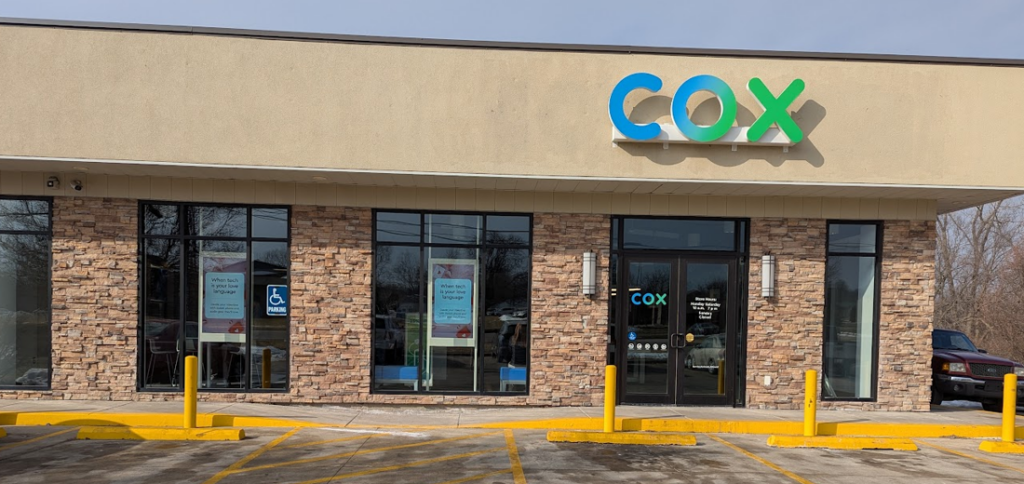
Table of Contents

