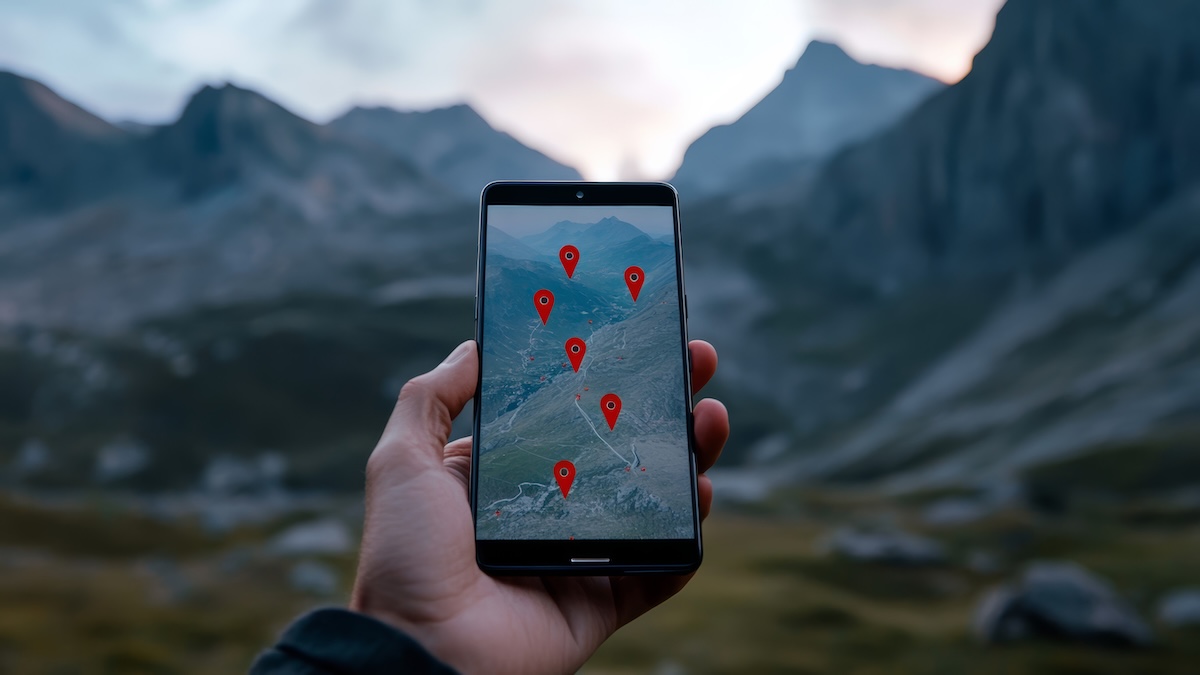
Positioning, navigation, and timing (PNT) powers much of the modern world — yet remains invisible
If you’ve used a navigation system, you’ve likely noticed that it pulls information across three dimensions — position, navigation, and time. It tells you where an object is, if it’s moving or static, and the exact time when those attributes apply. This is called positioning, navigation, and timing or PNT.
From telecommunication to transportation, energy to agriculture, most modern industries rely on PNT for day to day operations. PNT services work through satellite constellations, gathering and streaming data to enabled applications, such as global positioning systems (GPSs), weather apps, shipment trackers, etc., which facilitate global supply lines, electricity supply, emergency services, and other critical operations.
Building blocks
PNT has three pillars: positioning, which is the process of determining the exact location of an object; navigation or tracking and controlling its movement path; and time synchronization or the ability to acquire the precise time.
The PNT satellites that pick up data about the object or user location make one half of the system. The other half is made up of ground-based assets that work in conjunction with the satellites to fill gaps in coverage.
Here’s how it works. Satellite signals are inherently weak and vulnerable to interceptions. So it needs to be supported by complementary technologies for higher accuracy, resiliency, and service continuity. These include: ground stations and augmentation systems that enhance the accuracy and reliability of the satellite data; navigation systems that track objects’ speed, coordinates, and orientation; and atomic clocks for time signal synchronization that allows receivers to correctly determine the location of an object at a given time.
Applications in real world
PNT services are ubiquitous in our modern-day life. They are what synchronize telephone calls, provide commuters directions from one place to another, and timestamp financial transactions. Here are some prime PNT use cases that we see today.
- PNT primarily powers the navigation systems in cars, railways, aircrafts, drones, and ships. These systems use PNT services to transmit location data, ensuring safe and timely navigation.
- Telecom is another essential sector that relies heavily on PNT. The service is used to sync up network signals with fixed base stations to establish connectivity.
- The agriculture industry is increasingly adopting PNT technologies like GPS and GNSS (Global Navigation Satellite System) to enable smart farming. Smart farming, at its heart, relies on centimeter-level precision, which only PNT systems can deliver. In the recent years, PNT has elevated farming practices with automated and accurate data on weather conditions, machinery, and soil quality, leading to improved yield, reduced waste, and enhanced weather resilience of crops.
- PNT also forms the backbone of military communication and defense guidance. At the Precision Navigation and Timing Conference in Sydney, Lieutenant General Susan Coyle of the Australian Defense Force, highlighted the service’s growing importance: “PNT isn’t a subsystem. It is the invisible connective tissue that allows our joint, integrated, all-domain force to function. Without assured PNT, tempo slows, precision degrades and synchronisation fails.”
- PNT also plays an outsize role in optimizing infrastructure and resource management in smart cities. The technology has found expansive use in city planning, infrastructure monitoring, and power and water usage optimization, among other things.
- A critical utility in finance, PNT ensures precision through time-stamping that is required to trace, sync, and secure high-speed transactions and records. That time precision is an essential precondition for ensuring protection and compliance in financial systems.
Resilient PNT for economic and national security
Two common complaints about traditional PNT systems like GPS and GNSS you’d often hear is that they do not work very well indoors — and that they are vulnerable to spoofing and jamming.
Bad actors have used GPS interference to carry out small manipulations, like disabling equipment or appliances to big events, like disrupting global transportation and seizing control of defense systems in war zones. This is in part because awareness is out of step with adoption, and attack mechanisms are poorly understood.
In recent years, rising cases of GPS interference have heightened concerns about the safety of critical national infrastructures, driving a push for resilient PNT. Resilient PNT architectures and systems are designed to withstand, mitigate, and recover from jamming and spoofing incidents without extended downtimes. Going forward, these systems will play a central role in ensuring security of critical infrastructure across aviation, defense, and finance.
The industry is joined in its effort by organizations like the National Institute of Standards and Technology (NIST) and U.S. Department of Homeland Security (DHS) that have hammered out frameworks to protect critical infrastructure from PNT interference.
During the Trump administration’s first term, an executive order issued in 2020 warned against the possible risks from PNT disruption.
It said, “the disruption or manipulation of these services has the potential to adversely affect the national and economic security of the United States. To strengthen national resilience, the Federal Government must foster the responsible use of PNT services by critical infrastructure owners and operators.”
Now considered an integral piece of the Golden Dome project, securing the PNT ecosystem has become a federal priority.
Federal Communications Commission (FCC) chairperson, Brendan Carr, in a recent notice, urged stakeholders to develop new and resilient PNT solutions to up-level protection.
Side by side, the EU Agency for the Space Programme as well as several other industry bodies worldwide are advocating for adoption of protective technologies and responsible use of PNT to help safeguard the ecosystem.
Conclusion
Today, PNT underpins critical infrastructures from emergency response to power grid operations. Future-proofing it is a priority to safeguard against catastrophic compromises. As Dana Goward, founder of a charity called Resilient Navigation and Timing Foundation, says, the world will plunge into chaos if the GPS system has a blackout. The ripples will be felt across all areas, but it will hit transportation first. And the first shockwaves will be felt with increased traffic jams and road accidents.