

RCR Wireless
  • News
  • Channels
    • 5G
    • 6G
    • BSS OSS
    • Carriers
    • IoT
    • Network Infrastructure
    • Open RAN
    • Private 5G
    • Telco AI
    • Telco Cloud
    • Test & Measurement
  • Resources
    • Reports
    • Webinars
    • White papers
    • AI Fundamentals
    • Analyst Angle
    • Editorial Calendar
    • Fundamentals
      • 5G NR Release 17
      • AI
        • Telco AI in 2025
    • Podcasts
      • Let’s Get Digital with Carrie Charles
      • Wireless Connectivity to Enable Industry 4.0 for the Middleprise
      • Well Technically…
      • Will 5G Change the World
      • Accelerating Industry 4.0 Digitalization
  • AI Infrastructure
  • Programs
  • Events
  • RCRtv
  • Advertise
  • Subscribe
Saturday, July 4, 2026
RCR Wireless
  • News
  • Channels
    • 5G
    • 6G
    • BSS OSS
    • Carriers
    • IoT
    • Network Infrastructure
    • Open RAN
    • Private 5G
    • Telco AI
    • Telco Cloud
    • Test & Measurement
  • Resources
    • Reports
    • Webinars
    • White papers
    • AI Fundamentals
    • Analyst Angle
    • Editorial Calendar
    • Fundamentals
      • 5G NR Release 17
      • AI
        • Telco AI in 2025
    • Podcasts
      • Let’s Get Digital with Carrie Charles
      • Wireless Connectivity to Enable Industry 4.0 for the Middleprise
      • Well Technically…
      • Will 5G Change the World
      • Accelerating Industry 4.0 Digitalization
  • AI Infrastructure
  • Programs
  • Events
  • RCRtv
  • Advertise
  • Subscribe
Add RCR Wireless as a preferred source on Google
  • Qualcomm 6G Insights
  • Huawei Content Hub
  • Qualcomm – 6G Vision
  • OSS/BSS Channel
RCR Wireless
RCR Wireless
  • Advanced Mimo
  • Mobile mmWave
  • 5G Positioning
  • Green Networks
  • Metaverse
  • Automotive
  • Industrial and Wide-area IoT
Copyright 2021 - All Right Reserved
Home - Four key challenges for autonomous public transport in smart cities
Fundamentals

Four key challenges for autonomous public transport in smart cities

by James Blackman September 27, 2024
written by James Blackman September 27, 2024 Share
LinkedinEmail
Share 0LinkedinEmail
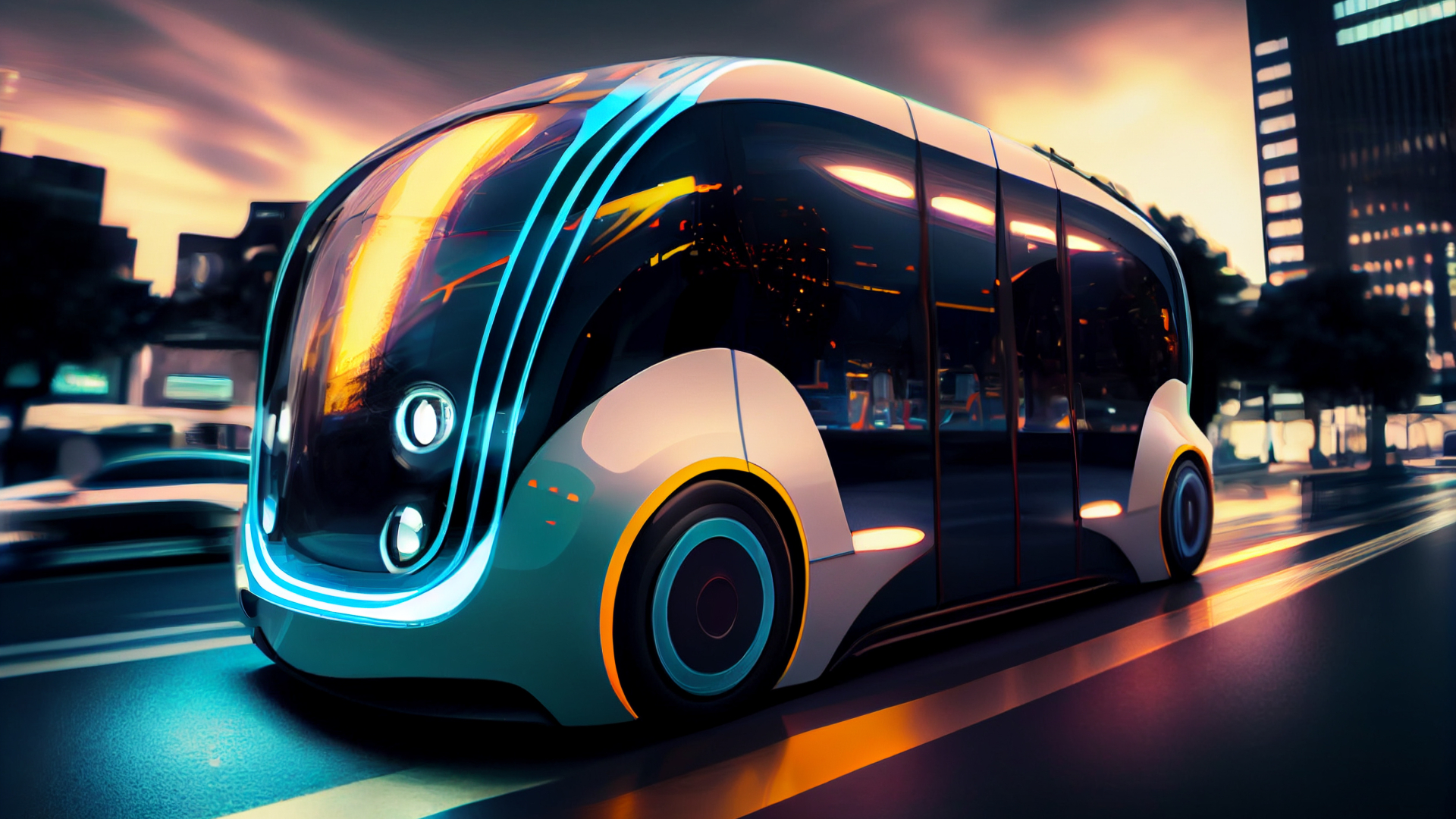
Image: 123rf
235

An interesting press note across the news desk today from UK technology research group IDTechEx, which explores the continuing challenges to establish a coherent model for the global rollout of autonomous buses and robo-shuttles – that classic smart-city staple to redesign urban mobility with futuristic transport solutions. In the end, the crux of it is to convince governments to facilitate pilots and investors to scale them. Which is about the viability of the model in the first place, but also the vision and will of authorities to untangle all the red tape.  

There were “once” over 50 “players” in the market, variously developing autonomous bus and robo-shuttles and teasing a “public transport revolution”, reckons IDTechEx. But commercial services have been slow to materialise and the number of providers has since declined, with the whole market “falling short of industry expectations”, it says. “Large-scale commercial testing has not been achieved,” writes Shihao Fu, analyst at IDTechEx, even as progressive “near-commercial” government-supported initiatives in Singapore, France, China, and South Korea show the way. 

The full report from IDTechEx is available here; but here is a summary of some of its findings and recommendations about the extant challenges that face autonomous buses and robo-shuttles – if they are to deliver on their promise of “significant” cost and labour reductions for operators, and a broader view of smart-city sustainability. The quotes are from Fu, as indicated; the summary format and bullets are by RCR Wireless.

1 | The sheer complexity of urban transport

So here is the start-point, and the eternal challenge with public transport systems: how to overcome the complexities of urban sprawl, where cities have developed over centuries, and are reliant on varied and sometimes-antiquated road infrastructure. IDTechEx writes: “Roboshuttles need to overcome the uncertainties posed by dynamic routes and the performance challenges of navigating narrow urban streets. Testing in such areas, closer to residential zones, means these vehicles will be under greater public scrutiny.”

New mobility solutions – especially autonomous ones operating in busy environments – must gain public trust, clearly. “Buses face the challenge of maintaining relatively high speeds while ensuring the safety of dozens of passengers, which is crucial for public trust,” says IDTechEx. Which only comes with tests and proofs – which require national and local government support. Which in the end, as with all large-scale smart-city initiatives, is the killer factor; the technology has to be proven, the model has to be proven, and the authorities have to be willing.

2 | The ultimate proof of commercial viability

Some companies have successfully navigated the complexities surrounding autonomous buses and roboshuttles, securing government permits for testing, notes IDTechEx. As above, it cites “near-commercialization testing” – sometimes with real passengers, sometimes on ‘real’ streets – in Singapore, France, China, and South Korea. The market has a decade, the firm suggests, to prove its commercial viability to attract continued investment and backing, and to be endorsed ultimately as a legitimate option for mass urban transportation.

3 | The hard pursuit of government support

Mentioned already, the biggest challenge for new smart-city mobility providers is to gain municipal support – in terms of permits and red tape, collaboration and investment, and just in terms of pure vision. There are precedents, says IDTechEx: “proactive policies” in Shenzhen, Beijing, and Shanghai in China, included major investments in smart traffic signals and precision maps; “legal frameworks” in California, Florida, and Arizona in the US to outline rules on testing, safety, and liability; and legal frameworks and public-private funding in the UK for testing and deployment of autonomous transport solutions.

There are a couple of highlights, perhaps: Shenzhen in China has already launched commercial autonomous bus services, notes IDTechEx; the federal government in the US is working on nationwide standards to regulate autonomous vehicle technology; the autonomous bus route across the Forth Road Bridge in the UK is described as a “testament to the practical application of this technology”; designated specific zones have been designed in Singapore for testing autonomous buses and robo-shuttles. There is progress – is the point; but it only happens with enlightened and committed government intervention. 

To flip-flop a concluding paragraph in the press note, IDTechEx writes that “results indicate strong potential for these solutions to transform public and industrial transportation sectors”, but that “key challenges… include the need for regulatory approvals and the readiness of infrastructure, particularly for remote operations on public roads.” Which says it all.

4 | The long-term value of short-terms gains

IDTechEx identifies two short-term commercial solutions to get the autonomous bus industry moving. These are to replace high-cost tram and light rail systems with autonomous buses, and to offer 24/7 autonomous bus services in industrial parks. The calculations with these proposals is that autonomous buses offer infrastructure savings of 50-80 percent compared with urban rolling stock, and that industrial parks are the perfect playgrounds, especially combined with charging solutions, to develop and cement new autonomous bus services.

It writes: “By eliminating the need for complex rail networks and replacing them with autonomous buses, cities can achieve a more flexible and cost-efficient public transport system… Industrial parks benefit from controlled environments, allowing autonomous buses to operate without human intervention.” It cites work in Norway (FusionProcessing project) to cover 75,000 kilometres of industrial parkland with autonomous shuttles, to carry 27,000 passengers. “The long-term vision [is for] fully remote operations without onboard safety drivers by 2028,” it writes.

The point is to focus on valuable urban point solutions for new autonomous mobility projects – to challenge the case for new rail infrastructure deployments, and to make a play for transit operations in self-contained, modern, and manageable out-of-town developments – in order to fast-track the business model, and accelerate rollout in broader geographies.


You Might Also Like
  • What is AI-RRM in Wi-Fi 7?
  • Why Wi-Fi 7 strengthens Wi-Fi/5G convergence
  • Three reasons 2026 is Wi-Fi 7’s breakout year, according to Cisco
  • What is unequal modulation (UEQM) in Wi-Fi 8?
  • What is VoWiFi — and why are operators still investing in Wi-Fi calling?
  • FR3 explained — why it matters in Release 18
Share 0 LinkedinEmail
James Blackman
James Blackman

James Blackman has been writing about the technology and telecoms sectors for over a decade. He has edited and contributed to a number of European news outlets and trade titles. He has also worked at telecoms company Huawei, leading media activity for its devices business in Western Europe. He is based in London.

previous post
How is T-Mobile US using data and AI for intent-based CX
next post
What is the role of BSS evolution in 5G monetization?

White Papers

  • CSG White Paper: Telco AI Enabler: Mediation’s Defining Role

  • Enea White Paper: Scalable Database Design for 5G and Beyond

  • Supermicro and NVIDIA Whitepaper: Powering sovereign AI at scale

  • VIAVI Whitepaper: RAN scenario generators and their critical role for future-proofing AI-native RAN in Advanced 5G and 6G networks

  • Emerson/NI White Paper: 2026 Technology Trends Impacting the Wireless Communications Industry

Editorial Reports

  • Report: Scaling Optical Networks For The Hyperscale And AI Era

  • Test And Measurement Market Pulse Report

  • Editorial Report: Securing telecom infrastructure for the quantum era

Webinars

  • Webinar: Rethinking the RAN as AI, cloud and openness converge

  • Webinar: Scale-Up, Scale-Out, Scale-Across – Building AI-Era Network Fabrics

  • Webinar: NTN in motion – evolving standards, expanding services

  • Webinar: Noise-Figure Measurements with RFmx and PXI VSTs

  • Qualcomm Webinar – Building the 6G Standard: Key developments to know

Since 1982, RCR Wireless News has been providing wireless and mobile industry news, insights, and analysis to mobile and wireless industry professionals, decision makers, policy makers, analysts and investors.

Facebook Twitter Youtube Linkedin Envelope Rss

Useful Links

  • Subscribe
  • About RCR Wireless News
  • Contact Us
  • Advertise
  • Editorial Calendar
  • Archive
  • RSS
  • Wireless News Archive
  • Subscribe
  • About RCR Wireless News
  • Contact Us
  • Advertise
  • Editorial Calendar
  • Archive
  • RSS
  • Wireless News Archive

Edtior's Picks

Samsung’s AI RAN optimizer boosts KDDI 5G speeds up to 52% in live...
Indosat outlines AI Grid vision as 5G modernization targets nationwide AI-ready network
Wednesday | Telco agents and smash hits (Editorial Diary)

Latest Articles

Samsung’s AI RAN optimizer boosts KDDI 5G speeds up to 52% in live trial
Indosat outlines AI Grid vision as 5G modernization targets nationwide AI-ready network
Wednesday | Telco agents and smash hits (Editorial Diary)
Trust you can see – the convergence of voice, messaging, and identity (Reader Forum)

© 2026 RCR Wireless News All Right Reserved. Developed by Eight Hats.

Cookie Policy | Privacy Policy

RCR Wireless
  • News
  • Channels
    • 5G
    • 6G
    • BSS OSS
    • Carriers
    • IoT
    • Network Infrastructure
    • Open RAN
    • Private 5G
    • Telco AI
    • Telco Cloud
    • Test & Measurement
  • Resources
    • Reports
    • Webinars
    • White papers
    • AI Fundamentals
    • Analyst Angle
    • Editorial Calendar
    • Fundamentals
      • 5G NR Release 17
      • AI
        • Telco AI in 2025
    • Podcasts
      • Let’s Get Digital with Carrie Charles
      • Wireless Connectivity to Enable Industry 4.0 for the Middleprise
      • Well Technically…
      • Will 5G Change the World
      • Accelerating Industry 4.0 Digitalization
  • AI Infrastructure
  • Programs
  • Events
  • RCRtv
  • Advertise
  • Subscribe
RCR Wireless
  • News
  • Channels
    • 5G
    • 6G
    • BSS OSS
    • Carriers
    • IoT
    • Network Infrastructure
    • Open RAN
    • Private 5G
    • Telco AI
    • Telco Cloud
    • Test & Measurement
  • Resources
    • Reports
    • Webinars
    • White papers
    • AI Fundamentals
    • Analyst Angle
    • Editorial Calendar
    • Fundamentals
      • 5G NR Release 17
      • AI
        • Telco AI in 2025
    • Podcasts
      • Let’s Get Digital with Carrie Charles
      • Wireless Connectivity to Enable Industry 4.0 for the Middleprise
      • Well Technically…
      • Will 5G Change the World
      • Accelerating Industry 4.0 Digitalization
  • AI Infrastructure
  • Programs
  • Events
  • RCRtv
  • Advertise
  • Subscribe
@2020 - All Right Reserved. Designed and Developed by PenciDesign