

RCR Wireless
  • News
  • Channels
    • 5G
    • 6G
    • BSS OSS
    • Carriers
    • IoT
    • Network Infrastructure
    • Open RAN
    • Private 5G
    • Telco AI
    • Telco Cloud
    • Test & Measurement
  • Resources
    • Reports
    • Webinars
    • White papers
    • AI Fundamentals
    • Analyst Angle
    • Editorial Calendar
    • Fundamentals
      • 5G NR Release 17
      • AI
        • Telco AI in 2025
    • Podcasts
      • Let’s Get Digital with Carrie Charles
      • Wireless Connectivity to Enable Industry 4.0 for the Middleprise
      • Well Technically…
      • Will 5G Change the World
      • Accelerating Industry 4.0 Digitalization
  • AI Infrastructure
  • Programs
  • Events
  • RCRtv
  • Advertise
  • Subscribe
Sunday, August 2, 2026
RCR Wireless
  • News
  • Channels
    • 5G
    • 6G
    • BSS OSS
    • Carriers
    • IoT
    • Network Infrastructure
    • Open RAN
    • Private 5G
    • Telco AI
    • Telco Cloud
    • Test & Measurement
  • Resources
    • Reports
    • Webinars
    • White papers
    • AI Fundamentals
    • Analyst Angle
    • Editorial Calendar
    • Fundamentals
      • 5G NR Release 17
      • AI
        • Telco AI in 2025
    • Podcasts
      • Let’s Get Digital with Carrie Charles
      • Wireless Connectivity to Enable Industry 4.0 for the Middleprise
      • Well Technically…
      • Will 5G Change the World
      • Accelerating Industry 4.0 Digitalization
  • AI Infrastructure
  • Programs
  • Events
  • RCRtv
  • Advertise
  • Subscribe
Add RCR Wireless as a preferred source on Google
  • Qualcomm 6G Insights
  • Huawei Content Hub
  • Qualcomm – 6G Vision
  • OSS/BSS Channel
  • RCRTech Roundtable: AI Infrastructure
RCR Wireless
RCR Wireless
  • Advanced Mimo
  • Mobile mmWave
  • 5G Positioning
  • Green Networks
  • Metaverse
  • Automotive
  • Industrial and Wide-area IoT
Copyright 2021 - All Right Reserved
Home - In-line vs. look-aside acceleration for Open RAN silicon
Open RANNetwork Infrastructure

In-line vs. look-aside acceleration for Open RAN silicon

by RCR Wireless News and Picocom (Sponsored) August 3, 2023
written by RCR Wireless News and Picocom (Sponsored) August 3, 2023 Share
LinkedinEmail
Share 0LinkedinEmail
236

Getting Open RAN acceleration right directly impacts network monetization opportunities

As the Open RAN market continues to mature and evolve, there’s a growing debate around whether in-line or look-aside acceleration is better-suited for lower layer processing.

The main difference between these two approaches is that in look-aside acceleration, only selected functions are sent to an accelerator card and then back to the CPU, while in in-line acceleration parts of or the whole data flow and functions are sent through the accelerator.

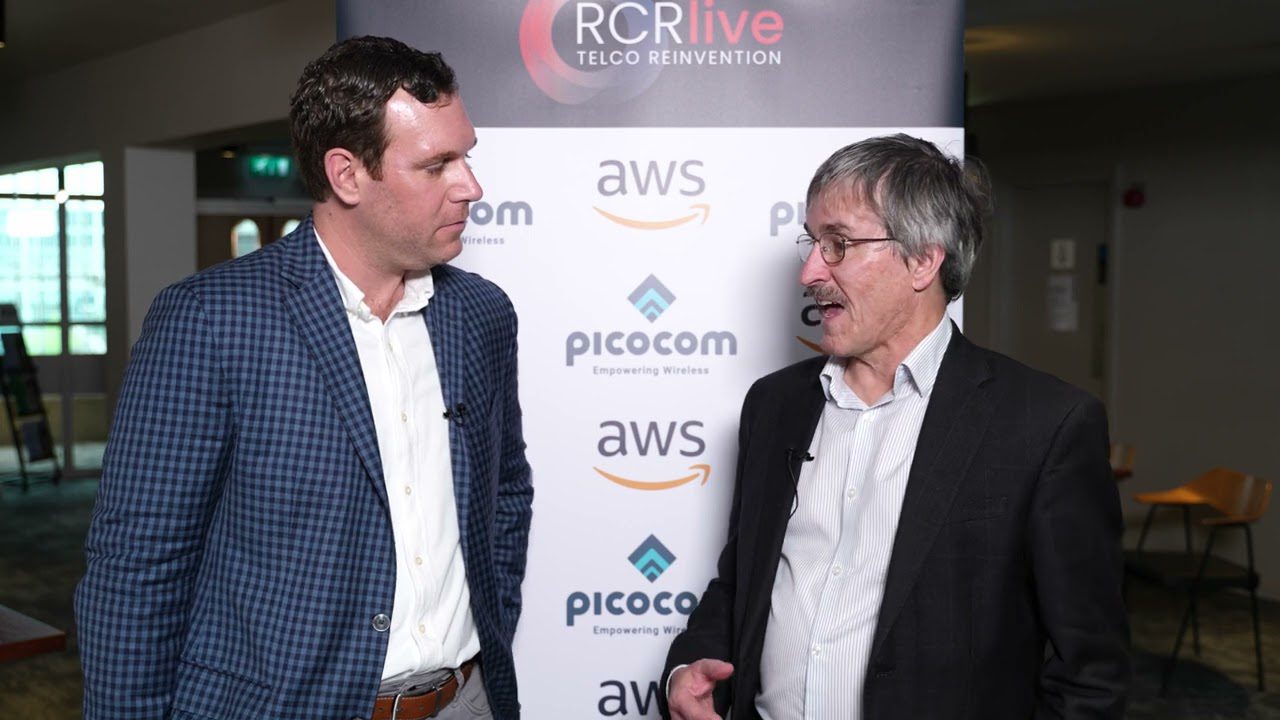
Picocom President Peter Claydon weighed in on the debate and tied Picocom’s preference, indeed the preference of many companies involved in the space, for in-line acceleration as it bring positive dynamics to the performance and power consumption of Open RAN systems. 

According to Claydon, in-line acceleration is the best option for Layer 1 processing. “There were two camps here really. There’s Intel and basically everyone else, which includes Picocom, Qualcomm, Marvel and NVIDIA. So Intel wants to implement as much of the PHY [Layer 1] as possible on their processors. In fact, they designed processors with specific acceleration in the process of instruction set for Open RAN. They’ve also got a new processor with multiple chips on the same package which they’ve taken the acceleration function and put it in there,” Claydon said during an interview with RCR Wireless News during the RCR Live: Telco Reinvention event which took place in London on April 25. 

“Now, Intel’s problem is that they can’t do everything in software and their processors so they want to have this look-aside acceleration model. Other people design the entire PHY on their own chips, so hence, it’s a completely separate thing and none of it is implemented on the x86 processor,” Claydon added.

“Intel starts off saying that because it’s standard hardware it’s going to be cheaper, but what they ignore is the fact that the amount of silicon area you have, it controls the cost and the power generating and silicon basically cost $200 billion per square mile. And so if you have a bigger chip, it’s more expensive and Intel’s chips are enormous and you can implement the same function optimally on something that’s far smaller, as other people do. Hence you’re going to reduce the cost and you’re going to reduce the power dissipation. What happened in the early days of Open RAN is those optimized chips didn’t exist. Now they do, so the equation has changed,” he added.

In terms of the feedback Picocom is hearing from OEMs and their operator customers, Claydon said, “everyone is probably going to move towards in-line acceleration.”

When asked what needs to happen to return operators to growth and profitability, Claydon noted that this process will take a long time, adding that Open RAN will play a role in this process.  “I think Open RAN is an ingredient there. I think that’s going to open-up the market to more players from our perspective as a vendor…They’re going to have a mixture of different types of equipment, more of a mix and match, and that’s going to help them increase performance in their network and reduce their costs.”


You Might Also Like
  • Building the AI backbone, waiting on the AI billions
  • Thursday (telco diary) | Vodafone resets, AT&T reloads
  • Wednesday (telco diary) | Orange leads Euro telco revival
  • The 6G AI uplink panic (Analyst Angle)
  • Tuesday (telco diary) | D2D in 3D – Amazon appeals to telcos
  • Network agents are “ready” for commercial use, but are telcos? (Analyst Angle)
Share 0 LinkedinEmail
RCR Wireless News and Picocom (Sponsored)

previous post
Re-shoring and near-shoring will drive smarter manufacturing (Reader Forum)
next post
Kagan: Cable TV must create next sticky bundle to fight cord-cutting

White Papers

  • Norton eBook: The 2026 Telco Playbook

  • Enea White Paper: Why Intelligent AAA is the Swiss Army Knife of Telecom

  • CSG White Paper: Telco AI Enabler: Mediation’s Defining Role

  • Enea White Paper: Scalable Database Design for 5G and Beyond

  • Supermicro and NVIDIA Whitepaper: Powering sovereign AI at scale

Editorial Reports

  • Market Pulse Report: Telco AI in 2026 – Trends, Challenges and Opportunities

  • Nvidia Report: The State of AI in Telecommunications: 2026 Trends

  • Report: Scaling Optical Networks For The Hyperscale And AI Era

Webinars

  • Webinar: Building 6G — aligning technology, policy and purpose

  • SIMCom Webinar: Scaling your next deployment – from plastic to provisioning

  • Webinar: Rethinking the RAN as AI, cloud and openness converge

  • Webinar: Scale-Up, Scale-Out, Scale-Across – Building AI-Era Network Fabrics

  • Webinar: NTN in motion – evolving standards, expanding services

Since 1982, RCR Wireless News has been providing wireless and mobile industry news, insights, and analysis to mobile and wireless industry professionals, decision makers, policy makers, analysts and investors.

Facebook Twitter Youtube Linkedin Envelope Rss

Useful Links

  • Subscribe
  • About RCR Wireless News
  • Contact Us
  • Advertise
  • Editorial Calendar
  • Archive
  • RSS
  • Wireless News Archive
  • Subscribe
  • About RCR Wireless News
  • Contact Us
  • Advertise
  • Editorial Calendar
  • Archive
  • RSS
  • Wireless News Archive

Edtior's Picks

Building the AI backbone, waiting on the AI billions
Ensuring colocation success by eliminating network observability blind spots (Reader Forum)
Thursday (telco diary) | Vodafone resets, AT&T reloads

Latest Articles

Building the AI backbone, waiting on the AI billions
Ensuring colocation success by eliminating network observability blind spots (Reader Forum)
Thursday (telco diary) | Vodafone resets, AT&T reloads
SK Telecom’s A.X K2 is South Korea’s biggest bet yet on sovereign AI

© 2026 RCR Wireless News All Right Reserved. Developed by Eight Hats.

Cookie Policy | Privacy Policy

RCR Wireless
  • News
  • Channels
    • 5G
    • 6G
    • BSS OSS
    • Carriers
    • IoT
    • Network Infrastructure
    • Open RAN
    • Private 5G
    • Telco AI
    • Telco Cloud
    • Test & Measurement
  • Resources
    • Reports
    • Webinars
    • White papers
    • AI Fundamentals
    • Analyst Angle
    • Editorial Calendar
    • Fundamentals
      • 5G NR Release 17
      • AI
        • Telco AI in 2025
    • Podcasts
      • Let’s Get Digital with Carrie Charles
      • Wireless Connectivity to Enable Industry 4.0 for the Middleprise
      • Well Technically…
      • Will 5G Change the World
      • Accelerating Industry 4.0 Digitalization
  • AI Infrastructure
  • Programs
  • Events
  • RCRtv
  • Advertise
  • Subscribe
RCR Wireless
  • News
  • Channels
    • 5G
    • 6G
    • BSS OSS
    • Carriers
    • IoT
    • Network Infrastructure
    • Open RAN
    • Private 5G
    • Telco AI
    • Telco Cloud
    • Test & Measurement
  • Resources
    • Reports
    • Webinars
    • White papers
    • AI Fundamentals
    • Analyst Angle
    • Editorial Calendar
    • Fundamentals
      • 5G NR Release 17
      • AI
        • Telco AI in 2025
    • Podcasts
      • Let’s Get Digital with Carrie Charles
      • Wireless Connectivity to Enable Industry 4.0 for the Middleprise
      • Well Technically…
      • Will 5G Change the World
      • Accelerating Industry 4.0 Digitalization
  • AI Infrastructure
  • Programs
  • Events
  • RCRtv
  • Advertise
  • Subscribe
@2020 - All Right Reserved. Designed and Developed by PenciDesign