

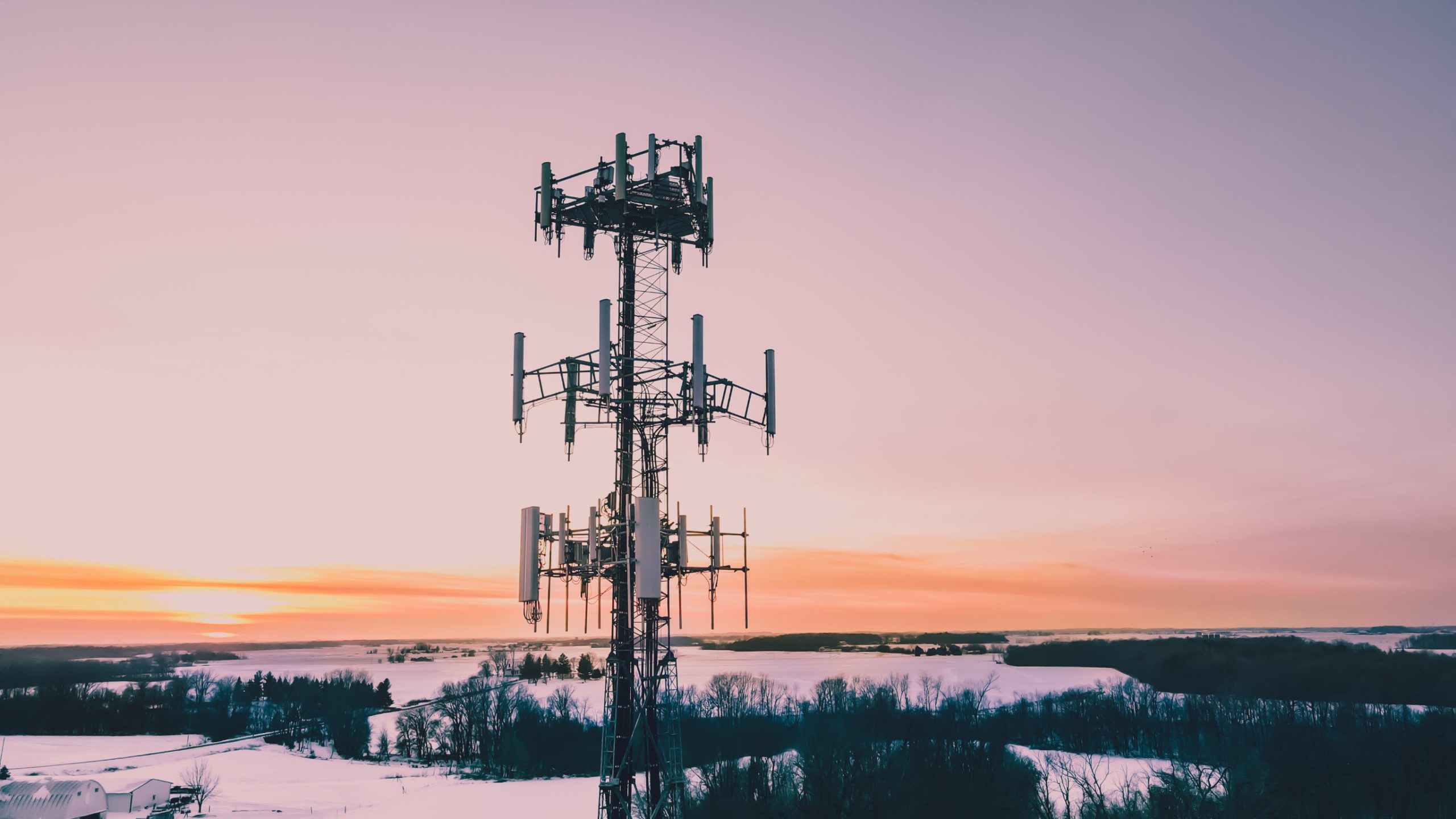
For Communication Service Providers (CSPs), the mobile network must ensure ubiquitous coverage and provide the necessary capacity to its users. Base station (BTS) antennas are more than just “components of the network” that connect the end users “to” the mobile network. All cellular traffic goes through the BTS antennas. As a result, the performance of the BTS antenna has a very material impact on the overall experience of the mobile network. As the diversity and data throughput requirements of applications continues to expand, the data throughput and quality of experience will be highly dependent on the base station antennas. Furthermore, CSPs are facing demands to adopt green and sustainable practices, where antennas can make a substantial contribution.
Evolving from 2D to 3D will be an essential enabler
To cater for the growing demand on the networks, base station antennas once again face a new set of challenges which sets the development pathway for the next decade. With more data-intensive applications and heterogeneous end user demands, CSPs will need to continue maximizing their network performance and deploy the best equipment for their mobile networks.
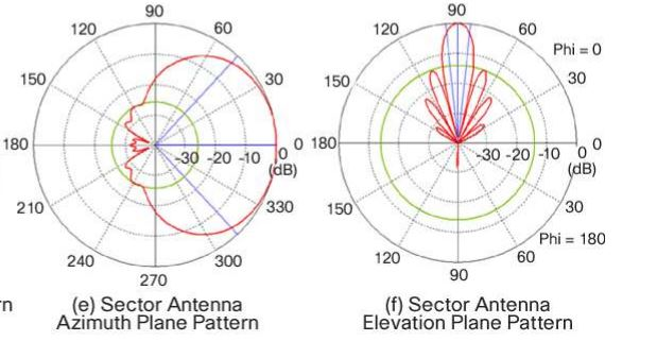
For BTS antennas, the move from analyzing the antenna’s “2D radiation patterns” to “3D radiation patterns” will allow the CSP to evaluate antenna performance more comprehensively. The advancement of test equipment and computational technologies has enabled the industry to generate 3D patterns which was previously costly and difficult to obtain.
Figure 1: A 2D Radiation Pattern Generated by a Cellular Sector Antenna
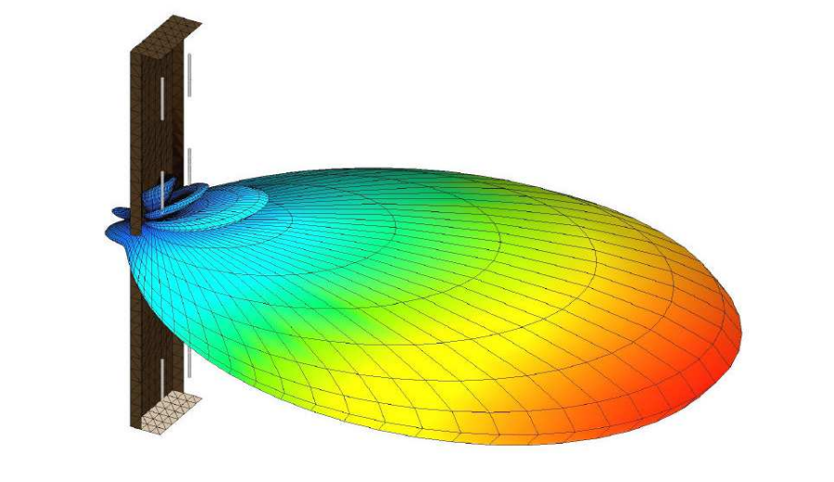
The 3D radiation pattern provides more in-depth information about the performance of a base station antenna. The 3D radiation pattern also provides additional information such as RF efficiency, coverage efficiency, interference indicators, beamforming efficiency, among many others.
Figure 2: A 3D Radiation Pattern Generated by a Cellular Antenna
Maximizing network performance
To maximize network performance, CSPs need to ensure their choice of base station antennas meets their deployment needs. The depth and granularity of data provided by the 3D radiation pattern will enable CSPs to better evaluate the performance of base station antennas. This will ensure the optimal equipment investment is made that meets the needs of the deployment scenario (e.g., covering highway vs covering a static residential area). Another key impact which is brought forth by 3D radiation pattern is in the RF planning department. 3D radiation pattern can help RF planners to better plan, deploy and configure the deployment of base station antennas for their mobile network. For example, with a 3D radiation pattern, an RF planner has a better understanding of the RF signal energy distribution emanating from an antenna and thereby allow the operator to know confidently that the RF signal energy is delivered to where is required.
The mobile network sites typically evolve alongside the changing demands on the network and deliver upon the overall performance. This means that CSPs will need to add new sites for its mobile network to meet both coverage and capacity constraints. With new sites deployed, CSPs will need to reexamine the optimization achieved for existing sites. For example, the angle and direction of the RF beams from both new and existing sites could overlap thus resulting in degraded performance. Therefore, antennas will need to have the ability to adapt to the changing environment they are deployed in. This will allow CSPs to optimize the coverage of base station antennas and thus ensure the network performance is fully realized. This could be in the form of implementing an antenna with horizontal beam, and/or vertical beam characteristics, which can be dynamically adjusted to best suit a particular environment or locale. With such capabilities, RF planners will be able to adapt their mobile networks rapidly and effectively for future as well as scenario-based demands.
Smooth & efficient evolution for the mobile network
The Active-Passive-Antenna platform is one such innovation that is showing rapid innovation. We have observed the evolution from mechanical integration to electronical integration where a single Massive MIMO antenna can be seamlessly integrated into the back of a passive cellular BTS antenna. As capacity demand and performance demand continues to grow at the cell site, the base station antenna will need to make provisions for future Massive MIMO configurations such as 64T64R or even higher. While catering for future demand for Massive MIMOs, the passive base station antennas also need to ensure future upgradability via hardware or software (e.g., incorporating beamforming functionality). With an increasing demand for mobile networks, it has become increasingly important for base station antennas to adopt higher order MIMO configurations. For example, by transitioning from a 4T4R to an 8T8R configuration, it will help to enhance coverage as well as provide better user experience. A perpetual challenge faced by outdoor mobile networks is the ability to provide a sufficient link budget to devices indoors. With an 8T8R antenna, the sensitivity to transmit and receive signals indoors can be more effective.
With new frequency bands as well as new RAN equipment (e.g., Massive MIMO or multiple RRUs), CSPs are constantly faced with the challenges of optimizing their cell sites. Passive base station antennas will play an important role in enabling the steady and necessary future evolution at the cell-site. Given the invaluable role the base-station antenna plays in the network, CSPs should adopt antenna solutions that support a “zero-touch” management approach. Post deployment, passive base station antennas should be able to cope with future changes and upgrades, both in terms of software and hardware. By implementing antennas that support zero touch management, CSPs can reduce the hassle and time/manpower expense of configuring/reconfiguring their passive base station antennas. This can also help CSPs manage their TCO (total cost of ownership) and shorten their TTM (time to market). For example, not having to invest in new passive BTS antennas to meet mobile network or to support new RAN equipment upgrades.
Supporting sustainability
For CSPs, sustainability and operational costs are perennial concerns especially in our current era. Better information, which enables accurate deployment of antennas, can help reduce the energy used to deliver the same performance. This will help CSPs to align their Environmental, Social and Governance (ESG) goals with their efforts to make the network greener and at the same time improve the efficiency & performance of the mobile networks for end users. Analyzing and interpreting the 3D radiation pattern will enable telecom operators to evaluate and optimize the energy efficiency, link budget and coverage characteristics being delivered to the end user devices.
Green initiatives do not only include energy usage. Another key challenge for CSPs lies with “Scope 3 Emissions”. Scope 3 represents the indirect greenhouse gas emissions from a company’s value chain. There are 2 main ways to tackle the environmental impact: (i) reduce the manufacturing and materials impact a product has on the environment; and (ii) prolong the lifespan and usability of a single product. To prolong the lifespan of base station antennas, vendors will need to look deeper into the material science domain to understand and choose the right materials to meet both the sustainability and the performance requirements. The lifespan of base-station antennas can be prolonged by making the antennas more modular and ensure they can deliver greater reconfigurability… thus adapting to new application scenarios.
The 3D radiation pattern, alongside the information which can be obtained, enables new metrics and KPIs to be determined for base station antennas. This also allows base station antennas to better optimize its network performance and its energy utilization. Sustainability is not only a worthy goal in its own right, it can also ensure the RF signal’s energy profile is not excessive or poorly distributed in the cell’s local environment. Delivering the right RF coverage can also reduce power consumption.
Base station antennas, the bedrock of the network
Base station antennas lay at the heart of many discussions about mobile network performance, cost and sustainability. While the overall appearance of the antenna has not changed radically over the past decade, it houses a distinct range of novel innovations. With the increasing demands on the mobile network, CSPs must seek further operational efficiencies in every part of their networks.
All traffic goes through the base station antenna. Therefore, it will have a huge impact on the overall mobile network performance. Sub-optimal antenna selection decisions will slowly cripple the ability of CSPs to meet current and future user expectations and social obligations (i.e., providing ubiquitous connectivity). As antennas vendors continue to push the boundaries of innovation and unlock new network functionalities, CSPs should not forget the importance & value of base station antennas. The mobile network is only as robust as its weakest network asset.
Table of Contents

