

RCR Wireless
  • News
  • Channels
    • 5G
    • 6G
    • BSS OSS
    • Carriers
    • IoT
    • Network Infrastructure
    • Open RAN
    • Private 5G
    • Telco AI
    • Telco Cloud
    • Test & Measurement
  • Resources
    • Reports
    • Webinars
    • White papers
    • AI Fundamentals
    • Analyst Angle
    • Editorial Calendar
    • Fundamentals
      • 5G NR Release 17
      • AI
        • Telco AI in 2025
    • Podcasts
      • Let’s Get Digital with Carrie Charles
      • Wireless Connectivity to Enable Industry 4.0 for the Middleprise
      • Well Technically…
      • Will 5G Change the World
      • Accelerating Industry 4.0 Digitalization
  • AI Infrastructure
  • Programs
  • Events
  • RCRtv
  • Advertise
  • Subscribe
Wednesday, July 22, 2026
RCR Wireless
  • News
  • Channels
    • 5G
    • 6G
    • BSS OSS
    • Carriers
    • IoT
    • Network Infrastructure
    • Open RAN
    • Private 5G
    • Telco AI
    • Telco Cloud
    • Test & Measurement
  • Resources
    • Reports
    • Webinars
    • White papers
    • AI Fundamentals
    • Analyst Angle
    • Editorial Calendar
    • Fundamentals
      • 5G NR Release 17
      • AI
        • Telco AI in 2025
    • Podcasts
      • Let’s Get Digital with Carrie Charles
      • Wireless Connectivity to Enable Industry 4.0 for the Middleprise
      • Well Technically…
      • Will 5G Change the World
      • Accelerating Industry 4.0 Digitalization
  • AI Infrastructure
  • Programs
  • Events
  • RCRtv
  • Advertise
  • Subscribe
Add RCR Wireless as a preferred source on Google
  • Qualcomm 6G Insights
  • Huawei Content Hub
  • Qualcomm – 6G Vision
  • OSS/BSS Channel
  • RCRTech Roundtable: AI Infrastructure
RCR Wireless
RCR Wireless
  • Advanced Mimo
  • Mobile mmWave
  • 5G Positioning
  • Green Networks
  • Metaverse
  • Automotive
  • Industrial and Wide-area IoT
Copyright 2021 - All Right Reserved
Home - Cities deploy Google-made smart-city stickers to build trust in IoT surveillance tech
EnterpriseInternet of Things (IoT)News & Event CoveragePolicySecuritySensorsSmart Cities

Cities deploy Google-made smart-city stickers to build trust in IoT surveillance tech

by James Blackman July 14, 2022
written by James Blackman July 14, 2022 Share
LinkedinEmail
Share 0LinkedinEmail
211

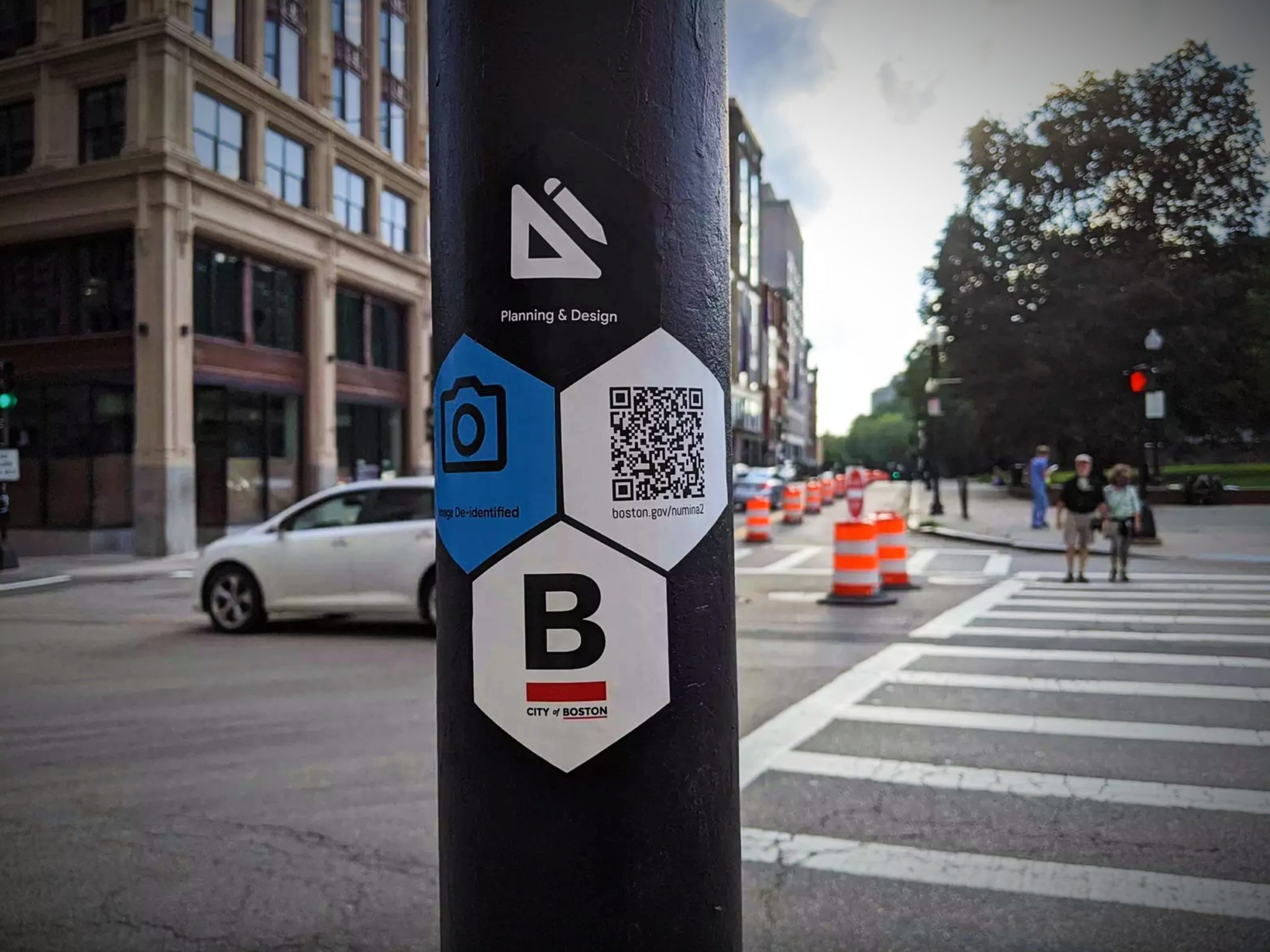
It has taken three years to appear, but four cities (“communities”) are to adopt and test a set of visual icons, originally developed and announced as part of the Google parent-company Alphabet’s Sidewalk Labs project, on smart-connected infrastructure around their streets and neighbourhoods. The initiatives are mainly to build citizen trust in new urban IoT tracking and monitoring gadgetry, and particularly in surveillance and data-capture tech – which risks being, even, vandalised and removed because of a fundamental lack of public faith in smart-city tech.

The Angers-Loire metropolitan region in France, the town of Innisfil in Canada, and the cities of Boston and Washington DC in the US are to deploy the Digital Trust for Places and Routines (DTPR) iconography, designed as a “unified taxonomy and visual language” for smart cities to give techno-agency to residents and visitors, and now offered as an open source initiative.

A statement from the World Economic Forum, which is supporting the DTPR standard via its ‘global action plan’ to “strengthen global governance and innovation of IoT”, said: “DTPR is an initiative that allows the public to understand and interact with smart technologies installed in their cities. At its heart is a taxonomy of digital technologies, a set of visual icons providing visibility and awareness of the technologies installed, and a mechanism for public feedback.”

Sidewalk Labs, which was folded back into Google in 2021 after a run of bad press about privacy concerns and failed projects (notably, in Toronto), released a set of mock-up icons back in 2019 to work like food nutrition labels for emerging digital systems in public spaces. The point was to define and explain the role and accountability of digital solutions being rolled out by public and private authorities in cities, and in the broader public realm.

But the icon set has lived on in the open source DTPR project, as a way to enable anyone moving through a DTPR-badged public space with data-collecting technology to send questions and comments to the “place manager” responsible for it. Angers-Loire, Innisfil, Boston, and Washington DC are the first to sticker their smart infrastructure, and set up enquiry desks to explain about the data being collected in urban spaces.

The World Economic Forum said a “clear gap’ remains between policy and implementation of cities’ stated promises on transparency and citizen engagement. It wrote: “They are missing ready-to-use methodologies and toolsets that increase the legibility of these technologies – rendering transparency unattainable, and residents unable to meaningfully engage in dialogue about public infrastructure.”

The World Economic Forum said findings from initial DTPR research and pilots shows three ways for local governments to build public trust around new tech: by providing an explanation of city technologies; by enabling public feedback on them; and by measuring their effectiveness. Boston has tested the first concept, by placing DTPR-labelled sensors at three road intersections in the city for four weeks in 2020

Apparently, 100-odd people engaged with the Boston signage in the period. Nayeli Rodriguez, from the city’s office of urban mechanics, reflected: “While cities increasingly rely on new technologies and datasets to function and thrive, they and their partners must also take responsibility for promoting a shift in cultural awareness around technology, data and related challenges. This means investing in engaging communication tools and public processes.”

The point about public feedback has been tested by Amnesty International in New York City, working with locals to position new facial recognition tech. The World Economic Forum noted certain installations are more likely to raise hackles, and more important to consult on. “Surveillance tech can create a rift between communities, businesses and governments. [which] can potentially damage public trust,” it said.

It said a failure to engage citizens can also lead to vandalism of new tech gadgetry, and its eventual removal, even if it is designed for public safety. It said: “If local governments don’t proactively disclose details about technology they’ve implemented and the data it collects, residents will find ways to learn about what is happening in their city on their own terms.”

Meanwhile, the evaluation phase is important to prove the technology to the public, and ease the relationship further. “When smart city projects do use metrics, they often have a limited technology- or sector-specific focus, neglecting community benefits and impacts,” it said, referencing a NIST project on smart-city KPIs. “Without proper data, metrics and input, cities will have trouble managing and maintaining trust in the use of these technologies over time.”


You Might Also Like
  • The most expensive wireless system is the one you install twice (Reader Forum)
  • Monday (telco diary) | Sovereign AI for Industry 4.0
  • When the push becomes the pull – private 5G and physical AI
  • Subsea shift – ITU and FCC redraw rules for global cable resilience
  • Fast-growing private 5G offers blueprint for AI-era telecoms
  • Wednesday (telco diary) | What telcos want – and why they wait
Share 0 LinkedinEmail
James Blackman
James Blackman

James Blackman has been writing about the technology and telecoms sectors for over a decade. He has edited and contributed to a number of European news outlets and trade titles. He has also worked at telecoms company Huawei, leading media activity for its devices business in Western Europe. He is based in London.

previous post
#TBT: Lucent lands Verizon EV-DO network contract; Operators eye EDGE; Nokia mid-aughts tech strategy … this week in 2004
next post
Will fixed wireless access drive near-term mmWave monetizaton?

White Papers

  • Norton eBook: The 2026 Telco Playbook

  • Enea White Paper: Why Intelligent AAA is the Swiss Army Knife of Telecom

  • CSG White Paper: Telco AI Enabler: Mediation’s Defining Role

  • Enea White Paper: Scalable Database Design for 5G and Beyond

  • Supermicro and NVIDIA Whitepaper: Powering sovereign AI at scale

Editorial Reports

  • Nvidia Report: The State of AI in Telecommunications: 2026 Trends

  • Report: Scaling Optical Networks For The Hyperscale And AI Era

  • Test And Measurement Market Pulse Report

Webinars

  • Webinar: Building 6G — aligning technology, policy and purpose

  • SIMCom Webinar: Scaling your next deployment – from plastic to provisioning

  • Webinar: Rethinking the RAN as AI, cloud and openness converge

  • Webinar: Scale-Up, Scale-Out, Scale-Across – Building AI-Era Network Fabrics

  • Webinar: NTN in motion – evolving standards, expanding services

Since 1982, RCR Wireless News has been providing wireless and mobile industry news, insights, and analysis to mobile and wireless industry professionals, decision makers, policy makers, analysts and investors.

Facebook Twitter Youtube Linkedin Envelope Rss

Useful Links

  • Subscribe
  • About RCR Wireless News
  • Contact Us
  • Advertise
  • Editorial Calendar
  • Archive
  • RSS
  • Wireless News Archive
  • Subscribe
  • About RCR Wireless News
  • Contact Us
  • Advertise
  • Editorial Calendar
  • Archive
  • RSS
  • Wireless News Archive

Edtior's Picks

South Korea launches AI-RAN project to advance industrial AI
Tuesday (telco diary) | Telco agents and outcomes
AT&T’s bets on “best tech” (fiber) pay off with record adds, improving margins 

Latest Articles

South Korea launches AI-RAN project to advance industrial AI
Tuesday (telco diary) | Telco agents and outcomes
AT&T’s bets on “best tech” (fiber) pay off with record adds, improving margins 
The most expensive wireless system is the one you install twice (Reader Forum)

© 2026 RCR Wireless News All Right Reserved. Developed by Eight Hats.

Cookie Policy | Privacy Policy

RCR Wireless
  • News
  • Channels
    • 5G
    • 6G
    • BSS OSS
    • Carriers
    • IoT
    • Network Infrastructure
    • Open RAN
    • Private 5G
    • Telco AI
    • Telco Cloud
    • Test & Measurement
  • Resources
    • Reports
    • Webinars
    • White papers
    • AI Fundamentals
    • Analyst Angle
    • Editorial Calendar
    • Fundamentals
      • 5G NR Release 17
      • AI
        • Telco AI in 2025
    • Podcasts
      • Let’s Get Digital with Carrie Charles
      • Wireless Connectivity to Enable Industry 4.0 for the Middleprise
      • Well Technically…
      • Will 5G Change the World
      • Accelerating Industry 4.0 Digitalization
  • AI Infrastructure
  • Programs
  • Events
  • RCRtv
  • Advertise
  • Subscribe
RCR Wireless
  • News
  • Channels
    • 5G
    • 6G
    • BSS OSS
    • Carriers
    • IoT
    • Network Infrastructure
    • Open RAN
    • Private 5G
    • Telco AI
    • Telco Cloud
    • Test & Measurement
  • Resources
    • Reports
    • Webinars
    • White papers
    • AI Fundamentals
    • Analyst Angle
    • Editorial Calendar
    • Fundamentals
      • 5G NR Release 17
      • AI
        • Telco AI in 2025
    • Podcasts
      • Let’s Get Digital with Carrie Charles
      • Wireless Connectivity to Enable Industry 4.0 for the Middleprise
      • Well Technically…
      • Will 5G Change the World
      • Accelerating Industry 4.0 Digitalization
  • AI Infrastructure
  • Programs
  • Events
  • RCRtv
  • Advertise
  • Subscribe
@2020 - All Right Reserved. Designed and Developed by PenciDesign