

RCR Wireless
  • News
  • Channels
    • 5G
    • 6G
    • BSS OSS
    • Carriers
    • IoT
    • Network Infrastructure
    • Open RAN
    • Private 5G
    • Telco AI
    • Telco Cloud
    • Test & Measurement
  • Resources
    • Reports
    • Webinars
    • White papers
    • AI Fundamentals
    • Analyst Angle
    • Editorial Calendar
    • Fundamentals
      • 5G NR Release 17
      • AI
        • Telco AI in 2025
    • Podcasts
      • Let’s Get Digital with Carrie Charles
      • Wireless Connectivity to Enable Industry 4.0 for the Middleprise
      • Well Technically…
      • Will 5G Change the World
      • Accelerating Industry 4.0 Digitalization
  • AI Infrastructure
  • Programs
  • Events
  • RCRtv
  • Advertise
  • Subscribe
Thursday, July 23, 2026
RCR Wireless
  • News
  • Channels
    • 5G
    • 6G
    • BSS OSS
    • Carriers
    • IoT
    • Network Infrastructure
    • Open RAN
    • Private 5G
    • Telco AI
    • Telco Cloud
    • Test & Measurement
  • Resources
    • Reports
    • Webinars
    • White papers
    • AI Fundamentals
    • Analyst Angle
    • Editorial Calendar
    • Fundamentals
      • 5G NR Release 17
      • AI
        • Telco AI in 2025
    • Podcasts
      • Let’s Get Digital with Carrie Charles
      • Wireless Connectivity to Enable Industry 4.0 for the Middleprise
      • Well Technically…
      • Will 5G Change the World
      • Accelerating Industry 4.0 Digitalization
  • AI Infrastructure
  • Programs
  • Events
  • RCRtv
  • Advertise
  • Subscribe
Add RCR Wireless as a preferred source on Google
  • Qualcomm 6G Insights
  • Huawei Content Hub
  • Qualcomm – 6G Vision
  • OSS/BSS Channel
  • RCRTech Roundtable: AI Infrastructure
RCR Wireless
RCR Wireless
  • Advanced Mimo
  • Mobile mmWave
  • 5G Positioning
  • Green Networks
  • Metaverse
  • Automotive
  • Industrial and Wide-area IoT
Copyright 2021 - All Right Reserved
Home - How CBRS is closing the digital divide in rural communities (Reader Forum)
SpectrumOpinionReader Forum

How CBRS is closing the digital divide in rural communities (Reader Forum)

by Imran Akbar, Vice President and Head of New Business Team, Networks Business, Samsung Electronics America June 8, 2022
written by Imran Akbar, Vice President and Head of New Business Team, Networks Business, Samsung Electronics America June 8, 2022 Share
LinkedinEmail
Share 0LinkedinEmail
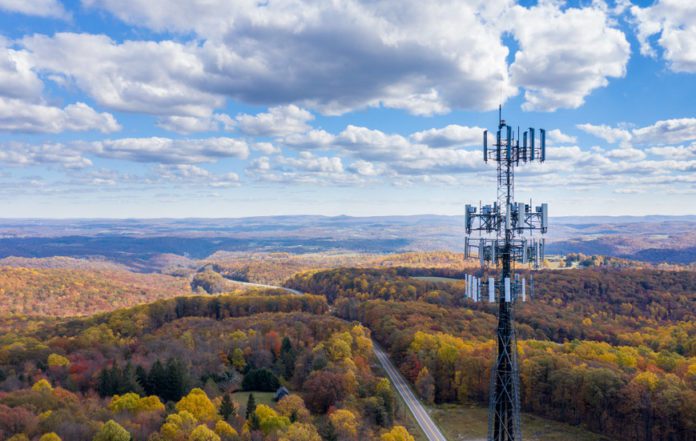
cbrs rural 5G wireless RESIZED american tower
Image: 123RF
189

Remote communities stand to benefit from new era in network technology

The digital divide is a serious issue in the U.S., with millions of people still unable to experience the benefits of reliable, high-speed broadband access. As a result, those without an internet connection can fall behind both educationally and professionally, as more classes remain online and new work-from-home jobs require connectivity. Additionally, without a reliable internet connection, it’s harder for people to access key services, such as receiving the medical care that many doctors now offer via videoconference. 

The digital divide particularly hits hard on rural communities. Nearly 30% of rural Americans still live without a broadband connection at home, a far higher percentage than exists in urban and suburban areas.

For years, operators have sought ways to provide internet access to their rural residents but have lacked technology options or a financially-rewarding business model. The low population density in rural areas — and the need to place wires to every home and business — have not supported a feasible business plan. Today however, a combination of updated wireless technologies, combined with publicly-available funds, are changing that.

CBRS: The key to unlocking broadband access

Through new and improved technical solutions, the elimination of the digital divide is now possible. A primary contributor to this is the availability of Citizens Broadband Radio Service (CBRS) — a mid-band frequency occupying the 3.55-3.7 GHz frequency range — which provides a way to carry more data than low-band signals while still traveling far distances (often up to three or four miles). This combination makes CBRS a strong solution for operators, who can leverage it to deliver a new wave of high-performance broadband capabilities. And with the arrival of powerful Massive MIMO radios that can take full advantage of CBRS, both regional mobile operators and their customers in rural areas are rapidly benefitting from this spectrum.

CBRS also supports an innovative approach to delivering wireless broadband service: Fixed Wireless Access (FWA). FWA sends a signal wirelessly over the ‘last mile’ from a neighborhood antenna to each subscribed house or business. This brings inherent cost savings, while speeding up time to service, since operators no longer need to dig trenches to lay cable or fiber. FWA has been around for a few years, but the onset of 5G networks has accelerated the opportunities around it, making FWA a more efficient means to help reduce the digital divide.

Sending data over the CBRS band via FWA has become a powerful solution for mobile operators. They can reduce costs and provide data rates that not only provide basic Internet service but new services such as home automation, security, and entertainment.

Additionally, for operators who currently reach their customers on LTE networks, but want to prepare for a 5G future, CBRS provides a simple software upgrade path for a smooth 5G migration – and the higher speeds and lower latency it brings. This is why operators should have 5G-ready CBRS products deployed as part of their network, so while they are serving rural broadband customers today, they can prepare to unlock future benefits of the next generation network.

The RDOF opportunity

Along with the advent of CBRS, operators have an unprecedented opportunity to tap public funds to advance broadband in remote locations. Several U.S. and state public funds are available for service providers to offer rural communities broadband access with specific requirements, such as meeting minimum throughput speeds for uploads/downloads and reaching a certain number of covered subscribers. The 5G Fund for Rural America, Connect America Fund (CAF) and ReConnect Loan and Grant Program are examples of such programs.

The FCC also offers a unique opportunity to access the Rural Development Opportunity Fund (RDOF), with over $20 billion available over ten years. RDOF was explicitly created to support broadband networks for rural communities. With RDOF and other funds now available, service providers can make their business cases to offer high-speed internet access in both unserved and underserved rural areas.

New business models addressing the digital divide

Many regional service providers and innovative companies are already deploying CBRS in rural areas, and are introducing new business models in the process. One such company is Avista Edge, which provides electric utilities and ISP solutions that enable them to offer broadband services to customers in remote communities. Using Samsung’s 5G-ready CBRS Massive MIMO radio and Compact Core, in conjunction with Avista Edge’s unique Customer Premise Equipment (CPE), they provide a simple way for electric utility companies to offer their customers broadband internet access along with electric power. Like Avista Edge, electric utilities will be able to install an electric meter collar in a few minutes that contains all of the 5G FWA networking components that enable high-speed internet access.

Bob O’Donnell of TECHnalysis recently discussed the importance of the Avista Edge solution in an article: “CBRS Offers New Opportunities for Rural Broadband.” According to O’Donnell: “What’s particularly fascinating about the [Avista Edge] offering is that it leverages the unique characteristics of its energy company heritage in several different ways. First, the receiving portion of the service consists of a device that connects between the home’s electric meter and a power outlet. Second, the broadband services run over the home’s power lines to a small plug-in device that then broadcasts it throughout the house via Wi-Fi.” O’Donnell observed how this is a strong example of “how private companies and electric utilities can join together to create new business models and successfully address the gap in rural broadband access for broader populations.” 

A trial of Avista Edge’s service in Cheney, Washington, was launched earlier this year, and the company plans to eventually make the same technology available for rural communities across the country.

In conclusion, it is clear that CBRS has become a cost-effective and efficient way for operators to deliver high-speed internet access and enhanced services to the rural locations that need it most. This will enable more people to participate in at-home activities that are in high demand and require broadband speeds, ranging from work to medical care to streaming entertainment. With CBRS gaining traction as a critical technology in the network evolution, it’s important for mobile operators and businesses to consider the strategic role it can play in expanding connectivity today, and for enhancing the digital experiences of tomorrow.

You Might Also Like
  • Tuesday (telco diary) | Telco agents and outcomes
  • The most expensive wireless system is the one you install twice (Reader Forum)
  • Monday (telco diary) | Sovereign AI for Industry 4.0
  • Friday (telco diary) | Verizon looks to AI horizon
  • Agentic AI – the $60bn opportunity for telecom operators (Reader Forum)
  • Thursday (telco diary) | Satellite versus terrestrial

Table of Contents

  • Remote communities stand to benefit from new era in network technology
    • CBRS: The key to unlocking broadband access
    • The RDOF opportunity
    • New business models addressing the digital divide
Share 0 LinkedinEmail
Imran Akbar, Vice President and Head of New Business Team, Networks Business, Samsung Electronics America

previous post
What is service function chaining (SFC)?
next post
Softbank takes equity stake in 1NCE – as “only company that can deliver global IoT”

White Papers

  • Norton eBook: The 2026 Telco Playbook

  • Enea White Paper: Why Intelligent AAA is the Swiss Army Knife of Telecom

  • CSG White Paper: Telco AI Enabler: Mediation’s Defining Role

  • Enea White Paper: Scalable Database Design for 5G and Beyond

  • Supermicro and NVIDIA Whitepaper: Powering sovereign AI at scale

Editorial Reports

  • Nvidia Report: The State of AI in Telecommunications: 2026 Trends

  • Report: Scaling Optical Networks For The Hyperscale And AI Era

  • Test And Measurement Market Pulse Report

Webinars

  • Webinar: Building 6G — aligning technology, policy and purpose

  • SIMCom Webinar: Scaling your next deployment – from plastic to provisioning

  • Webinar: Rethinking the RAN as AI, cloud and openness converge

  • Webinar: Scale-Up, Scale-Out, Scale-Across – Building AI-Era Network Fabrics

  • Webinar: NTN in motion – evolving standards, expanding services

Since 1982, RCR Wireless News has been providing wireless and mobile industry news, insights, and analysis to mobile and wireless industry professionals, decision makers, policy makers, analysts and investors.

Facebook Twitter Youtube Linkedin Envelope Rss

Useful Links

  • Subscribe
  • About RCR Wireless News
  • Contact Us
  • Advertise
  • Editorial Calendar
  • Archive
  • RSS
  • Wireless News Archive
  • Subscribe
  • About RCR Wireless News
  • Contact Us
  • Advertise
  • Editorial Calendar
  • Archive
  • RSS
  • Wireless News Archive

Edtior's Picks

South Korea launches AI-RAN project to advance industrial AI
Tuesday (telco diary) | Telco agents and outcomes
AT&T’s bets on “best tech” (fiber) pay off with record adds, improving margins 

Latest Articles

South Korea launches AI-RAN project to advance industrial AI
Tuesday (telco diary) | Telco agents and outcomes
AT&T’s bets on “best tech” (fiber) pay off with record adds, improving margins 
The most expensive wireless system is the one you install twice (Reader Forum)

© 2026 RCR Wireless News All Right Reserved. Developed by Eight Hats.

Cookie Policy | Privacy Policy

RCR Wireless
  • News
  • Channels
    • 5G
    • 6G
    • BSS OSS
    • Carriers
    • IoT
    • Network Infrastructure
    • Open RAN
    • Private 5G
    • Telco AI
    • Telco Cloud
    • Test & Measurement
  • Resources
    • Reports
    • Webinars
    • White papers
    • AI Fundamentals
    • Analyst Angle
    • Editorial Calendar
    • Fundamentals
      • 5G NR Release 17
      • AI
        • Telco AI in 2025
    • Podcasts
      • Let’s Get Digital with Carrie Charles
      • Wireless Connectivity to Enable Industry 4.0 for the Middleprise
      • Well Technically…
      • Will 5G Change the World
      • Accelerating Industry 4.0 Digitalization
  • AI Infrastructure
  • Programs
  • Events
  • RCRtv
  • Advertise
  • Subscribe
RCR Wireless
  • News
  • Channels
    • 5G
    • 6G
    • BSS OSS
    • Carriers
    • IoT
    • Network Infrastructure
    • Open RAN
    • Private 5G
    • Telco AI
    • Telco Cloud
    • Test & Measurement
  • Resources
    • Reports
    • Webinars
    • White papers
    • AI Fundamentals
    • Analyst Angle
    • Editorial Calendar
    • Fundamentals
      • 5G NR Release 17
      • AI
        • Telco AI in 2025
    • Podcasts
      • Let’s Get Digital with Carrie Charles
      • Wireless Connectivity to Enable Industry 4.0 for the Middleprise
      • Well Technically…
      • Will 5G Change the World
      • Accelerating Industry 4.0 Digitalization
  • AI Infrastructure
  • Programs
  • Events
  • RCRtv
  • Advertise
  • Subscribe
@2020 - All Right Reserved. Designed and Developed by PenciDesign
