

RCR Wireless
  • News
  • Channels
    • 5G
    • 6G
    • BSS OSS
    • Carriers
    • IoT
    • Network Infrastructure
    • Open RAN
    • Private 5G
    • Telco AI
    • Telco Cloud
    • Test & Measurement
  • Resources
    • Reports
    • Webinars
    • White papers
    • AI Fundamentals
    • Analyst Angle
    • Editorial Calendar
    • Fundamentals
      • 5G NR Release 17
      • AI
        • Telco AI in 2025
    • Podcasts
      • Let’s Get Digital with Carrie Charles
      • Wireless Connectivity to Enable Industry 4.0 for the Middleprise
      • Well Technically…
      • Will 5G Change the World
      • Accelerating Industry 4.0 Digitalization
  • AI Infrastructure
  • Programs
  • Events
  • RCRtv
  • Advertise
  • Subscribe
Monday, July 20, 2026
RCR Wireless
  • News
  • Channels
    • 5G
    • 6G
    • BSS OSS
    • Carriers
    • IoT
    • Network Infrastructure
    • Open RAN
    • Private 5G
    • Telco AI
    • Telco Cloud
    • Test & Measurement
  • Resources
    • Reports
    • Webinars
    • White papers
    • AI Fundamentals
    • Analyst Angle
    • Editorial Calendar
    • Fundamentals
      • 5G NR Release 17
      • AI
        • Telco AI in 2025
    • Podcasts
      • Let’s Get Digital with Carrie Charles
      • Wireless Connectivity to Enable Industry 4.0 for the Middleprise
      • Well Technically…
      • Will 5G Change the World
      • Accelerating Industry 4.0 Digitalization
  • AI Infrastructure
  • Programs
  • Events
  • RCRtv
  • Advertise
  • Subscribe
Add RCR Wireless as a preferred source on Google
  • Qualcomm 6G Insights
  • Huawei Content Hub
  • Qualcomm – 6G Vision
  • OSS/BSS Channel
  • RCRTech Roundtable: AI Infrastructure
RCR Wireless
RCR Wireless
  • Advanced Mimo
  • Mobile mmWave
  • 5G Positioning
  • Green Networks
  • Metaverse
  • Automotive
  • Industrial and Wide-area IoT
Copyright 2021 - All Right Reserved
Home - IoT in the healthcare industry (Reader Forum)
EnterpriseHealthcareInternet of Things (IoT)Reader Forum

IoT in the healthcare industry (Reader Forum)

by Catherine Sbeglia Nin February 22, 2022
written by Catherine Sbeglia Nin February 22, 2022 Share
LinkedinEmail
Share 0LinkedinEmail
198

The merge of technology and healthcare has never been more needed. The pandemic showed the world how urgent it was to update the global medical practices and make medical help more feasible for everybody.

Now technology is taking over the healthcare sector for good. The new era of the Internet of Things (IoT) will disrupt the way we interact with and receive medical help. According to experts, the business of IoT is about to reach a striking $176 billion by 2026.

IoT encompasses a range of products and services that will bring a shift from hospital-based to home-based diagnostics and care. People will have access to basic medical help in their pockets, and dealing with chronic diseases will become easier.

The revolution of IoT in the Healthcare Industry has already begun and is taking over with fast gear in motion. Here is everything you need to know about the role of the Internet of Things in creating a paradigm shift in healthcare.

What is the Internet of Things?

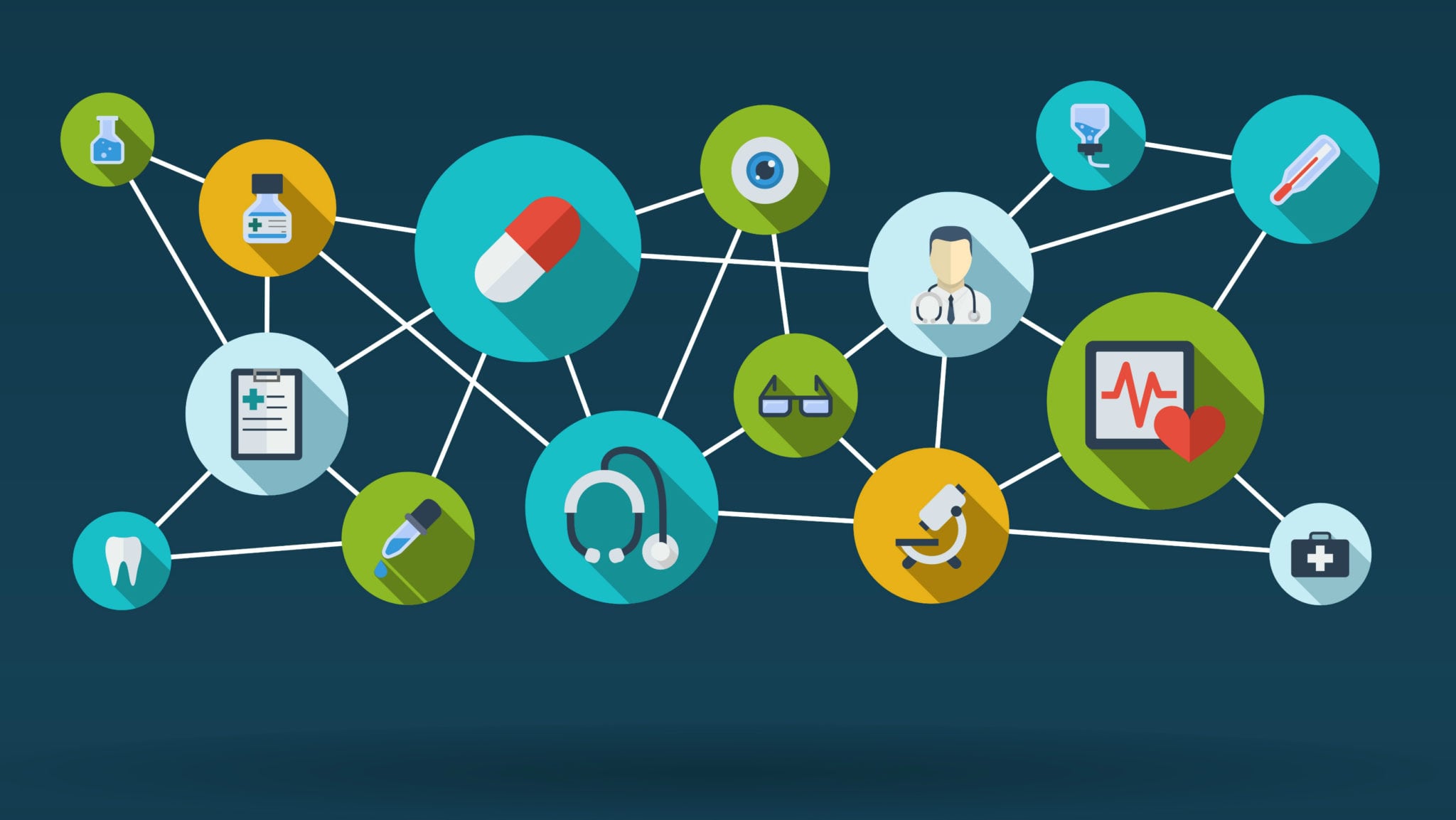
Think of the Internet of Things as a widespread network of devices that are connected to the Internet. This access and connection to the online world allow the devices to share and receive real-time data. Data forms the basis of every canny decision — big or small. The devices are connected through sensors and microprocessors.

IoT provides business leaders and decision-makers access to a variety of data to steer their fields in a better direction. This is exactly what IoT does for healthcare too. It keeps a constant connection between the patient and the doctor or medical worker so quick action can be taken in case of an emergency.

Internet of Things and its role in healthcare

The Internet of Things is gaining gradual traction. Combine it with the latest technological advancements like 5G wireless connection, Artificial Intelligence and Big Data, and you have a revolution around the corner.

In the Healthcare industry, IoT is changing the way patients are monitored, diagnosed and treated. It is not only helping patients get access to quick medical help but also increasing productivity for healthcare workers by making redundant tasks easy and automated.

Examples of IoT in healthcare

There are several functions performed by IoT devices in healthcare. It can be used to monitor temperature after the administration of vaccines, upload updated medical data in emergencies, track the effectiveness of drugs and monitor heart rate and glucose. Wearable devices communicate with elderly patients immediately and accomplish several more purposes.

Consider a healthcare technology company called NexLeaf Analytics. The company aims to help improve the health conditions in developing and poor countries by improving the process of vaccination and cooking.

Its devices have a ColdTrace system in which a sensor is placed inside the vaccine storage refrigerators so that data about the temperature of those vaccines can be monitored in real-time. This way, the safety of disease-controlling injections and vaccines is ensured.

Another system, the StoveTrace, provides data via cloud technology about the stoves being used in rural households to cook food. After analysis, monetary rewards are prepared for people who shift to safer appliances that don’t use wood or emit a dangerous amount of carbon dioxide. StoveTrace aims to help people make a move towards clean cooking.

Advantages of IoT in healthcare

IoT has expanded the scope of medicine in multiple ways, including:

Emergency monitoring and control 

Sometimes it becomes extremely difficult to get the person in need of urgent medical help to the hospital immediately. The patient may not be able to survive the long ride. IoT helps the patient connect with a doctor in an emergency, like a heart attack or asthma attack, while being at home.

The IoT will connect to an app that transfers real-time data like oxygen, blood pressure, weight and more information over the cloud to the doctor. The doctor will be able to receive data and provide an immediate solution. This will lead to a reduction in sudden deaths due to emergencies.

Reduction of costs

When people get medical help on time, they will not feel the need to make constant hospital visits. It will also decrease the number of people coming for admission to the hospital. Fewer resources will be utilized in treating a patient, and the overall costs will be reduced.

Data analysis and visualization

Diagnosing and treating a patient requires a huge amount of data. It is inefficient and slow to gather all the data from paper files and different medical centers. IoT devices can provide accumulated patient data and present it to the doctor in a consolidated form. All the doctor will need to do is assess the information and give the treatment.

Emergency alerts

This is especially important for tracking elder care. Elderly or disabled patients may not be able to get someone on time to help them with a health problem. Wearable tech devices can generate alerts in an urgent medical situation and monitor progress.

Challenges with IoT in healthcare

There are still some issues to tackle about IoT in healthcare like data privacy. A huge amount of data is dealt with, and patient data is sensitive. There needs to be a strict security wall to protect breaches of data by cybercriminals.

Doctors may be overwhelmed by data overload since detailed information from multiple sources is being provided. This also raises the issue of the integration of devices. To provide uniform data, several institutes will need to integrate devices to form an accurate report.

The devices do not cost less. So, they are a burden on the pockets of low-income patients.

Conclusion

IoT is not a standalone thing. The devices need to form a network and be connected with other technologies to give consolidated reports. IoT has the potential to take healthcare to the next big step, but it still needs some attention on issues of data privacy, speed, integration and a few more. But the revolution is around the corner.

You Might Also Like
  • When the push becomes the pull – private 5G and physical AI
  • Fast-growing private 5G offers blueprint for AI-era telecoms
  • Wednesday (telco diary) | What telcos want – and why they wait
  •  VodafoneThree puts P.I. Works’ SMO at the center of network transformation
  • The (agentic) future of AI-to-AI connectivity (Reader Forum)
  • Monday (telco diary) | Consolidation, orchestration, automation

Table of Contents

  • What is the Internet of Things?
  • Internet of Things and its role in healthcare
  • Examples of IoT in healthcare
  • Advantages of IoT in healthcare
  • Challenges with IoT in healthcare
  • Conclusion
Share 0 LinkedinEmail
Catherine Sbeglia Nin

Catherine Sbeglia Nin is the Managing Editor for RCR Wireless News, where she covers topics such as Wi-Fi, network infrastructure, AI and edge computing. She also produced and hosted Arden Media's podcast Well, technically... After studying English and Film & Media Studies at The University of Rochester, she moved to Madison, WI. Having already lived on both coasts, she thought she’d give the middle a try. So far, she likes it very much.

previous post
AT&T says FirstNet 5G is available in 20 cities
next post
Are you ready for Wi-Fi 7—the next generation of Wi-Fi (Analyst Angle)

White Papers

  • Norton eBook: The 2026 Telco Playbook

  • Enea White Paper: Why Intelligent AAA is the Swiss Army Knife of Telecom

  • CSG White Paper: Telco AI Enabler: Mediation’s Defining Role

  • Enea White Paper: Scalable Database Design for 5G and Beyond

  • Supermicro and NVIDIA Whitepaper: Powering sovereign AI at scale

Editorial Reports

  • Nvidia Report: The State of AI in Telecommunications: 2026 Trends

  • Report: Scaling Optical Networks For The Hyperscale And AI Era

  • Test And Measurement Market Pulse Report

Webinars

  • Webinar: Building 6G — aligning technology, policy and purpose

  • SIMCom Webinar: Scaling your next deployment – from plastic to provisioning

  • Webinar: Rethinking the RAN as AI, cloud and openness converge

  • Webinar: Scale-Up, Scale-Out, Scale-Across – Building AI-Era Network Fabrics

  • Webinar: NTN in motion – evolving standards, expanding services

Since 1982, RCR Wireless News has been providing wireless and mobile industry news, insights, and analysis to mobile and wireless industry professionals, decision makers, policy makers, analysts and investors.

Facebook Twitter Youtube Linkedin Envelope Rss

Useful Links

  • Subscribe
  • About RCR Wireless News
  • Contact Us
  • Advertise
  • Editorial Calendar
  • Archive
  • RSS
  • Wireless News Archive
  • Subscribe
  • About RCR Wireless News
  • Contact Us
  • Advertise
  • Editorial Calendar
  • Archive
  • RSS
  • Wireless News Archive

Edtior's Picks

From experiment to expectation: BAI on delivering private 5G across Australian industry
When the push becomes the pull – private 5G and physical AI
Elisa targets data center growth through fiber connectivity

Latest Articles

From experiment to expectation: BAI on delivering private 5G across Australian industry
When the push becomes the pull – private 5G and physical AI
Elisa targets data center growth through fiber connectivity
Subsea shift – ITU and FCC redraw rules for global cable resilience

© 2026 RCR Wireless News All Right Reserved. Developed by Eight Hats.

Cookie Policy | Privacy Policy

RCR Wireless
  • News
  • Channels
    • 5G
    • 6G
    • BSS OSS
    • Carriers
    • IoT
    • Network Infrastructure
    • Open RAN
    • Private 5G
    • Telco AI
    • Telco Cloud
    • Test & Measurement
  • Resources
    • Reports
    • Webinars
    • White papers
    • AI Fundamentals
    • Analyst Angle
    • Editorial Calendar
    • Fundamentals
      • 5G NR Release 17
      • AI
        • Telco AI in 2025
    • Podcasts
      • Let’s Get Digital with Carrie Charles
      • Wireless Connectivity to Enable Industry 4.0 for the Middleprise
      • Well Technically…
      • Will 5G Change the World
      • Accelerating Industry 4.0 Digitalization
  • AI Infrastructure
  • Programs
  • Events
  • RCRtv
  • Advertise
  • Subscribe
RCR Wireless
  • News
  • Channels
    • 5G
    • 6G
    • BSS OSS
    • Carriers
    • IoT
    • Network Infrastructure
    • Open RAN
    • Private 5G
    • Telco AI
    • Telco Cloud
    • Test & Measurement
  • Resources
    • Reports
    • Webinars
    • White papers
    • AI Fundamentals
    • Analyst Angle
    • Editorial Calendar
    • Fundamentals
      • 5G NR Release 17
      • AI
        • Telco AI in 2025
    • Podcasts
      • Let’s Get Digital with Carrie Charles
      • Wireless Connectivity to Enable Industry 4.0 for the Middleprise
      • Well Technically…
      • Will 5G Change the World
      • Accelerating Industry 4.0 Digitalization
  • AI Infrastructure
  • Programs
  • Events
  • RCRtv
  • Advertise
  • Subscribe
@2020 - All Right Reserved. Designed and Developed by PenciDesign
