

RCR Wireless
  • News
  • Channels
    • 5G
    • 6G
    • BSS OSS
    • Carriers
    • IoT
    • Network Infrastructure
    • Open RAN
    • Private 5G
    • Telco AI
    • Telco Cloud
    • Test & Measurement
  • Resources
    • Reports
    • Webinars
    • White papers
    • AI Fundamentals
    • Analyst Angle
    • Editorial Calendar
    • Fundamentals
      • 5G NR Release 17
      • AI
        • Telco AI in 2025
    • Podcasts
      • Let’s Get Digital with Carrie Charles
      • Wireless Connectivity to Enable Industry 4.0 for the Middleprise
      • Well Technically…
      • Will 5G Change the World
      • Accelerating Industry 4.0 Digitalization
  • AI Infrastructure
  • Programs
  • Events
  • RCRtv
  • Advertise
  • Subscribe
Friday, July 10, 2026
RCR Wireless
  • News
  • Channels
    • 5G
    • 6G
    • BSS OSS
    • Carriers
    • IoT
    • Network Infrastructure
    • Open RAN
    • Private 5G
    • Telco AI
    • Telco Cloud
    • Test & Measurement
  • Resources
    • Reports
    • Webinars
    • White papers
    • AI Fundamentals
    • Analyst Angle
    • Editorial Calendar
    • Fundamentals
      • 5G NR Release 17
      • AI
        • Telco AI in 2025
    • Podcasts
      • Let’s Get Digital with Carrie Charles
      • Wireless Connectivity to Enable Industry 4.0 for the Middleprise
      • Well Technically…
      • Will 5G Change the World
      • Accelerating Industry 4.0 Digitalization
  • AI Infrastructure
  • Programs
  • Events
  • RCRtv
  • Advertise
  • Subscribe
Add RCR Wireless as a preferred source on Google
  • Qualcomm 6G Insights
  • Huawei Content Hub
  • Qualcomm – 6G Vision
  • OSS/BSS Channel
  • RCRTech Roundtable: AI Infrastructure
RCR Wireless
RCR Wireless
  • Advanced Mimo
  • Mobile mmWave
  • 5G Positioning
  • Green Networks
  • Metaverse
  • Automotive
  • Industrial and Wide-area IoT
Copyright 2021 - All Right Reserved
Home - Chronicles of 3GPP Rel. 17 Part 2: Defining the future of 5G
5GAnalyst Angle

Chronicles of 3GPP Rel. 17 Part 2: Defining the future of 5G

by Prakash Sangam December 16, 2019
written by Prakash Sangam December 16, 2019 Share
LinkedinEmail
Share 0LinkedinEmail
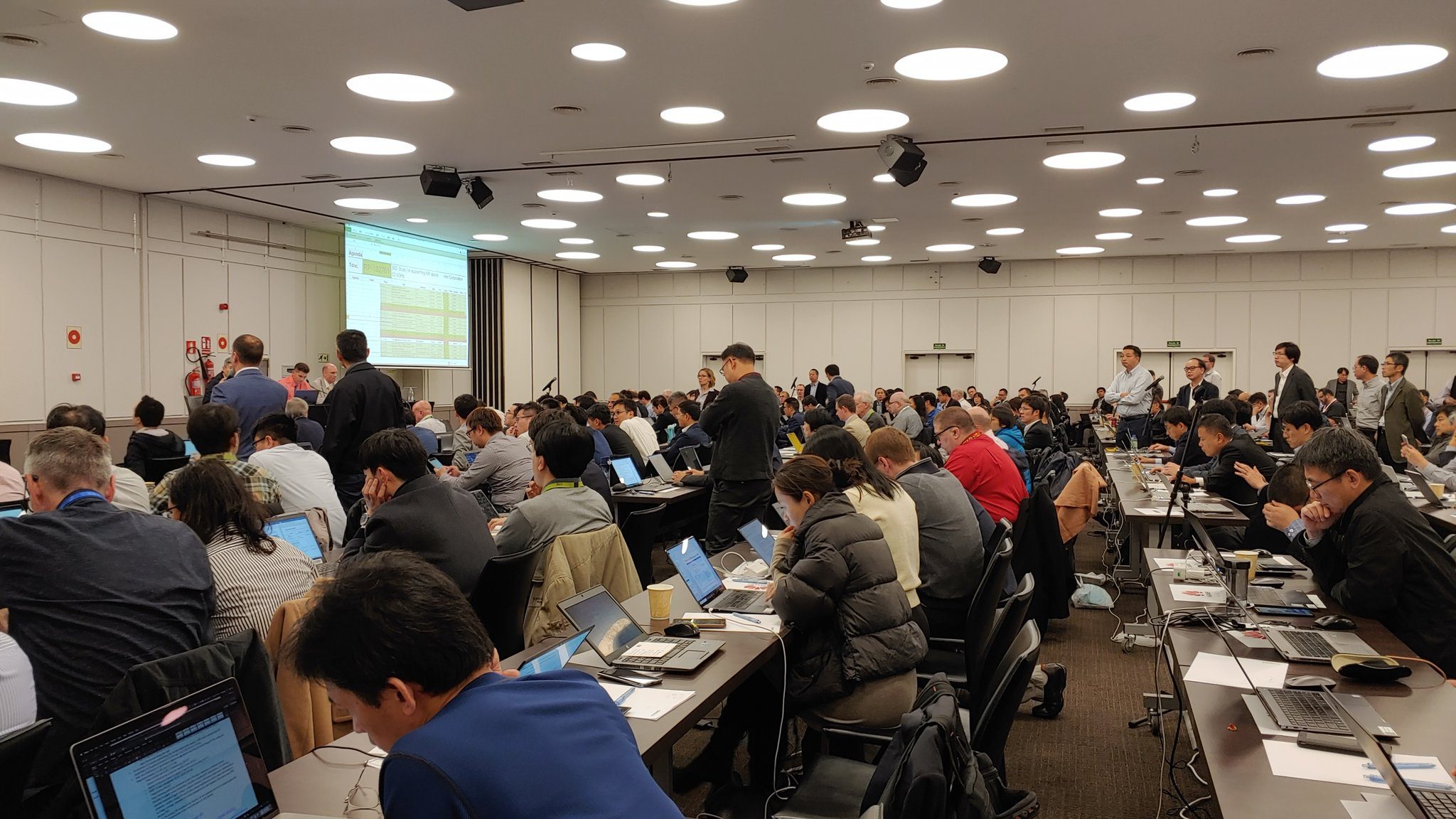
3GPP Rel. 17 plenary
Image courtesy of Prakash Sangam/Twitter.
183

I just returned from a whirlwind session of 3GPP RAN Plenary #86, held at the beautiful beach town of Sitges in Spain. The meeting finalized a comprehensive package with more than 30 Study and Work Items (SI and WI) for Rel 17. With a mix of new capabilities and significant improvements to existing features, Rel 17 is set to define the future of 5G. It is expected to be completed by mid or end of 2021.

<<Side note, if you would like to understand more about how 3GPP works, read my series “Demystifying Cellular Standards and Licensing” >>

Although the package looks like a laundry list of features, it gives a window into the strategy and capabilities of different member companies. Some are keen on investing in new, path-breaking technologies, while others are looking to optimize existing features or working on the fringe or very specific areas.

The Rel. 17 SI and WIs can be divided into three main categories.

Blazing new trail

These are the most important new concepts being introduced in Rel. 17 that promise to expand 5G’s horizon. 

XR (SI) – The objective of this is to evaluate and adopt improvements that make 5G even better suited for AR, VR, and MR. It includes evaluating distributed architecture harnessing the power of edge-cloud and device capabilities to optimize latency, processing, and power. Lead (aka Rapporteur) – Qualcomm

NR up to 71 GHz (SI and WI) – This is in the new section because of a twist. The WI is to extend the current NR waveform up to 71 GHz, and SI is to explore new and more efficient waveforms for the 52.6 – 71 GHz band.  Lead – Qualcomm and Intel 

NR-Light (SI) – The objective is to develop cost-effective devices with capabilities that lie between the full-featured NR and Low Power Wireless Access (e.g., NB-IoT/eMTC). For example, devices that support 10s or 100 Mbps speed vs. multi-Gigabit, etc. The typical use cases are wearables, Industrial IoT (IIoT), and others. Lead – Ericsson

Non-Terrestrial Network (NTN) support for NR & NB-IoT/eMTC (WI) – A typical NTN is the satellite network. The objective is to address verticals such as Mining and Agriculture, which mostly lie in remote areas, as well as to enable global asset management, transcending contents and oceans. Lead – MediaTek and Eutelsat

Perfecting the concepts introduced in Rel. 16 

Rel. 16 was a short release with an aggressive schedule. It improved upon Rel. 15 and brought in some new concepts. Rel 17 is aiming to make those new concepts well rounded. 

 Integrated Access & Backhaul – IAB (WI) – Enable cost-effective and efficient deployment of 5G by using wireless for both access and backhaul, for example, using relatively low-cost and readily available millimeter wave (mmWave) spectrum in IAB mode for rapid 5G deployment. Such an approach is especially useful in regions where fiber is not feasible (hilly areas, emerging markets).  Lead – Qualcomm

Positioning (SI) – Achieve centimeter-level accuracy, based only on cellular connectivity, especially indoors. This is a key feature for wearables, IIoT, and Industry 4.0 applications.  Lead – CATT (NYU)

Sidelink (WI) – Expand use cases from V2X-only to public safety, emergency services, and other handset-based applications by reducing power consumption, reliability, and latency. Lead – LG 

Small data transmission in “Inactive” mode (WI) – Enable such transmission without going through the full connection set-up to minimize power consumption. This is extremely important for IIoT use cases such as sensor updates, also for smartphone chatting apps such as Whatsapp, QQ, and others. Lead – ZTE

 IIoT and URLLC (WI) – Evaluate and adopt any changes that might be needed to use the unlicensed spectrum for these applications and use cases. Lead – Nokia 

Fine-tuning the performance of basic features introduced in Rel. 15

Rel. 15 introduced 5G. Its primary focus was enabling enhanced Broadband (eMBB). Rel. 16 enhanced many of eMBB features, and Rel. 17 is now trying to optimize them even further, especially based on the learnings from the early 5G deployments.

Further enhanced MIMO – FeMIMO (WI) – This improves the management of beamforming and beamsteering and reduces associated overheads. Lead – Samsung

Multi-Radio Dual Connectivity – MRDC (WI) – Mechanism to quickly deactivate unneeded radio when user traffic goes down, to save power. Lead – Huawei

Dynamic Spectrum Sharing – DSS (WI) – DSS had a major upgrade in Rel 16. Rel 17 is looking to facilitate better cross-carrier scheduling of 5G devices to provide enough capacity when their penetration increases. Lead – LG

Coverage Extension (SI) – Since many of the spectrum bands used for 5G will be higher than 4G (even in Sub 6 GHz), this will look into the possibility of extending the coverage of 5G to balance the difference between the two.  Lead – China Telecom and Samsung

Along with these, there were many other SI and WIs, including Multi-SIM, RAN Slicing, Self Organizing Networks, QoE Enhancements, NR-Multicast/Broadcast, UE power saving, etc., was adopted into Rel. 17.

Other highlights of the plenary

Unlike previous meetings, there were more delegates from non-cellular companies this time, and they were very actively participating in the discussions, as well. For example, a representative from Bosch was a passionate proponent for automotive needs in Slidelink enhancements. I have discussed with people who facilitate the discussion between 3GPP and the industry body 5G Automotive Association (5GAA). This is an extremely welcome development, considering that 5G will transform these industries. Incorporating their needs at the grassroots level during the standards definition phase allows the ecosystem to build solutions that are market-ready for rapid deployment. 

There was a rare, very contentious debate in a joint session between RAN and SA groups. The debate was to whether set RAN SI and WI completion timeline to 15 months, as planned now, or extend it to 18 months. The reason for the latter is TSG-SA being late with Rel. 16 completion, and consequently lagging in Rel. 17. Setting an 18-month completion target for RAN will allow SA to catch up and align both the groups to finish Rel. 17 simultaneously. However, RAN, which runs a tight ship, is not happy with the delay. Even after a lengthy discussion, the issue remains unresolved. 

<<Side Note: If you would like to know the organization of different 3GPP groups, including TSGs, check out my previous article “Who are the unsung heroes that create the standards?” >>

It will be amiss if I don’t mention the excellent project management skills exhibited by the RAN chair Mr. Balazs Bertenyi of Nokia Bell Labs. Without his firm, yet logical and unbiased decision making, it would have been impossible to finalize all these things in a short span of four days. 

In closing

Rel. 17 is a major release in the evolution of 5G that will expand its reach and scope. It will 1) enable new capabilities for applications such as XR; 2) create new categories of devices with NR-Light; 3) bring 5G to new realms such as satellites; 4) make possible the Massive IoT and Mission Critical Services vision set out at the beginning of 5G; while also improving the excellent start 5G has gotten with Rel. 15 and eMBB. I, for one, feel fortunate to be a witness to see it transform from concept to completion.

You Might Also Like
  • Fifteen years on, how did that 1,000x mobile broadband forecast fare? (Analyst Angle)
  • Mimosa Networks and Viaero Wireless demonstrate scalable 5 GHz and 6 GHz fixed wireless broadband with AFC
  • What defines network performance in 5G and beyond? A CTO Perspective
  • Elisa says AI automation has cut network incidents by over 80%
  • Huawei outlines AI-centric network roadmap for telecom monetization
  • Why consolidation will reshape MDU connectivity (part 3/3) – Analyst Angle

Table of Contents

  • Blazing new trail
  • Perfecting the concepts introduced in Rel. 16 
  • Fine-tuning the performance of basic features introduced in Rel. 15
  • Other highlights of the plenary
  • In closing
Share 0 LinkedinEmail
Prakash Sangam

Prakash Sangam is the founder and principal at Tantra Analyst, a leading research and consultancy firm covering IP strategy, 5G, IoT, AI, as well as client and cloud computing. He has more than 20 years of wireless industry experience working for Qualcomm, Ericsson, and AT&T. A prolific writer, blogger, and speaker, Prakash enjoys analyzing technical and business challenges and transforming them into impactful strategies and persuasive messaging. He is a regular contributor to Forbes, EETimes, RCR Wireless, Medium, and other leading publications and has been on the speaking circuit for leading industry events, including Mobile World Congress, and CTIA. Prakash holds a Bachelor’s of Engineering in electronics and communications from Karnatak University in India, and a Masters of Business Administration from San Diego State University. He can be reached on twitter @MyTechMusings

previous post
Boingo Wireless reorganizing, cutting 80 positions
next post
Kagan: 5G wireless rollout will accelerate in 2020 (Analyst Angle)

White Papers

  • Enea White Paper: Why Intelligent AAA is the Swiss Army Knife of Telecom

  • CSG White Paper: Telco AI Enabler: Mediation’s Defining Role

  • Enea White Paper: Scalable Database Design for 5G and Beyond

  • Supermicro and NVIDIA Whitepaper: Powering sovereign AI at scale

  • VIAVI Whitepaper: RAN scenario generators and their critical role for future-proofing AI-native RAN in Advanced 5G and 6G networks

Editorial Reports

  • Report: Scaling Optical Networks For The Hyperscale And AI Era

  • Test And Measurement Market Pulse Report

  • Editorial Report: Securing telecom infrastructure for the quantum era

Webinars

  • SIMCom Webinar: Scaling your next deployment – from plastic to provisioning

  • Webinar: Rethinking the RAN as AI, cloud and openness converge

  • Webinar: Scale-Up, Scale-Out, Scale-Across – Building AI-Era Network Fabrics

  • Webinar: NTN in motion – evolving standards, expanding services

  • Webinar: Noise-Figure Measurements with RFmx and PXI VSTs

Since 1982, RCR Wireless News has been providing wireless and mobile industry news, insights, and analysis to mobile and wireless industry professionals, decision makers, policy makers, analysts and investors.

Facebook Twitter Youtube Linkedin Envelope Rss

Useful Links

  • Subscribe
  • About RCR Wireless News
  • Contact Us
  • Advertise
  • Editorial Calendar
  • Archive
  • RSS
  • Wireless News Archive
  • Subscribe
  • About RCR Wireless News
  • Contact Us
  • Advertise
  • Editorial Calendar
  • Archive
  • RSS
  • Wireless News Archive

Edtior's Picks

NestAI and Nokia debut AI defense tech for denied battlefields
OCUDU aims to resolve the ‘last bottlenecks of proprietary software’
Optical advances won’t eliminate need for new fiber, says Dell’Oro

Latest Articles

NestAI and Nokia debut AI defense tech for denied battlefields
OCUDU aims to resolve the ‘last bottlenecks of proprietary software’
Optical advances won’t eliminate need for new fiber, says Dell’Oro
SIMCom Webinar: Scaling your next deployment – from plastic to provisioning

© 2026 RCR Wireless News All Right Reserved. Developed by Eight Hats.

Cookie Policy | Privacy Policy

RCR Wireless
  • News
  • Channels
    • 5G
    • 6G
    • BSS OSS
    • Carriers
    • IoT
    • Network Infrastructure
    • Open RAN
    • Private 5G
    • Telco AI
    • Telco Cloud
    • Test & Measurement
  • Resources
    • Reports
    • Webinars
    • White papers
    • AI Fundamentals
    • Analyst Angle
    • Editorial Calendar
    • Fundamentals
      • 5G NR Release 17
      • AI
        • Telco AI in 2025
    • Podcasts
      • Let’s Get Digital with Carrie Charles
      • Wireless Connectivity to Enable Industry 4.0 for the Middleprise
      • Well Technically…
      • Will 5G Change the World
      • Accelerating Industry 4.0 Digitalization
  • AI Infrastructure
  • Programs
  • Events
  • RCRtv
  • Advertise
  • Subscribe
RCR Wireless
  • News
  • Channels
    • 5G
    • 6G
    • BSS OSS
    • Carriers
    • IoT
    • Network Infrastructure
    • Open RAN
    • Private 5G
    • Telco AI
    • Telco Cloud
    • Test & Measurement
  • Resources
    • Reports
    • Webinars
    • White papers
    • AI Fundamentals
    • Analyst Angle
    • Editorial Calendar
    • Fundamentals
      • 5G NR Release 17
      • AI
        • Telco AI in 2025
    • Podcasts
      • Let’s Get Digital with Carrie Charles
      • Wireless Connectivity to Enable Industry 4.0 for the Middleprise
      • Well Technically…
      • Will 5G Change the World
      • Accelerating Industry 4.0 Digitalization
  • AI Infrastructure
  • Programs
  • Events
  • RCRtv
  • Advertise
  • Subscribe
@2020 - All Right Reserved. Designed and Developed by PenciDesign
