


One key element that was skirted around in Enterprise IoT Insights’ recent report on digital change in the power sector: the nitty-gritty of data analytics and artificial intelligence (AI). We referenced these as key disciplines – as the real art of digital change, in fact – but they remained somewhat out-of-focus.
It sounds like admission of error; it isn’t really. Most of the work to deliver on the promise of new digital technology, for every sector, is still about setting the springboard-infrastructure to enable analytics and automation. The question of connectivity remains a poser, and enough to contend with in one report.
But analytics is the dream ticket for digital transformation, and presents its own particular challenges. One company that can guage its progress in the broader utilities space is OSIsoft, author of the PI System, a well-established industrial platform for connecting operational technology (OT) and information technology (IT).
PI System is used by over 1,000 ultilities to get value from the data being generated by their devices. Eighty per cent of the electric power companies on the Platts 250 list of the largest energy companies in the world are customers. Every grid operator in the US uses PI System, as do the largest utilities in Europe and Japan, and nuclear power providers in Russia, China, and South Korea.
“We’re seeing some experimentation with AI, but to be honest most don’t need it yet. The reality is most utilities can solve a large swath of their problems today just buy surfacing data up to their employees,” says Michael Kanellos, IoT analyst at OSIsoft. It is rudimentary, perhaps, but even the task just to reveal data to humans, rather than automated machines, is powerful.
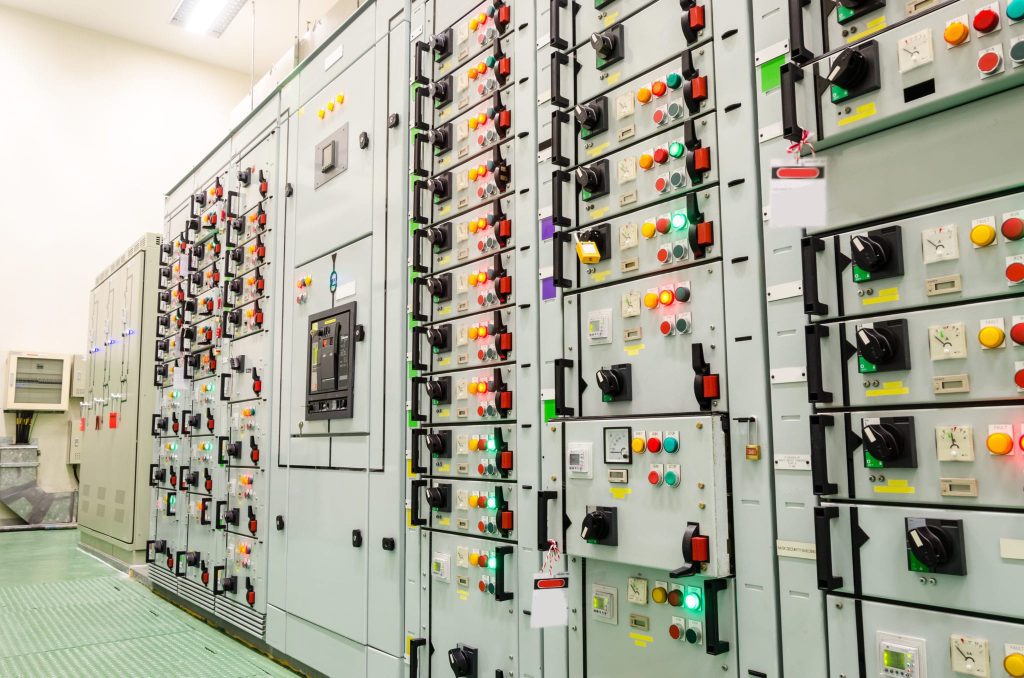
That’s what OSIsoft says, anyway. And while PI System is for data management, rather than AI, it is a busy conduit for industrial data, at the ‘coal face’ – where AI will eventually help with mining for glittering new insight. So OSIsoft’s opinion on AI in energy management matters. It says there’s not much to crow about, so far.
“You could call this human-based analytics where an individual makes a judgment call once they get access to information that might have been there but wasn’t easy to find in the past,” says Kanellos.
His colleague, Kevin Walsh, the company’s principal for transmission and distribution in the energy space, gives an example. The bearings that feather the blades on wind turbines can be fine-tuned to increase output and, over the life of a turbine, lower the cost of energ. But they go wrong, and cause a disproportionate number of maintenance issues. If left unchecked, bearing failure can cost $175,000, or more.
“The entire turbine head has to come down and go to the shop,” explains Walsh. California based Sempra Energy used the PI System to track the health of turbines in a remote wind farm in Nebraska, he says. “Within a few days, employees saw signs of impending failures. By fixing it in advance, the cost of repairs was cut by 90 per cent. But it didn’t require some magical dagical algorithm or cloud service. Just giving reasonably experienced employees data did the trick.”
“Most other commodities – water, food, data, transportation – can be widely stored or delivered over time. Power is a genuine real-time network”
The electricity grid – inter-connected across territories and available instantly, anywhere – is the most sophisticated machine ever made. That’s what people say, notes Kanellos. “Most other commodities – water, food, data, transportation – can be widely stored or delivered over time. Power is a genuine real-time network,” he says.
Utilities require live and relevant information to manage supply and demand on the grid, as well as to deal with outages, failures, and other issues. “Without data, accurate decisions cannot be made,” he says. But the weather – influencing generation and consumption – is changeable, and forecasting is a hazardous science.
Walsh talks about predicting the output from a solar farm. “Utilities purposely underestimate the amount of solar that can be delivered to give themselves a more comfortable margin of error. Over time, that raises the price of solar and slows adoption,” he explains.
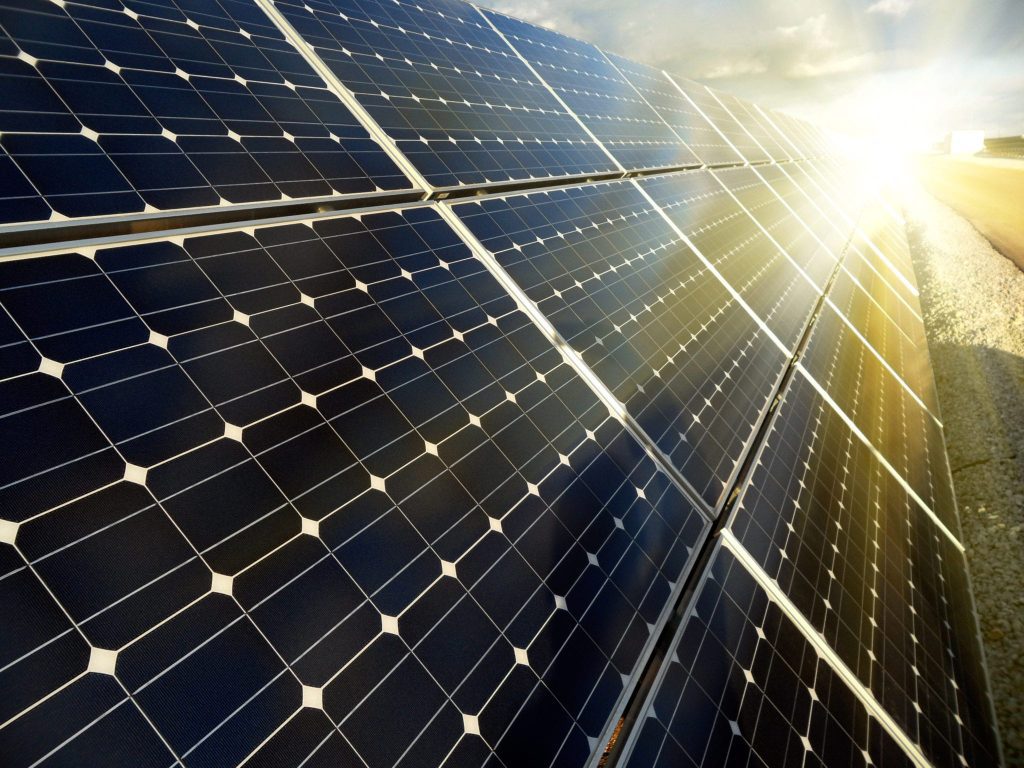
Again, the immediate challenge is to better harness data that is already available, rather than run clever algorithms on data that is not there. Solar farms produce 40 times more data than an equivalently-sized coal or gas plant, says Walsh. “That data is an asset that should be used,” he says, pointing as well to reduced maintenance and labour costs, as well as more accurate energy forecasting.
But the digital change sweeping the energy market – even as it concerns better data management by humans, as much as machine-led automation and operational intelligence – is seismic. “It sounds like hyperbole but we’re in the midst of a once-in-a-century overhaul of the power business,” comments Kanellos.
Where power has always ben produced by large centralised plants, and delivered via massive transmission lines and distribution networks, it is now increasingly being generated by decentralised resources, delivered via microgrids and agile distribution networks, and micro-managed even at point of consumption with meter-related guides and incentives.
“These changes are largely made possible by advances in technology. Solar panels are semiconductors. Microgrids are software applications linked to smart meters and other computer equipment. Demand management programmes and smart building devices for shaving peak power are essentially software and hardware,” says Kanellos.
“Change will occur at a controlled pace. Move fast and break things isn’t their motto: it’s their worst nightmare.”
It is the like when computers started replacing filing cabinets and adding machines in banks, and how robots have changed manufacturing, he suggests. But it will take time, he says.
“Change will occur at a controlled pace. Move fast and break things isn’t their motto: it’s their worst nightmare. When a utility announces it will retire a power plant, the final retirement date can be a few years away because the replacement resources have to already be in place.”
Similarly, for digital change to work, the whole system has to respond in kind. “Power providers have to test technologies and develop the policies and procedures to integrate them into their operations. Take high speed EV charging. It will accelerate electric car sales and generate revenue for a utility,” explains Walsh.
“But if the substation infrastructure doesn’t exist to accommodate charges, or if a utility hasn’t integrated software to dynamically balance charging, the result could be brownouts and other problems. Any upgrades will have ripple effects.”
The only way is with “good old-fashioned pilots and rollouts”, he says, giving the example of state-owned Horizon Power in Western Australia, which has joined with microgrid startup called Pxise to build the world’s largest microgrid in terms of size and capacity. “It will serve as an example to others,” says Walsh.
“Almost every utility in the world is experimenting. Itaipu in Brazil runs the world’s biggest dam, at 103 million megawatts per year. It has programmes to monitor the structural integrity, improve power output, and other tasks – it is already a template for others to follow.”
The other big challenge is how ultilities change their business models to respond to change, also. Kanellos cites the examples of Tepco and Kansai Electric, two of Japan’s biggest and most sophisticated utilities. “They have begun to offer consulting services and technology to utilities in other regions,” says Kanellos.
But business change blurs with cultural change, which is a trickier proposition. “It involves reengineering companies and getting employee and investor buy-in,” he says. “Again, it comes down to experimentation.” He goes to Australia again to illustrate the right way to do it.
“AGL in Australia did a massive digital rollout and encouraged employees, including non-technical employees, to start building dashboards to better monitor assets or predict problems. AGL saved $21 million in three years. It’s line was that ‘anyone can be the next data scientist’.”
Check out the new editorial report from Enterprise IoT Insights, called ‘Keeping the lights on – with green power’, which looks at development of IoT technologies in the energy and power market . The full report, free to download, is available here.

