More precise antenna tuning can help a smartphone take advantage of new technologies and new spectrum resources.
Editor’s Note: In the Analyst Angle section, we’ve collected a group of the industry’s leading analysts to give their outlook on the hot topics in the wireless industry.
Do you remember pulling out the antenna on your first mobile phone to make a call? Over the past 25 years, antenna design has changed radically for mobile phones. As we have transitioned from 2G to 3G to LTE, we have incrementally and gradually sacrificed as much as 10 decibels of link budget in some cases. It’s shocking but true: the network has improved dramatically, so we’ve been able to compromise performance in the handset antenna without much backlash from consumers.
Multiple factors come into play here, including the elimination of the extended antenna; metal-backed phone cases; multiband antenna requirements, with carrier aggregation, licensed-assisted access and multiple-input/multiple-output antenna technology; smaller antenna form factors; and time-to-market pressure that leaves little time for optimization.
Most people didn’t notice the reduction of antenna performance because government agencies require conducted testing (with a connector at the antenna port) and carriers generally perform testing in a “free space” chamber environment. Wireless industry trade association CTIA certification requires free-space testing, but only under fairly optimal conditions. Dynamic performance testing with realistic “hand-grip” fixtures is rarely required by anyone … in fact, often testing is done with hand-grip fixtures using a foam spacer to avoid simulating the poor performance with a true hand. The industry is hiding from the truth: we have been throwing away performance by ignoring real-world conditions.
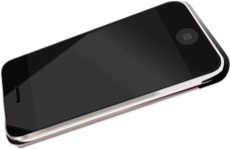
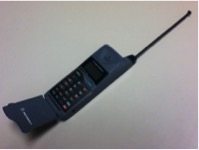
Figure 1: Antenna efficiency is lost in the transition from external to internal antennas.
However, the 25-year trend of throwing away antenna performance is starting to turn in the other direction. We’re starting to see handset manufacturers investing in new technology that specifically targets improvements in total radiated power and total isosotropic sensitivity. The benefits can be huge.
Diversity
In addition to tuning the main antenna, adding diversity antennas to the terminal can make a big difference. As most smartphones now include 2×2 MIMO for LTE, a second antenna has been added to the design for the LTE frequency bands. In fact, the LTE standards allow for the second antenna to be used for receiver diversity or for MIMO, depending on which mode is more advantageous with prevailing channel conditions.
Taking this concept one step farther, a few handsets such as the Google Pixel and the Samsung Galaxy S7 now use four antennas in key LTE bands to support choices including four-way receiver diversity and 4×4 MIMO. The gain in throughput is not obvious in a free-space test, but in the real world with hands gripping metal-backed phones the impact of additional antenna options can be significant. More than 60% increase in throughput has been recorded in some vendor testing.
Mobile operators are starting to invest in 4×4 MIMO for some base stations, but it’s clear that the 4×4 capability will not be implemented everywhere. Therefore we expect the architecture of the smartphone to include diversity switches that allow for either 4×4 MIMO operation or four-way receiver diversity for best performance in all situations.
Tuning
Aperture tuning was introduced 10 years ago and has become a standard part of any smartphone that includes multiple bands between 700 MHz and 960 MHz. In most smartphones today, this is implemented as a simple switch that changes the electrical length of the antenna, thus changing its resonant frequency from one band to another. Some handsets use MEMS devices for this purpose.
In addition to frequency tuning, more than 100 smartphone models now include impedance-match tuning, which adapts for the impact of a hand on the phone. Closed-loop impedance match tuning can recover more than 4 dB of lost performance in radiated power, which translated directly into user benefits such as longer battery life of up to as much as an hour per day longer for typical users; more stable data sessions as TDD links tend to be dropped due to uplink limitations and a 4 dB improvement in TRP greatly improves the stability of the LTE link; and higher data throughput, with both uplink and downlink benefiting from higher signal quality.
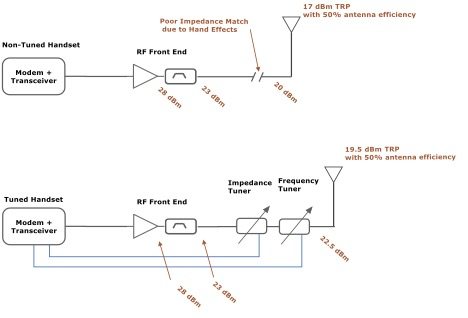
Figure 2: Mismatch loss due to hand effects can be eliminated with closed-loop tuning.
Carrier aggregation
Many people believe antenna tuning is incompatible with carrier aggregation, especially where carrier aggregation is implemented for “low-low” band combinations or “high-high” band combinations. However, the closed-loop tuning that’s in use today can be adapted for different scenarios, so Mobile Experts forecasts adoption of impedance-match tuning and possibly aperture tuning, even in the “low-low” CA case. The modem will need to make some new decisions about what tuning settings are needed for a wideband match instead of a narrowband match …this is the next natural step in evolution.
Notably, carrier aggregation can include multiple licensed bands, but can also include LAA, 3.5 GHz consumer broadband radio service and other bands. The algorithm can get pretty complex when combinations of licensed and unlicensed bands are changing constantly.
What’s coming next
The industry pattern has started to change. Ten years ago, handset OEMs recognized the inferior performance of some antenna choices they were making, but they were not willing to spend another $2 per handset to fix the problems. Today, handset OEMs are voluntarily choosing to use tuning solutions. The solutions have been simplified and “systemized” so that the cost is much lower than before. New handsets use a combination of diversity and tuning to improve everyday performance by 4 dB – and up to 10 dB for some cases.
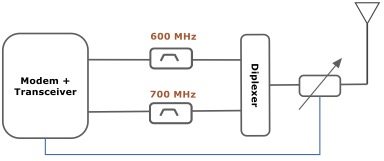
Figure 3: System-level closed loop design can adapt for broadband performance.
If the 600 MHz auction results in new spectrum for mobile handsets, we expect all of the problems with antenna performance to get even worse. Lower operating frequencies translate into antennas that are electrically short: the antenna dimensions are smaller than a wavelength. This causes poor efficiency in general for the antenna, forcing the system engineer to rely on a more resonant antenna with more narrowband performance to reduce electrical losses. As the 600 MHz band comes onto the market and carrier aggregation is required with 700 MHz or 850 MHz bands, we can expect much more sophisticated use of “systemized” tuners that can optimize for multiple bands in a dynamic environment.
The key lies in considering the antenna as a system, not a component. Handset OEMs are dealing with dozens of bands and their products are intended to work in countless frequency combinations. The solution to the complexity is smarter antenna tuning.
Modem suppliers that implement advanced closed-loop antenna algorithms will be able to squeeze much more performance out of the handset. This is not a small technical detail, but a major impact – closed-loop tuning can effectively double the true power from the handset. The result will be longer battery life and higher data speed for anybody that holds a phone in their hand. Yes, that means anyone.

Joe Madden is principal analyst at Mobile Experts LLC. Madden provides most of the business analysis behind our forecasts, as well as primary research in semiconductor areas. Over 26 years in mobile communications, he accurately predicted the rise of digital predistortion, remote radio heads, small cells and the mobile IT market. He validates ideas with mobile and cable operators, as well as hardware suppliers to find the match between business models and technology. Madden holds a physics degree from UCLA. Despite learning about economics at Stanford, he still obeys the laws of physics.
Table of Contents