

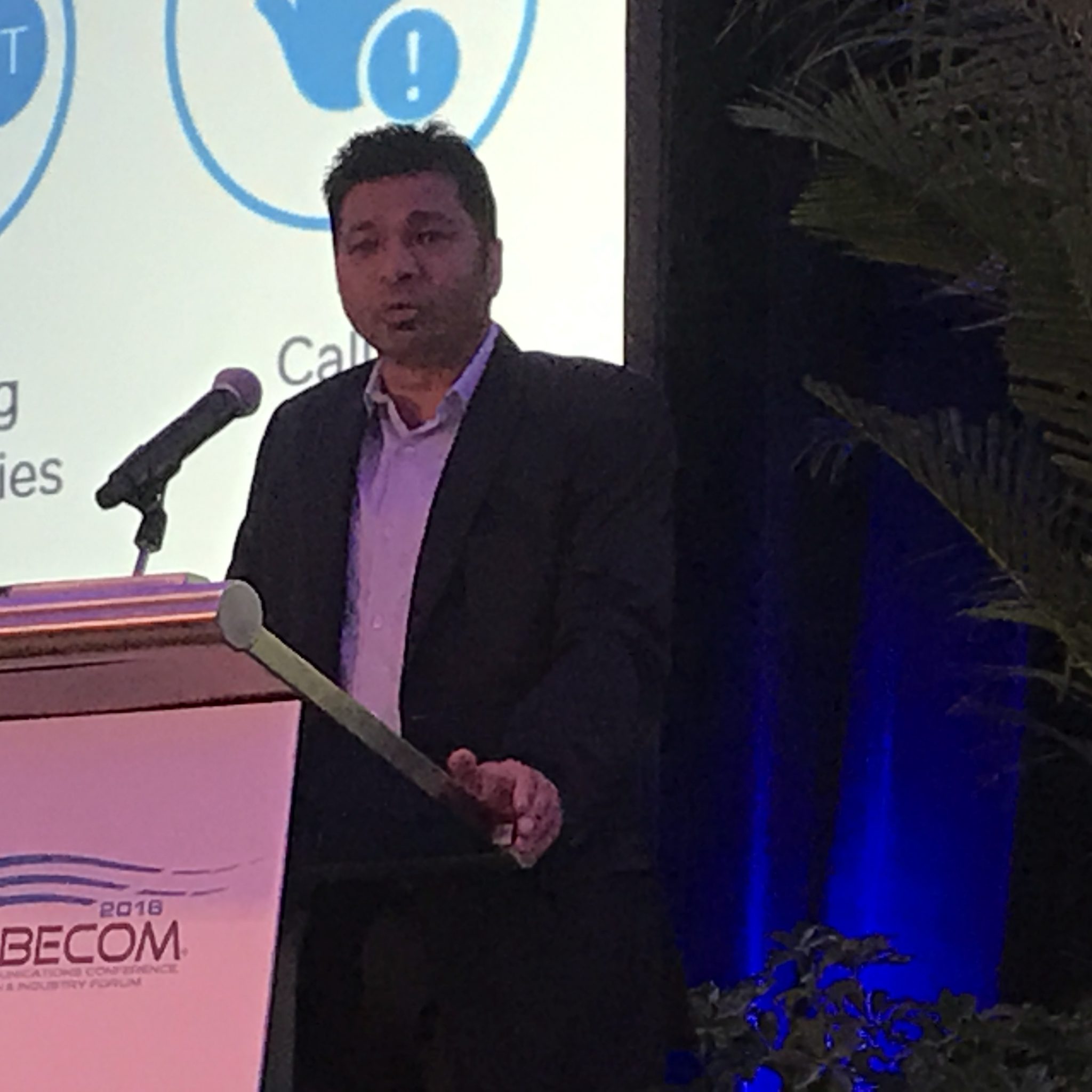
SDN, NFV and cloud will further network transformation necessitated by 5G use cases.
Saxena compared that growth to the period of 1995 to 2010.
“The growth in global internet users was 40-times,” Saxena said. “The pace and reach of change is growing beyond our imagination. Economists and political leaders are shifting from asking the question ‘who’s connected?’ to ‘who’s not?’” It impacts everything.”
Building on the Uber example, Saxena pulled up figures indicating Uber Pool, which involves multiple individuals sharing a vehicle, accounts for 20% of the companies rides, meaning approximately 1.8 billion gallons of fuel were not used last year. “That reduces the human impact of climate change dramatically. We have the potential for unprecedented formula for success in the future.”
“Just imagine the unlimited potential,” Saxena said. “Businesses will be enhanced with better logistics and coordination. Health can be monitored in near real time potentially saving people’s lives. Think about full stack integration of north/south as well as east/west – there’s so much opportunity.”
Saxena outlined numerous 5G use cases, including massive IoT, enhanced mobile broadband and fixed wireless access, which simply won’t work unless networks designed to reliably support voice calling are radically upgraded.
“The economic gravity of this reality necessitates we transform our approach to building networks,” Saxena added.

