
RCR Wireless
  • News
  • Channels
    • 5G
    • 6G
    • BSS OSS
    • Carriers
    • IoT
    • Network Infrastructure
    • Open RAN
    • Private 5G
    • Telco AI
    • Telco Cloud
    • Test & Measurement
  • Resources
    • Reports
    • Webinars
    • White papers
    • AI Fundamentals
    • Analyst Angle
    • Editorial Calendar
    • Fundamentals
      • 5G NR Release 17
      • AI
        • Telco AI in 2025
    • Podcasts
      • Let’s Get Digital with Carrie Charles
      • Wireless Connectivity to Enable Industry 4.0 for the Middleprise
      • Well Technically…
      • Will 5G Change the World
      • Accelerating Industry 4.0 Digitalization
  • AI Infrastructure
  • Programs
  • Events
  • RCRtv
  • Advertise
  • Subscribe
Thursday, August 13, 2026
RCR Wireless
  • News
  • Channels
    • 5G
    • 6G
    • BSS OSS
    • Carriers
    • IoT
    • Network Infrastructure
    • Open RAN
    • Private 5G
    • Telco AI
    • Telco Cloud
    • Test & Measurement
  • Resources
    • Reports
    • Webinars
    • White papers
    • AI Fundamentals
    • Analyst Angle
    • Editorial Calendar
    • Fundamentals
      • 5G NR Release 17
      • AI
        • Telco AI in 2025
    • Podcasts
      • Let’s Get Digital with Carrie Charles
      • Wireless Connectivity to Enable Industry 4.0 for the Middleprise
      • Well Technically…
      • Will 5G Change the World
      • Accelerating Industry 4.0 Digitalization
  • AI Infrastructure
  • Programs
  • Events
  • RCRtv
  • Advertise
  • Subscribe
Add RCR Wireless as a preferred source on Google
  • Qualcomm 6G Insights
  • Huawei Content Hub
  • Qualcomm – 6G Vision
  • OSS/BSS Channel
  • RCRTech Roundtable: AI Infrastructure
RCR Wireless
RCR Wireless
  • Advanced Mimo
  • Mobile mmWave
  • 5G Positioning
  • Green Networks
  • Metaverse
  • Automotive
  • Industrial and Wide-area IoT
Copyright 2021 - All Right Reserved
Home - Getting past the difficulties of IoT testing
FundamentalsInternet of Things (IoT)Test & Measurement

Getting past the difficulties of IoT testing

by Phillip Tracy August 12, 2016
written by Phillip Tracy August 12, 2016 Share
LinkedinEmail
Share 0LinkedinEmail
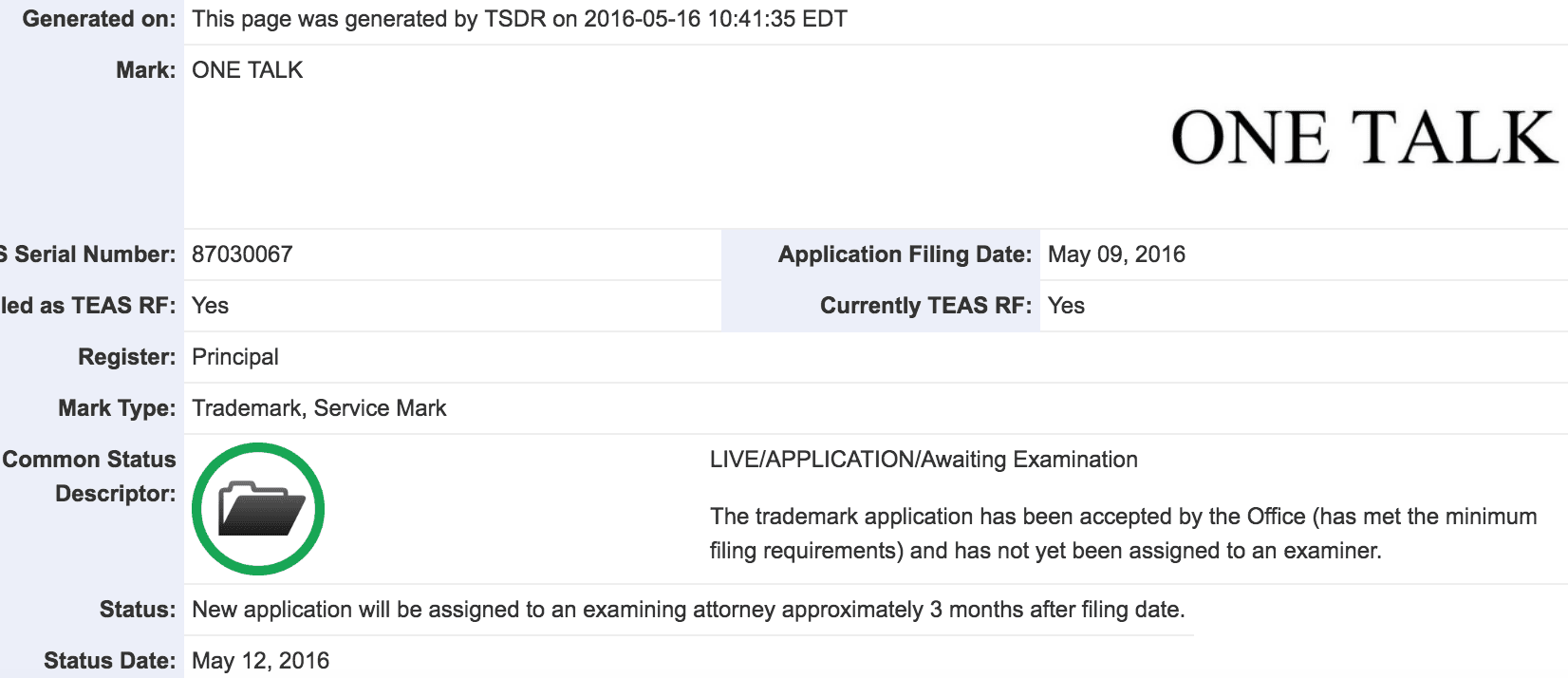
Verizon One Talk
Hinting at fixed/mobile convergence, Verizon filed a trademark for the brand One Talk.
154

Challenges and considerations of IoT testing

Internet of things (IoT) vulnerabilities and their potentially catastrophic results make it imperative that IoT devices go through rigorous testing before seeing the light of day. But testing the security, performance, connectivity, and a number of things for millions of devices is no easy task. Not to mention the IOT in IoT, that is, the internet of things (IoT) problems that arise with interoperability testing (IOT).

Chris Riley from DevOps.com sites several challenges that arise when testing IoT devices:

  • Replicating a fully-connected environment requires too much money and effort—and sometimes it’s simply inconceivable.
  • The subsystems, subcomponents, and services that are interconnected are owned by different groups and third party vendors. Inability to access just one dependent subcomponent could impact the testing of the whole application.
  • Considerable effort and coordination among different teams is needed to get the right test data populated across all the systems.
  • Availability of the device only with limited capacity and at  inconvenient times
  • The problem of testing for the IoT raises issues of responsibility. Who is at fault if the device in your vehicle starts emitting erroneous data that causes On-Board diagnostic connector to report non-existent events that destabilize the control loops used by different parts of the vehicle, causing a failure that leads to an accident? Is it the vendor of the device or the controller for being unable to cope with extraneous events?  Your customers will hate if you use classic test approach.

Riley’s first point is particularly intriguing. Thousands of devices need to be tested at one time, often in adverse environments: underground, underwater, in freezing temperatures, etc. The ability to simulate those situations will give IoT developers a leg up when it comes time for implementation. But even once it is determined a device is functioning, testers must make sure a number of different long-term elements are in place. With several million sensors and different types of devices connected to intelligent software, functionality validation is not enough in an environment as complex as IoT.

Sunil Sehgal, Managing Partner  at TechArcis Solution, gave a list on LinkedIn of quality assurance (QA) tests done to IoT implementations:

  • Usability / User Experience
  • Connectivity
  • Security
  • Identity and Authentication
  • Data Encryption
  • Data Protection
  • Data Security storage in cloud environment
  • Interoperability
  • Compatibility
  • Performance
  • Automation

All the different aspects that make up an IoT system, from Big data to long term sustainability, make testing that much more complex. But there are tools and strategies to help combat these complexities.

Approaches to solving problems

One way to do this is by using a devops and agile approach, which can help accelerate the testing process. Virtualization allows testers to be less dependent on test infrastructure, offering the all-important interconnectivity.

Additionally, using a platform-based approach allows companies to construct a system that requires interoperability between platform elements and places a high value on software—the ultimate source of “smartness” in test system design, according to National Instruments. A platform-based approach is a single, flexible hardware architecture deployed across many applications, which removes hardware complexity and makes each new problem primarily a software challenge.

National Instrument’s LabView RIO devices combine a microprocessor and a field-programmable gate array (FPGA), and the end user uses this to operate off-the-shelf measurement or control hardware.

“For example, a company like Airbus, that is controlling a motor or control system – that system would be running on dedicated hardware,” said Jamie Smith, NI director of embedded systems product marketing to IoT Journal. But [in the past] if the customer wanted to use the same control system in a brand-new style of actuator [for a different factory application], they would need to redesign the hardware. [With LabVIEW] they can use [our] same piece of electronics and reconfigure it without having to redesign the hardware.”

Another important aspect of IoT testing is the use of human test subjects. There is simply no better way to test a device than putting it in the same scenarios it will face when officially deployed. Test subject could be patients to monitor or test a health device. It could be an animal to test a bio-chip, or a driver to test a particular automobile.

Hardware problems with software solutions

There is almost always a software solution to help expedite the process of creating and releasing a product, and that is no exception to IoT solutions. Where National Instruments both hardware in the form of sensors and actuators as well as its LabView software, companies like Applause, SmartBear and TechArcis have testing and quality assurance software designed specifically for the internet of things.

You Might Also Like
  • Physical AI is exposing a data sovereignty gap (Reader Forum)
  • Japan’s private 5G market is finally moving beyond demo experiments (Analyst Angle)
  • Monday (telco diary) | Sovereign AI for Industry 4.0
  • When the push becomes the pull – private 5G and physical AI
  • Fast-growing private 5G offers blueprint for AI-era telecoms
  • Monday (telco diary) | Consolidation, orchestration, automation

Table of Contents

  • Challenges and considerations of IoT testing
  • Approaches to solving problems
  • Hardware problems with software solutions
Share 0 LinkedinEmail
Avatar of Phillip Tracy
Phillip Tracy

previous post
AT&T SVP: Small cells key to mm wave and LTE in unlicensed
next post
Viavi Broadband Log Periodic Antenna

White Papers

  • Norton eBook: The 2026 Telco Playbook

  • Enea White Paper: Why Intelligent AAA is the Swiss Army Knife of Telecom

  • CSG White Paper: Telco AI Enabler: Mediation’s Defining Role

  • Enea White Paper: Scalable Database Design for 5G and Beyond

  • Supermicro and NVIDIA Whitepaper: Powering sovereign AI at scale

Editorial Reports

  • Report: NTN in motion — evolving standards, expanding services

  • Market Pulse Report: Telco AI in 2026 – Trends, Challenges and Opportunities

  • Nvidia Report: The State of AI in Telecommunications: 2026 Trends

Webinars

  • Webinar: Building 6G — aligning technology, policy and purpose

  • SIMCom Webinar: Scaling your next deployment – from plastic to provisioning

  • Webinar: Rethinking the RAN as AI, cloud and openness converge

  • Webinar: Scale-Up, Scale-Out, Scale-Across – Building AI-Era Network Fabrics

  • Webinar: NTN in motion – evolving standards, expanding services

Since 1982, RCR Wireless News has been providing wireless and mobile industry news, insights, and analysis to mobile and wireless industry professionals, decision makers, policy makers, analysts and investors.

Facebook Twitter Youtube Linkedin Envelope Rss

Useful Links

  • Subscribe
  • About RCR Wireless News
  • Contact Us
  • Advertise
  • Editorial Calendar
  • Archive
  • RSS
  • Wireless News Archive
  • Subscribe
  • About RCR Wireless News
  • Contact Us
  • Advertise
  • Editorial Calendar
  • Archive
  • RSS
  • Wireless News Archive

Edtior's Picks

Lumen ready for AI traffic rush – with programmable fabric and “more fiber...
Rakuten confirms KDDI roaming will be reduced as own network expands
AI fiber build-out undermines rural BEAD skills-drive

Latest Articles

Lumen ready for AI traffic rush – with programmable fabric and “more fiber than anyone”
Rakuten confirms KDDI roaming will be reduced as own network expands
AI fiber build-out undermines rural BEAD skills-drive
Wednesday (telco diary) | Smells like team spirit – and that tech-bro Musk

© 2026 RCR Wireless News All Right Reserved. Developed by Eight Hats.

Cookie Policy | Privacy Policy

RCR Wireless
  • News
  • Channels
    • 5G
    • 6G
    • BSS OSS
    • Carriers
    • IoT
    • Network Infrastructure
    • Open RAN
    • Private 5G
    • Telco AI
    • Telco Cloud
    • Test & Measurement
  • Resources
    • Reports
    • Webinars
    • White papers
    • AI Fundamentals
    • Analyst Angle
    • Editorial Calendar
    • Fundamentals
      • 5G NR Release 17
      • AI
        • Telco AI in 2025
    • Podcasts
      • Let’s Get Digital with Carrie Charles
      • Wireless Connectivity to Enable Industry 4.0 for the Middleprise
      • Well Technically…
      • Will 5G Change the World
      • Accelerating Industry 4.0 Digitalization
  • AI Infrastructure
  • Programs
  • Events
  • RCRtv
  • Advertise
  • Subscribe
RCR Wireless
  • News
  • Channels
    • 5G
    • 6G
    • BSS OSS
    • Carriers
    • IoT
    • Network Infrastructure
    • Open RAN
    • Private 5G
    • Telco AI
    • Telco Cloud
    • Test & Measurement
  • Resources
    • Reports
    • Webinars
    • White papers
    • AI Fundamentals
    • Analyst Angle
    • Editorial Calendar
    • Fundamentals
      • 5G NR Release 17
      • AI
        • Telco AI in 2025
    • Podcasts
      • Let’s Get Digital with Carrie Charles
      • Wireless Connectivity to Enable Industry 4.0 for the Middleprise
      • Well Technically…
      • Will 5G Change the World
      • Accelerating Industry 4.0 Digitalization
  • AI Infrastructure
  • Programs
  • Events
  • RCRtv
  • Advertise
  • Subscribe
@2020 - All Right Reserved. Designed and Developed by PenciDesign