
RCR Wireless
  • News
  • Channels
    • 5G
    • 6G
    • BSS OSS
    • Carriers
    • IoT
    • Network Infrastructure
    • Open RAN
    • Private 5G
    • Telco AI
    • Telco Cloud
    • Test & Measurement
  • Resources
    • Reports
    • Webinars
    • White papers
    • AI Fundamentals
    • Analyst Angle
    • Editorial Calendar
    • Fundamentals
      • 5G NR Release 17
      • AI
        • Telco AI in 2025
    • Podcasts
      • Let’s Get Digital with Carrie Charles
      • Wireless Connectivity to Enable Industry 4.0 for the Middleprise
      • Well Technically…
      • Will 5G Change the World
      • Accelerating Industry 4.0 Digitalization
  • AI Infrastructure
  • Programs
  • Events
  • RCRtv
  • Advertise
  • Subscribe
Thursday, August 13, 2026
RCR Wireless
  • News
  • Channels
    • 5G
    • 6G
    • BSS OSS
    • Carriers
    • IoT
    • Network Infrastructure
    • Open RAN
    • Private 5G
    • Telco AI
    • Telco Cloud
    • Test & Measurement
  • Resources
    • Reports
    • Webinars
    • White papers
    • AI Fundamentals
    • Analyst Angle
    • Editorial Calendar
    • Fundamentals
      • 5G NR Release 17
      • AI
        • Telco AI in 2025
    • Podcasts
      • Let’s Get Digital with Carrie Charles
      • Wireless Connectivity to Enable Industry 4.0 for the Middleprise
      • Well Technically…
      • Will 5G Change the World
      • Accelerating Industry 4.0 Digitalization
  • AI Infrastructure
  • Programs
  • Events
  • RCRtv
  • Advertise
  • Subscribe
Add RCR Wireless as a preferred source on Google
  • Qualcomm 6G Insights
  • Huawei Content Hub
  • Qualcomm – 6G Vision
  • OSS/BSS Channel
  • RCRTech Roundtable: AI Infrastructure
RCR Wireless
RCR Wireless
  • Advanced Mimo
  • Mobile mmWave
  • 5G Positioning
  • Green Networks
  • Metaverse
  • Automotive
  • Industrial and Wide-area IoT
Copyright 2021 - All Right Reserved
Home - Small cells best practices, from design to deployment
CarriersHetNet NewsNetwork Infrastructure

Small cells best practices, from design to deployment

by Sean Kinney, Principal Analyst October 26, 2015
written by Sean Kinney, Principal Analyst October 26, 2015 Share
LinkedinEmail
Share 0LinkedinEmail
ericsson small cells
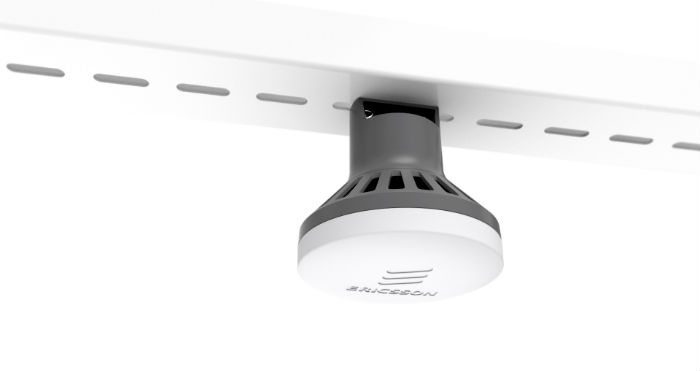
This is an Ericsson Radio Dot small cell antenna. Photo courtesy of Ericsson
108

Industry expert discusses lessons learned from rolling out small cells both indoors and outdoors

Small cells present a huge opportunity for the wireless industry, but, despite the promise, small cell deployments have not kept pace with projections largely because changing conditions make the process fraught with variables, which have a direct impact on cost.

Carriers like Sprint in the US have tapped small cells as a key part of network improvement strategies; Sprint hasn’t confirmed anything, but many industry watchers expect a strategy involving as many as 70,000 individual small cells.

As the small cell space picks up momentum, key industry players including Ericsson, which has launched a number of successful lines of small cells and related products including managed services, are steadily learning lessons in the field and using that insight to further streamline deployment processes in an effort to drive down total cost of ownership [TCO].

In a recent interview, Ericsson’s Stevan Filipovic, head of network design and 0ptimization product management, discussed a typical deployment process for an indoor small cell(s), and hit on the need to speed up processes to reduce TCO.

A five-step process: strategic analysis, TCO analysis, deployment, commissioning and optimizing

The first step, Filipovic said, is strategic analysis, during which the vendor and client discuss the problem and how small cells can help solve the issue. He said the process often starts with service providers needing to address complaints.

“We know for a fact that 70% of traffic is indoors and 90% of customer complaints are coming from indoors.”

Ericsson staff will use geo-located network data, combined with demographic and social media data, to establish a network footprint to identify shortomings on the design level. “Then we look at the figures and project traffic growth,” Filipovic said.

From there, with the problem identified, “We’d basically be running a TCO analysis to pinpoint what type of solution is right for this in terms of TCO. Then we would come with an offer.”

A problem and solution in hand, it’s time for the deployment, which can take a matter of hours to a matter of weeks depending on pre-existing cabling and other factors.

“It has to be very simple,” Filipovic said. “When you deploy, you receive a map. Everything is installed into the radio unit. The person who is doing this is not necessarily a radio expert.” Integration is largely automated with bar codes on hardware automatically linking the unit with the Operations Support System, which sends data automatically.”

Commissioning depends on the client. For an enterprise, commissioning immediately follows installation. This step also involves tweaking network parameters to ensure the best end user experience; for example, locating cell edges at building entrances/exits, and ensuring smooth hand-over when a user is travelling between floors.

“Then comes optimization,” Filipovic said. “We have a monitoring system, that’s monitoring for the full network. As soon as you put on air the indoor system, you’re actually making better the outdoor system as well.”

He said that, through these processes, Erisson has learned the value of providing small cell as a service to bridge capex constraints. That involves providing everything for indoor deployments, including backhaul, to an operator for a fixed amount per month based on building footprint.

For outdoor small cells, it’s a ‘local business’

While most of his comments focused on indoor deployments, Filipovic took a moment to discuss the small cells deployment process as applied to outdoor spaces. He said it’s essential to secure three accesses: access to power, access to fiber backhaul and access to a site.

“All three of [those factors] are used to determine the total cost of ownership of your solution and also determine the quality of your small cell site. A sub-optimal site may be a problem.

It may even bring down outdoor cell quality via interference.”

Filipovic also hit on the complexities that arise with large-scale outdoor rollouts. Every different city and town could have varying planning processes, which could drastically impact the amount of concurrency needed to deploy small cells.

“It’s a very local business,” he said. “It’s really very much depending on how this business is handled. In the US, there are utility companies that own poles with power outlets. There are other companies that own fiber. Ideally, you make agreements before that, or first rights to access, for these types of deployments. It’s a very, very local business,” which has big implications for TCO.

The need for small cells is pointed, but ecosystem needs to mature to reduce cost

Speaking in averages, RCR Wireless News has heard from industry sources time and again that it costs—again, on average—about $50,000 to deploy a small cell; similarly, we’ve heard that a price point closer to $20,000 per small cell would be much more feasible when considering large roll outs.

Filipovic agreed that, while players like Ericsson are constantly streamlining processes, there’s still plenty of room for improvement.

“We have lots of know how that helps us improve the process,” he said. “We have streamlined this a lot, but there is another thing that is coming, which is scale. That’s also finding the right partners, the local guys who have access to the buildings, and who can do, for example, the cabling. This efficiency will come when you present the complete product as simple as the infrastructure.”

He continued: “The complete ecosystem, between the real estate owners, property owners, enterprises and operators, still needs to mature a bit. In the ideal world, everybody understands the value of having an excellent user experience indoors but it’s a little bit the question. For example, I see very soon in the future, is operators will be licensing certain types of equipment. Basically, if you are using certain types of equipment, enterprise can go and deploy with some of the system integrators. This can speed up the local presence and the local know how. These are the guys who are shovel ready to foot. These are the guys that are already doing business with the enterprises. I think when the whole ecosystem matures a little bit, and it’s very clear, the rules of the game to everybody, we can get there. The need is there.”


You Might Also Like
  • KDDI expands AI, cloud, and data center investment
  • Tuesday (telco diary) | About open RAN, c/o Dell’Oro…
  • Celona takes private 5G into the industrial Wi-Fi fight – with AI in the middle
  • 6G Forum 2026
  • Europe’s AI ambitions will fail without sovereign cloud infrastructure (Reader Forum)
  • Monday (telco diary) | Digging in, moving up – lessons from Lumen

Table of Contents

  • Industry expert discusses lessons learned from rolling out small cells both indoors and outdoors
  • A five-step process: strategic analysis, TCO analysis, deployment, commissioning and optimizing
  • For outdoor small cells, it’s a ‘local business’
  • The need for small cells is pointed, but ecosystem needs to mature to reduce cost
Share 0 LinkedinEmail
Sean Kinney
Sean Kinney, Principal Analyst

Sean focuses on multiple subject areas including 5G, 6G, Open RAN, hybrid cloud, edge computing, and Industry 4.0. Prior to his work at RCR, Sean studied journalism and literature at the University of Mississippi then spent six years based in Key West, Florida, working as a reporter for the Miami Herald Media Company. He currently lives in Fayetteville, Arkansas.

previous post
What’s driving technology employment growth in Austin? (RCR Speaker Series)
next post
Reality Check: Are AT&T and Verizon really that different?

White Papers

  • Norton eBook: The 2026 Telco Playbook

  • Enea White Paper: Why Intelligent AAA is the Swiss Army Knife of Telecom

  • CSG White Paper: Telco AI Enabler: Mediation’s Defining Role

  • Enea White Paper: Scalable Database Design for 5G and Beyond

  • Supermicro and NVIDIA Whitepaper: Powering sovereign AI at scale

Editorial Reports

  • Report: NTN in motion — evolving standards, expanding services

  • Market Pulse Report: Telco AI in 2026 – Trends, Challenges and Opportunities

  • Nvidia Report: The State of AI in Telecommunications: 2026 Trends

Webinars

  • Webinar: Building 6G — aligning technology, policy and purpose

  • SIMCom Webinar: Scaling your next deployment – from plastic to provisioning

  • Webinar: Rethinking the RAN as AI, cloud and openness converge

  • Webinar: Scale-Up, Scale-Out, Scale-Across – Building AI-Era Network Fabrics

  • Webinar: NTN in motion – evolving standards, expanding services

Since 1982, RCR Wireless News has been providing wireless and mobile industry news, insights, and analysis to mobile and wireless industry professionals, decision makers, policy makers, analysts and investors.

Facebook Twitter Youtube Linkedin Envelope Rss

Useful Links

  • Subscribe
  • About RCR Wireless News
  • Contact Us
  • Advertise
  • Editorial Calendar
  • Archive
  • RSS
  • Wireless News Archive
  • Subscribe
  • About RCR Wireless News
  • Contact Us
  • Advertise
  • Editorial Calendar
  • Archive
  • RSS
  • Wireless News Archive

Edtior's Picks

Telefónica embeds generative AI directly into business voice services in Spain
KDDI expands AI, cloud, and data center investment
Tuesday (telco diary) | About open RAN, c/o Dell’Oro…

Latest Articles

Telefónica embeds generative AI directly into business voice services in Spain
KDDI expands AI, cloud, and data center investment
Tuesday (telco diary) | About open RAN, c/o Dell’Oro…
Celona takes private 5G into the industrial Wi-Fi fight – with AI in the middle

© 2026 RCR Wireless News All Right Reserved. Developed by Eight Hats.

Cookie Policy | Privacy Policy

RCR Wireless
  • News
  • Channels
    • 5G
    • 6G
    • BSS OSS
    • Carriers
    • IoT
    • Network Infrastructure
    • Open RAN
    • Private 5G
    • Telco AI
    • Telco Cloud
    • Test & Measurement
  • Resources
    • Reports
    • Webinars
    • White papers
    • AI Fundamentals
    • Analyst Angle
    • Editorial Calendar
    • Fundamentals
      • 5G NR Release 17
      • AI
        • Telco AI in 2025
    • Podcasts
      • Let’s Get Digital with Carrie Charles
      • Wireless Connectivity to Enable Industry 4.0 for the Middleprise
      • Well Technically…
      • Will 5G Change the World
      • Accelerating Industry 4.0 Digitalization
  • AI Infrastructure
  • Programs
  • Events
  • RCRtv
  • Advertise
  • Subscribe
RCR Wireless
  • News
  • Channels
    • 5G
    • 6G
    • BSS OSS
    • Carriers
    • IoT
    • Network Infrastructure
    • Open RAN
    • Private 5G
    • Telco AI
    • Telco Cloud
    • Test & Measurement
  • Resources
    • Reports
    • Webinars
    • White papers
    • AI Fundamentals
    • Analyst Angle
    • Editorial Calendar
    • Fundamentals
      • 5G NR Release 17
      • AI
        • Telco AI in 2025
    • Podcasts
      • Let’s Get Digital with Carrie Charles
      • Wireless Connectivity to Enable Industry 4.0 for the Middleprise
      • Well Technically…
      • Will 5G Change the World
      • Accelerating Industry 4.0 Digitalization
  • AI Infrastructure
  • Programs
  • Events
  • RCRtv
  • Advertise
  • Subscribe
@2020 - All Right Reserved. Designed and Developed by PenciDesign