

RCR Wireless
  • News
  • Channels
    • 5G
    • 6G
    • BSS OSS
    • Carriers
    • IoT
    • Network Infrastructure
    • Open RAN
    • Private 5G
    • Telco AI
    • Telco Cloud
    • Test & Measurement
  • Resources
    • Reports
    • Webinars
    • White papers
    • AI Fundamentals
    • Analyst Angle
    • Editorial Calendar
    • Fundamentals
      • 5G NR Release 17
      • AI
        • Telco AI in 2025
    • Podcasts
      • Let’s Get Digital with Carrie Charles
      • Wireless Connectivity to Enable Industry 4.0 for the Middleprise
      • Well Technically…
      • Will 5G Change the World
      • Accelerating Industry 4.0 Digitalization
  • AI Infrastructure
  • Programs
  • Events
  • RCRtv
  • Advertise
  • Subscribe
Friday, July 24, 2026
RCR Wireless
  • News
  • Channels
    • 5G
    • 6G
    • BSS OSS
    • Carriers
    • IoT
    • Network Infrastructure
    • Open RAN
    • Private 5G
    • Telco AI
    • Telco Cloud
    • Test & Measurement
  • Resources
    • Reports
    • Webinars
    • White papers
    • AI Fundamentals
    • Analyst Angle
    • Editorial Calendar
    • Fundamentals
      • 5G NR Release 17
      • AI
        • Telco AI in 2025
    • Podcasts
      • Let’s Get Digital with Carrie Charles
      • Wireless Connectivity to Enable Industry 4.0 for the Middleprise
      • Well Technically…
      • Will 5G Change the World
      • Accelerating Industry 4.0 Digitalization
  • AI Infrastructure
  • Programs
  • Events
  • RCRtv
  • Advertise
  • Subscribe
Add RCR Wireless as a preferred source on Google
  • Qualcomm 6G Insights
  • Huawei Content Hub
  • Qualcomm – 6G Vision
  • OSS/BSS Channel
  • RCRTech Roundtable: AI Infrastructure
RCR Wireless
RCR Wireless
  • Advanced Mimo
  • Mobile mmWave
  • 5G Positioning
  • Green Networks
  • Metaverse
  • Automotive
  • Industrial and Wide-area IoT
Copyright 2021 - All Right Reserved
Home - When will we see a large-scale FirstNet deployment?
FeaturedNetwork Infrastructure

When will we see a large-scale FirstNet deployment?

by Joey Jackson October 22, 2015
written by Joey Jackson October 22, 2015 Share
LinkedinEmail
Share 0LinkedinEmail
FirstNet verizon
114

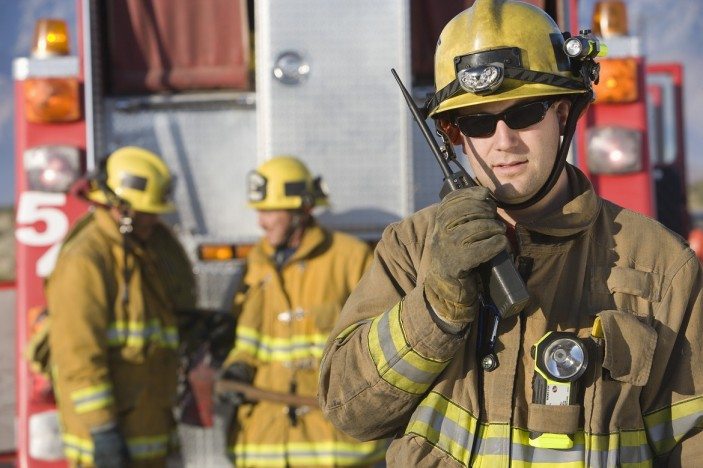
A part of the Middle Class Tax Relief and Job Creation Act of 2012, the federal government created the First Responders Network Authority to address large-scale public safety network concerns.

When networks go down or get overloaded it can be a huge public safety concern. We have seen many cases in which 911 networks go out when a carrier’s network fails, leaving thousands without emergency communications.

One of the biggest issues facing large-scale FirstNet deployment is whether it should be left to the states or whether it should be a sweeping federal deployment. Recently the FirstNet board decided to only accept national deployment offers.

Wade Sarver, an industry veteran and creator of the Wade4Wireless blog has been keeping a close eye on the deployment. He has mixed feelings about who should be in charge of the large-scale rollout. “If the states were allowed to do it, you’d be all over the place. I do agree with that. It might not be a constant network and I see where the federal government’s coming from when they established FirstNet; however, I guarantee you there would have been two of three states that would have a system built by now.”

“I think the states would be further ahead … but then there would be some states that would have no interest and wouldn’t have done anything, at least until the federal government would pay for it,” he added.

He says other issues include a steep learning curve and getting everyone on the same page. Sarver said FirstNet made a mistake in not approaching the Competitive Carriers Association.

“The members of CCA, the rural carriers, they would have been great … they would have been a key partner, but I think by going nationwide, now you’ve got to rely on the Bechtels, the General Dynamics, the companies that can handle something that big,” he explained. “You’re relying on them and their processes to build something out.”

So, can the deployment happen without the help of a major carrier? Sarver thinks it would be wise to capitalize on the expertise and infrastructure of the U.S.’ two largest carriers. “If you have the money, anything can happen … it’s the federal government, if they want it to happen, I really believe it will happen, but I think it would happen more efficiently, smoother and probably better if AT&T or Verizon Wireless were to partner with them,” he said. “I don’t know if Sprint and T-Mobile will want to do that. I can’t wait to find out when they do the RFP to see what they’re gonna do.”

Weighing the pros and cons of getting a carrier involved, he said, on the pro side: “The sites are there, the experience is there, the know-how is there,” he said. “They would know how to do everything. They know how to partner with people in the rural areas. They would also have their set of contractors.”

On the downside, he said it might not be worth the liability for Verizon Communications or AT&T to take on the responsibility of the massive project. “Anytime there’s a problem or something goes bad, it’s the federal government. They’re going to say ‘well, we partnered with these guys.’”

Another big issue FirstNet must address is what their backhaul network will look like and who to partner with.

“I think what FirstNet is going to do … I think they’ll try to partner with the states,” Sarver said. “I know for a fact a lot of states already have their own fiber network, wireless network. They have a lot of things in place and it would be silly to reinvent the wheel. They should just use what they have … so the states would pay for airtime for the devices and then FirstNet would pay for the backhaul charges to the states … to me that would be a win-win.”

He does believe that some new backhaul networks will have to be built and that it will be expensive. He doesn’t think the $7 billion the federal government allocated for the FirstNet buildout will be enough if a lot of new infrastructure has to be built. “I think to build all new backhaul with vendors, which I think they’ll have to do, it will be so much money. That $7 billion will get sucked up pretty quick. I think the fiber network will be a mix of fiber, wireless and copper and even some cable modems. I think they’ll just have to figure out who they’re going to partner with.”

So when will we see a large-scale rollout of FirstNet?

“Here’s how I see the time line. The RFP will take three to six months. It will take three months to really absorb it and possibly do the bidding and everything and then there will be issues after that. So now we’re into 2016. We’re at the start of third-quarter 2016. I think what FirstNet is going to have to do is vet whoever wins. They’re going to have to go through and say ‘can you do this?’… and then you have three more months of putting a plan together and then possibly by the end of the year they’ll have a plan and they’ll be ready to actually start working with vendors. So I will say it will ramp up in 2017 … I would say it will hit full force in third quarter 2017 … all the way through 2020 they’ll be deploying.”


You Might Also Like
  • Thursday (telco diary) | Telco pieces in the AI jigsaw
  • Nokia nips and tucks, and sees supercycle upside – as AI and cloud orders double
  • Wednesday (telco diary) | What AT&T and Lumen tell us about the AI fiber build-out
  • Rakuten Mobile expands O-RAN footprint with 1Finity radios
  • Monday (telco diary) | Sovereign AI for Industry 4.0
  • Agentic AI – the $60bn opportunity for telecom operators (Reader Forum)
Share 0 LinkedinEmail
Joey Jackson

[email protected] Joey Jackson is an editor and production manager at RCRWireless.com and RCRtv based in Austin, Texas. Before coming to RCR, Joey was a multimedia journalist for multiple TV news affiliates around the country. He is in charge of custom video production as well as the production of the "Digs," "Gigs," "How it works" and "Tower Stories" segments for RCRtv. He also writes daily about the latest developments in telecom and ICT news. An Oregon native, Joey graduated from the University of Oregon with a degree in journalism and communications. He enjoys telling the stories of the people and companies that are shaping the landscape of the mobile world. Follow him on Twitter at @duck_jackson.

previous post
FCC hits prepaid calling card companies with $30M in fines
next post
AT&T, CTIA CEOs talk IoT at Brookings Institute

White Papers

  • Norton eBook: The 2026 Telco Playbook

  • Enea White Paper: Why Intelligent AAA is the Swiss Army Knife of Telecom

  • CSG White Paper: Telco AI Enabler: Mediation’s Defining Role

  • Enea White Paper: Scalable Database Design for 5G and Beyond

  • Supermicro and NVIDIA Whitepaper: Powering sovereign AI at scale

Editorial Reports

  • Market Pulse Report: Telco AI in 2026 – Trends, Challenges and Opportunities

  • Nvidia Report: The State of AI in Telecommunications: 2026 Trends

  • Report: Scaling Optical Networks For The Hyperscale And AI Era

Webinars

  • Webinar: Building 6G — aligning technology, policy and purpose

  • SIMCom Webinar: Scaling your next deployment – from plastic to provisioning

  • Webinar: Rethinking the RAN as AI, cloud and openness converge

  • Webinar: Scale-Up, Scale-Out, Scale-Across – Building AI-Era Network Fabrics

  • Webinar: NTN in motion – evolving standards, expanding services

Since 1982, RCR Wireless News has been providing wireless and mobile industry news, insights, and analysis to mobile and wireless industry professionals, decision makers, policy makers, analysts and investors.

Facebook Twitter Youtube Linkedin Envelope Rss

Useful Links

  • Subscribe
  • About RCR Wireless News
  • Contact Us
  • Advertise
  • Editorial Calendar
  • Archive
  • RSS
  • Wireless News Archive
  • Subscribe
  • About RCR Wireless News
  • Contact Us
  • Advertise
  • Editorial Calendar
  • Archive
  • RSS
  • Wireless News Archive

Edtior's Picks

Why throwing money at broadband speeds isn’t fixing America’s internet (Reader Forum)
Thursday (telco diary) | Telco pieces in the AI jigsaw
The Agentic Network — Rakuten Mobile on turning data into outcomes

Latest Articles

Why throwing money at broadband speeds isn’t fixing America’s internet (Reader Forum)
Thursday (telco diary) | Telco pieces in the AI jigsaw
The Agentic Network — Rakuten Mobile on turning data into outcomes
AI drives new demands on optical networks, Ciena says

© 2026 RCR Wireless News All Right Reserved. Developed by Eight Hats.

Cookie Policy | Privacy Policy

RCR Wireless
  • News
  • Channels
    • 5G
    • 6G
    • BSS OSS
    • Carriers
    • IoT
    • Network Infrastructure
    • Open RAN
    • Private 5G
    • Telco AI
    • Telco Cloud
    • Test & Measurement
  • Resources
    • Reports
    • Webinars
    • White papers
    • AI Fundamentals
    • Analyst Angle
    • Editorial Calendar
    • Fundamentals
      • 5G NR Release 17
      • AI
        • Telco AI in 2025
    • Podcasts
      • Let’s Get Digital with Carrie Charles
      • Wireless Connectivity to Enable Industry 4.0 for the Middleprise
      • Well Technically…
      • Will 5G Change the World
      • Accelerating Industry 4.0 Digitalization
  • AI Infrastructure
  • Programs
  • Events
  • RCRtv
  • Advertise
  • Subscribe
RCR Wireless
  • News
  • Channels
    • 5G
    • 6G
    • BSS OSS
    • Carriers
    • IoT
    • Network Infrastructure
    • Open RAN
    • Private 5G
    • Telco AI
    • Telco Cloud
    • Test & Measurement
  • Resources
    • Reports
    • Webinars
    • White papers
    • AI Fundamentals
    • Analyst Angle
    • Editorial Calendar
    • Fundamentals
      • 5G NR Release 17
      • AI
        • Telco AI in 2025
    • Podcasts
      • Let’s Get Digital with Carrie Charles
      • Wireless Connectivity to Enable Industry 4.0 for the Middleprise
      • Well Technically…
      • Will 5G Change the World
      • Accelerating Industry 4.0 Digitalization
  • AI Infrastructure
  • Programs
  • Events
  • RCRtv
  • Advertise
  • Subscribe
@2020 - All Right Reserved. Designed and Developed by PenciDesign