

RCR Wireless
  • News
  • Channels
    • 5G
    • 6G
    • BSS OSS
    • Carriers
    • IoT
    • Network Infrastructure
    • Open RAN
    • Private 5G
    • Telco AI
    • Telco Cloud
    • Test & Measurement
  • Resources
    • Reports
    • Webinars
    • White papers
    • AI Fundamentals
    • Analyst Angle
    • Editorial Calendar
    • Fundamentals
      • 5G NR Release 17
      • AI
        • Telco AI in 2025
    • Podcasts
      • Let’s Get Digital with Carrie Charles
      • Wireless Connectivity to Enable Industry 4.0 for the Middleprise
      • Well Technically…
      • Will 5G Change the World
      • Accelerating Industry 4.0 Digitalization
  • AI Infrastructure
  • Programs
  • Events
  • RCRtv
  • Advertise
  • Subscribe
Monday, July 6, 2026
RCR Wireless
  • News
  • Channels
    • 5G
    • 6G
    • BSS OSS
    • Carriers
    • IoT
    • Network Infrastructure
    • Open RAN
    • Private 5G
    • Telco AI
    • Telco Cloud
    • Test & Measurement
  • Resources
    • Reports
    • Webinars
    • White papers
    • AI Fundamentals
    • Analyst Angle
    • Editorial Calendar
    • Fundamentals
      • 5G NR Release 17
      • AI
        • Telco AI in 2025
    • Podcasts
      • Let’s Get Digital with Carrie Charles
      • Wireless Connectivity to Enable Industry 4.0 for the Middleprise
      • Well Technically…
      • Will 5G Change the World
      • Accelerating Industry 4.0 Digitalization
  • AI Infrastructure
  • Programs
  • Events
  • RCRtv
  • Advertise
  • Subscribe
Add RCR Wireless as a preferred source on Google
  • Qualcomm 6G Insights
  • Huawei Content Hub
  • Qualcomm – 6G Vision
  • OSS/BSS Channel
RCR Wireless
RCR Wireless
  • Advanced Mimo
  • Mobile mmWave
  • 5G Positioning
  • Green Networks
  • Metaverse
  • Automotive
  • Industrial and Wide-area IoT
Copyright 2021 - All Right Reserved
Home - The most important coding languages for IoT developers
FeaturedFundamentalsInternet of Things (IoT)Telco Cloud

The most important coding languages for IoT developers

by Phillip Tracy October 7, 2016
written by Phillip Tracy October 7, 2016 Share
LinkedinEmail
Share 0LinkedinEmail
177

Languages for IoT developers

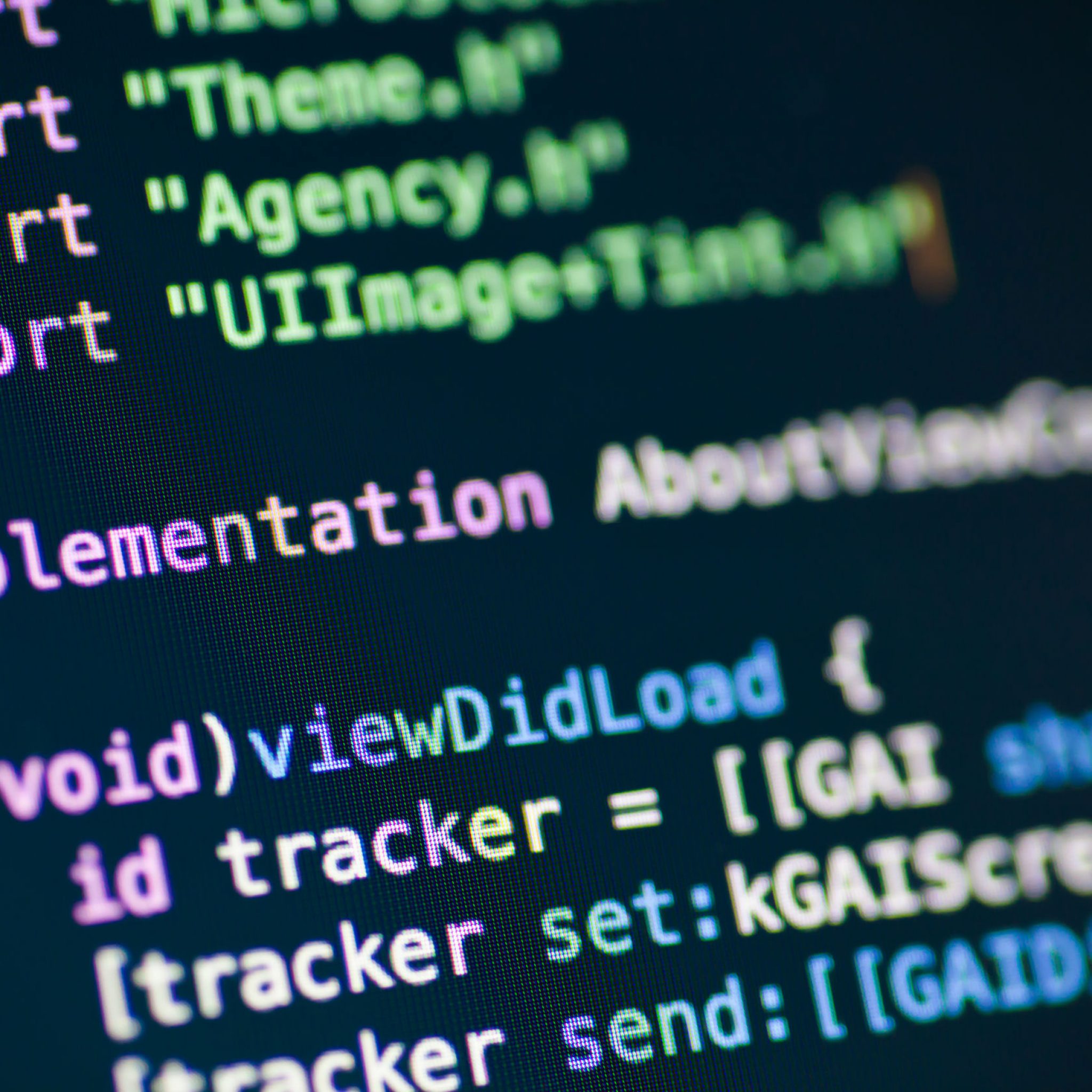
We have seen a changing of the guard in the past few years as software takes center stage and once-beloved hardware simply becomes a canvas for developers. The ability to code is an important skill for the production of any modern technology, especially a product that falls within the “internet of things.” If IoT developers are to create the next big thing in tech, they will need to know the most important and popular IoT coding languages. Here is a list of top coding languages providing the backbone of IoT software:

C

C, a language first developed to program telephone switches, is available on nearly every advanced embedded system platform that exists. For some platforms where it’s not directly available, it’s still the basis for the dedicated language used in the software development kit.

The language is still the first choice for many programmers who write for the lowest layer of software, the one closest to the hardware, according to Tech Beacon. The language hides nothing from you, and that means you can fiddle with every part of the code to squeeze out the best performance from an underpowered device. Every bit can be flipped. Every value on the stack is available.

“From what we see in the market, C remains the language of choice for constrained devices,” Victor Berrios, the CTO at the ZigBee Alliance, told Tech Beacon. “These typically do not include a ‘commercial’-level [operating system] but rather a basic task-scheduler type of resource management also coded in C.”

Java

The top choice of the Eclipse survey and Embedded Computing survey was Java. The original project was aimed at set-top boxes, one of the first domains for nondesktop computing.

Java’s advantages include the ability to create and debug code on a desktop and then move it to any chip with a Java Virtual Machine. That means the code can run not just on places where JVMs are common – servers and smartphones – but also on the smallest machines.

Java was written to be an object-oriented language that is portable with few hardware dependencies built into the compiler. In order to get the specific, fine control over particular pieces of hardware, Java depends on hardware-support libraries that are called from the generic code.

C++

C++ is an object-orientated preprocessor for C and has the processing power that C does not have to run higher level languages.

The language is commonly used in projects running Linux and also is used in embedded programming.

It adds layers of abstractions, classes and objects, allowing developers the ability to extend programming code for embedded and IoT code.

C++ has encouraged other languages including Java, Python C#, D and more.

Python

It started as a scripting language to glue together real code, but it’s increasingly used as the main language for many developers, thanks to its easy readability. When small devices have enough memory and computational power, the developers are free to choose the language that makes their lives easier, and that is more and more often turning out to be Python, according to Information Week.

Python makes for a solid embedded language, having sufficient power in the embedded platform. Python is a good choice for any applications that will take data, put it into any sort of database format, then draw upon the tables for control information.

JavaScript

JavaScript is a scripting language that is heavily used for building web-fronted applications. Its relatively newfound popularity on the server makes it a surprisingly popular choice for IoT applications. A full 41.8% of the developers in the Eclipse survey chose JavaScript, and 31.5% indicated that they were using Node.js in their projects, according to Tech Beacon.

Much of this work is focused on the servers and gateways or hubs that gather the information and then store it. The smaller smart hubs and sensors that run Linux can usually run Node.js.

Swift

While Swift is still mainly used to build applications for Apple’s iOS and macOS devices, the popularity of these devices means it’s often part of the IoT stack. If you want your things to interact with an iPhone or an iPad, you’re probably going to want to build the app in Swift.

Additional languages

Other languages being used for IoT include:

  • Go
  • Rust
  • Assembler
  • Forth
  • B#
You Might Also Like
  • ‘You can’t tame it’ – private networks, open standards and the AI proof for IoT
  • LoRaWAN eyes ‘fourth pillar’ status as IoT apps start to stack
  • Telefónica, Google Cloud boost Spain’s sovereign cloud ambitions
  • New LoRaWAN roadmap puts focus on usability in bid for ‘massive’-scale IoT
  • AI fuels cloud growth past $500B, Synergy Research finds
  • Powering the future of cloud RAN with the Dell PowerEdge XR8720t

Table of Contents

  • Languages for IoT developers
  • C
  • Java
  • C++
  • Python
  • JavaScript
  • Swift
  • Additional languages
Share 0 LinkedinEmail
Avatar of Phillip Tracy
Phillip Tracy

previous post
These are the elements required to deploy an IoT solution
next post
T-Mobile outage, Verizon drone news … 5 things to know today

White Papers

  • Enea White Paper: Why Intelligent AAA is the Swiss Army Knife of Telecom

  • CSG White Paper: Telco AI Enabler: Mediation’s Defining Role

  • Enea White Paper: Scalable Database Design for 5G and Beyond

  • Supermicro and NVIDIA Whitepaper: Powering sovereign AI at scale

  • VIAVI Whitepaper: RAN scenario generators and their critical role for future-proofing AI-native RAN in Advanced 5G and 6G networks

Editorial Reports

  • Report: Scaling Optical Networks For The Hyperscale And AI Era

  • Test And Measurement Market Pulse Report

  • Editorial Report: Securing telecom infrastructure for the quantum era

Webinars

  • Webinar: Rethinking the RAN as AI, cloud and openness converge

  • Webinar: Scale-Up, Scale-Out, Scale-Across – Building AI-Era Network Fabrics

  • Webinar: NTN in motion – evolving standards, expanding services

  • Webinar: Noise-Figure Measurements with RFmx and PXI VSTs

  • Qualcomm Webinar – Building the 6G Standard: Key developments to know

Since 1982, RCR Wireless News has been providing wireless and mobile industry news, insights, and analysis to mobile and wireless industry professionals, decision makers, policy makers, analysts and investors.

Facebook Twitter Youtube Linkedin Envelope Rss

Useful Links

  • Subscribe
  • About RCR Wireless News
  • Contact Us
  • Advertise
  • Editorial Calendar
  • Archive
  • RSS
  • Wireless News Archive
  • Subscribe
  • About RCR Wireless News
  • Contact Us
  • Advertise
  • Editorial Calendar
  • Archive
  • RSS
  • Wireless News Archive

Edtior's Picks

Enea White Paper: Why Intelligent AAA is the Swiss Army Knife of Telecom
Huawei outlines AI-centric network roadmap for telecom monetization
Why consolidation will reshape MDU connectivity (part 3/3) – Analyst Angle

Latest Articles

Enea White Paper: Why Intelligent AAA is the Swiss Army Knife of Telecom
Huawei outlines AI-centric network roadmap for telecom monetization
Why consolidation will reshape MDU connectivity (part 3/3) – Analyst Angle
Quantum Safe Networks Forum 2026

© 2026 RCR Wireless News All Right Reserved. Developed by Eight Hats.

Cookie Policy | Privacy Policy

RCR Wireless
  • News
  • Channels
    • 5G
    • 6G
    • BSS OSS
    • Carriers
    • IoT
    • Network Infrastructure
    • Open RAN
    • Private 5G
    • Telco AI
    • Telco Cloud
    • Test & Measurement
  • Resources
    • Reports
    • Webinars
    • White papers
    • AI Fundamentals
    • Analyst Angle
    • Editorial Calendar
    • Fundamentals
      • 5G NR Release 17
      • AI
        • Telco AI in 2025
    • Podcasts
      • Let’s Get Digital with Carrie Charles
      • Wireless Connectivity to Enable Industry 4.0 for the Middleprise
      • Well Technically…
      • Will 5G Change the World
      • Accelerating Industry 4.0 Digitalization
  • AI Infrastructure
  • Programs
  • Events
  • RCRtv
  • Advertise
  • Subscribe
RCR Wireless
  • News
  • Channels
    • 5G
    • 6G
    • BSS OSS
    • Carriers
    • IoT
    • Network Infrastructure
    • Open RAN
    • Private 5G
    • Telco AI
    • Telco Cloud
    • Test & Measurement
  • Resources
    • Reports
    • Webinars
    • White papers
    • AI Fundamentals
    • Analyst Angle
    • Editorial Calendar
    • Fundamentals
      • 5G NR Release 17
      • AI
        • Telco AI in 2025
    • Podcasts
      • Let’s Get Digital with Carrie Charles
      • Wireless Connectivity to Enable Industry 4.0 for the Middleprise
      • Well Technically…
      • Will 5G Change the World
      • Accelerating Industry 4.0 Digitalization
  • AI Infrastructure
  • Programs
  • Events
  • RCRtv
  • Advertise
  • Subscribe
@2020 - All Right Reserved. Designed and Developed by PenciDesign
