

RCR Wireless
  • News
  • Channels
    • 5G
    • 6G
    • BSS OSS
    • Carriers
    • IoT
    • Network Infrastructure
    • Open RAN
    • Private 5G
    • Telco AI
    • Telco Cloud
    • Test & Measurement
  • Resources
    • Reports
    • Webinars
    • White papers
    • AI Fundamentals
    • Analyst Angle
    • Editorial Calendar
    • Fundamentals
      • 5G NR Release 17
      • AI
        • Telco AI in 2025
    • Podcasts
      • Let’s Get Digital with Carrie Charles
      • Wireless Connectivity to Enable Industry 4.0 for the Middleprise
      • Well Technically…
      • Will 5G Change the World
      • Accelerating Industry 4.0 Digitalization
  • AI Infrastructure
  • Programs
  • Events
  • RCRtv
  • Advertise
  • Subscribe
Sunday, July 26, 2026
RCR Wireless
  • News
  • Channels
    • 5G
    • 6G
    • BSS OSS
    • Carriers
    • IoT
    • Network Infrastructure
    • Open RAN
    • Private 5G
    • Telco AI
    • Telco Cloud
    • Test & Measurement
  • Resources
    • Reports
    • Webinars
    • White papers
    • AI Fundamentals
    • Analyst Angle
    • Editorial Calendar
    • Fundamentals
      • 5G NR Release 17
      • AI
        • Telco AI in 2025
    • Podcasts
      • Let’s Get Digital with Carrie Charles
      • Wireless Connectivity to Enable Industry 4.0 for the Middleprise
      • Well Technically…
      • Will 5G Change the World
      • Accelerating Industry 4.0 Digitalization
  • AI Infrastructure
  • Programs
  • Events
  • RCRtv
  • Advertise
  • Subscribe
Add RCR Wireless as a preferred source on Google
  • Qualcomm 6G Insights
  • Huawei Content Hub
  • Qualcomm – 6G Vision
  • OSS/BSS Channel
  • RCRTech Roundtable: AI Infrastructure
RCR Wireless
RCR Wireless
  • Advanced Mimo
  • Mobile mmWave
  • 5G Positioning
  • Green Networks
  • Metaverse
  • Automotive
  • Industrial and Wide-area IoT
Copyright 2021 - All Right Reserved
Home - What are HAPS and what role will they play in future networks?
Network Infrastructure5G

What are HAPS and what role will they play in future networks?

by Kelly Hill December 20, 2021
written by Kelly Hill December 20, 2021 Share
LinkedinEmail
Share 0LinkedinEmail
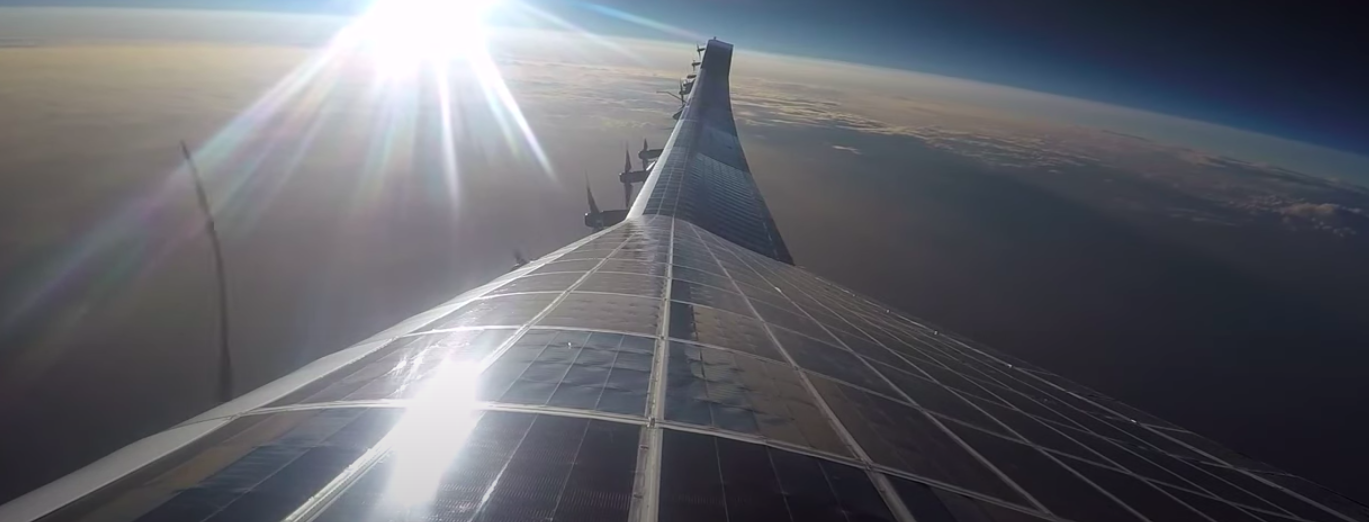
Image: HAPSMobile/Loon (screenshot)
604

Non-terrestrial networks (NTN) are being integrated into 5G standards and, according to standards body ATIS, “maximize the inherent value of 5G networks by solving coverage problems and difficult use-cases that ground-based infrastructure alone cannot address.” While NTN are often assumed to be LEO or GEO satellites, there is also another, closer-to-earth option in development: HAPS, which fly in the earth’s stratosphere.

What are HAPS?

HAPS stands for High-Altitude Platform Station, although they are also sometimes referred to as High-Altitude Pseudo Satellites. HAPS carry telecom payloads and can provide stratosphere-based connectivity to devices on the ground. So far, HAPS have been used largely for temporary coverage, such as during disaster recovery, but companies working in the space hope to use them for more enduring and reliable coverage in unconnected areas.

What are two types of HAPS?

As described in a white paper from HAPS Alliance (pdf), there are two basic types of HAPS: Lighter Than Air (LTA) HAPS, such as high-altitude balloons, that rely on buoyancy to reach and maintain their height; and Heavier Than Air (HTA) HAPS, such as fixed-wing aircraft.

What are some of the telecommunications-specific aspects of HAPS?

A significant amount of HAPS development and testing thus far has focused on how to enable connectivity. Given that the on-board communications equipment is being carried by an unmanned, lightweight aircraft that runs on solar energy, both weight and power consumption need to be minimized. However, the equipment also needs to be able to operate reliably with significant vibration and in the harsh, cold stratospheric environment.

In terms of how a HAPS system works, there is a ground gateway that connects ground base stations and a HAPS. HAPS tests have been conducted using special access to various frequency bands both below 1 GHz (700 MHz and 900 MHz, for example) and in the midband (1.2-1.7 GHz, 1.9 and 2.5 GHz, 3.4-3.5 GHz, and 5.8 GHz unlicensed spectrum) as well as at higher frequencies (26 GHz and 38 GHz, 70-80 GHz). In testing, multiple frequency bands have been used in order to control payload and data collection as well as the feeder link to transmit data from smartphones to terrestrial internet lines, to ensure redundancy. More details on HAPS testing and spectrum use are available in the HAPS Alliance white paper.

Testing has successfully established communications links, including a video call supported by HAPSMobile’s Sunglider aircraft.

What hurdles lie ahead for HAPS development?

The HAPS Alliance white paper identified several, including:

-The need for internationally accepted regulations for HAPS to operate in the stratosphere. While test flights have been permitted in individual countries, commercialization will require a comprehensive regulatory framework. The HAPS Alliance says it is working with regulators around the world as well as the International Civil Aviation Organization (ICAO) toward such a framework, which would include everything from safety rules to remote control of autonomous HAPS fleets.

-Better, globally shared meteorological data on conditions in the troposphere and stratosphere. The HAPS Alliance white paper noted that during test flights, weather balloons had to be sent up after the HAPS took off in order to get near-real-time information on conditions for the aircraft’s descent.

-Also key to the future of HAPS is the continued advancement of solar panels and battery cells, so that HAPS can fly longer. In the HAPS Alliance’s words, “It is no exaggeration to say that the advancement of HAPS depends on improving the performance of battery cells and solar panels.” HAPS represents a network with base stations that operate on solar power alone. The aircraft use solar panels mounted on top of its wing to generate electricity during the day to turn its propellers, and stores surplus energy to be used at night. Because the craft flies above the clouds, it is ensured access to solar power generation. Softbank believes that it will be able to maintain continuous flight of HAPS for about six months.

What does the future of HAPS look like?

In addition to connecting hard-to-connect places and people, HAPS Alliance notes that as drones come into more extensive use, and even electric vertical take-off and landing (eVTOL) vehicles that can carry people, NTN such as HAPS will become more important because network coverage will need to extend above the ground in ways that terrestrial base stations aren’t built for.

Softbank says that, along with connecting an estimated 3.7 billion people, is why it’s putting work into HAPS development. Softbank purchased the intellectual property associated with Alphabet’s Loon when that business unit was wound down this year. Softbank’s HAPSMobile JV is aiming to accelerate effort towards commercialization of HAPS and has a target of mass-production of HAPS aircraft starting in 2027.

“It is safe to say that the HAPS is guaranteed to become vital infrastructure for humankind,” the white paper concluded, calling the stratosphere “the last frontier for humanity.”


You Might Also Like
  • Huawei sees Mobile AI driving new wave of uplink network investment
  • Spectrum supercycle – US opens floodgates; UK shares it out
  • Thursday (telco diary) | Telco pieces in the AI jigsaw
  • Nokia nips and tucks, and sees supercycle upside – as AI and cloud orders double
  • Wednesday (telco diary) | What AT&T and Lumen tell us about the AI fiber build-out
  • South Korea launches AI-RAN project to advance industrial AI
Share 0 LinkedinEmail
Kelly Hill

Kelly Hill reports on network test and measurement, AI infrastructure and regulatory issues, including spectrum, for RCR Wireless News. She began covering the wireless industry in 2005, focusing on carriers and MVNOs, then took a few years’ hiatus and returned to RCR Wireless News to write about heterogeneous networks (remember those?) and network infrastructure. Kelly is an Ohio native with a masters degree in journalism from the University of California, Berkeley, where she focused on science writing and multimedia. She has written for the San Francisco Chronicle, The Oregonian and The Canton Repository. She lives in northern Virginia, not far from Data Center Alley.

previous post
What’s next for Wi-Fi, and should enterprises wait to upgrade?
next post
‘The real risk is we don’t partner’ – cloud-cos, telcos and the free-for-all in the 5G house

White Papers

  • Norton eBook: The 2026 Telco Playbook

  • Enea White Paper: Why Intelligent AAA is the Swiss Army Knife of Telecom

  • CSG White Paper: Telco AI Enabler: Mediation’s Defining Role

  • Enea White Paper: Scalable Database Design for 5G and Beyond

  • Supermicro and NVIDIA Whitepaper: Powering sovereign AI at scale

Editorial Reports

  • Market Pulse Report: Telco AI in 2026 – Trends, Challenges and Opportunities

  • Nvidia Report: The State of AI in Telecommunications: 2026 Trends

  • Report: Scaling Optical Networks For The Hyperscale And AI Era

Webinars

  • Webinar: Building 6G — aligning technology, policy and purpose

  • SIMCom Webinar: Scaling your next deployment – from plastic to provisioning

  • Webinar: Rethinking the RAN as AI, cloud and openness converge

  • Webinar: Scale-Up, Scale-Out, Scale-Across – Building AI-Era Network Fabrics

  • Webinar: NTN in motion – evolving standards, expanding services

Since 1982, RCR Wireless News has been providing wireless and mobile industry news, insights, and analysis to mobile and wireless industry professionals, decision makers, policy makers, analysts and investors.

Facebook Twitter Youtube Linkedin Envelope Rss

Useful Links

  • Subscribe
  • About RCR Wireless News
  • Contact Us
  • Advertise
  • Editorial Calendar
  • Archive
  • RSS
  • Wireless News Archive
  • Subscribe
  • About RCR Wireless News
  • Contact Us
  • Advertise
  • Editorial Calendar
  • Archive
  • RSS
  • Wireless News Archive

Edtior's Picks

AT&T says its network is already built for the agentic AI wave
AT&T and Ericsson use network sensing to spot drones with ordinary 5G towers
Huawei sees Mobile AI driving new wave of uplink network investment

Latest Articles

AT&T says its network is already built for the agentic AI wave
AT&T and Ericsson use network sensing to spot drones with ordinary 5G towers
Huawei sees Mobile AI driving new wave of uplink network investment
Spectrum supercycle – US opens floodgates; UK shares it out

© 2026 RCR Wireless News All Right Reserved. Developed by Eight Hats.

Cookie Policy | Privacy Policy

RCR Wireless
  • News
  • Channels
    • 5G
    • 6G
    • BSS OSS
    • Carriers
    • IoT
    • Network Infrastructure
    • Open RAN
    • Private 5G
    • Telco AI
    • Telco Cloud
    • Test & Measurement
  • Resources
    • Reports
    • Webinars
    • White papers
    • AI Fundamentals
    • Analyst Angle
    • Editorial Calendar
    • Fundamentals
      • 5G NR Release 17
      • AI
        • Telco AI in 2025
    • Podcasts
      • Let’s Get Digital with Carrie Charles
      • Wireless Connectivity to Enable Industry 4.0 for the Middleprise
      • Well Technically…
      • Will 5G Change the World
      • Accelerating Industry 4.0 Digitalization
  • AI Infrastructure
  • Programs
  • Events
  • RCRtv
  • Advertise
  • Subscribe
RCR Wireless
  • News
  • Channels
    • 5G
    • 6G
    • BSS OSS
    • Carriers
    • IoT
    • Network Infrastructure
    • Open RAN
    • Private 5G
    • Telco AI
    • Telco Cloud
    • Test & Measurement
  • Resources
    • Reports
    • Webinars
    • White papers
    • AI Fundamentals
    • Analyst Angle
    • Editorial Calendar
    • Fundamentals
      • 5G NR Release 17
      • AI
        • Telco AI in 2025
    • Podcasts
      • Let’s Get Digital with Carrie Charles
      • Wireless Connectivity to Enable Industry 4.0 for the Middleprise
      • Well Technically…
      • Will 5G Change the World
      • Accelerating Industry 4.0 Digitalization
  • AI Infrastructure
  • Programs
  • Events
  • RCRtv
  • Advertise
  • Subscribe
@2020 - All Right Reserved. Designed and Developed by PenciDesign