
A digital twin is like a virtual copy of a real object or system. It mimics how the real thing looks, works and behaves. The digital twin stays up-to-date with information from the real object and helps us find the best ways to improve it, like when adding new services. We believe digital twins have the potential to revolutionize mobile networks and the services they offer. This potential is not just a distant dream — it’s on the horizon and could transform experiences from smart cities to public safety and extended reality (XR). We believe that the convergence of 6G networks and digital twins can create new value at a scale that has never been seen before and help to create a future where the digital and physical worlds are more closely intertwined.
Welcome to the fifth installment of the 6G foundry series, where we look deeper into digital twins and the role they stand to play in our intelligent, interconnected future.
What are digital twins?
According to the National Academies of Sciences, Engineering, and Medicine, a digital twin is a virtual model that mirrors the structure, context and behavior of its physical counterpart, continually updating with data from the physical system. This bidirectional interaction allows for predictive analytics and informed decision-making.
At Qualcomm Technologies, we believe digital twins will be a key component of 6G networks, enhancing network efficiency and performance on the one side and enabling new services on the other
By offering a comprehensive view of the network, digital twins empower operators to make informed decisions that bolster network performance and reliability. From smart city infrastructure to public safety and XR, the potential applications of digital twins are vast and varied. By harnessing the power of digital twins, network operators can unlock new value.
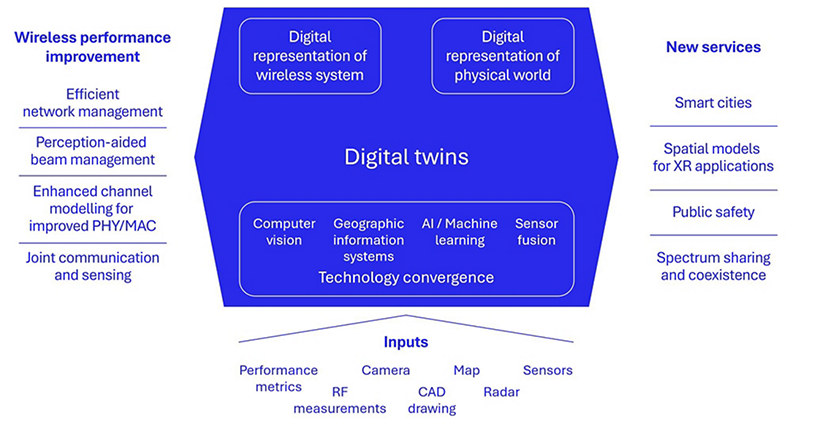
Figure 1. Digital twins in 6G can improve network performance, operational efficiencies, and enable new services
6G and digital twins: A cornerstone in the convergence of the physical and digital worlds
With predictive analytics powered by digital twins and AI, network operators can improve operational efficiencies, service reliability, spectrum management and ensure the successful introduction of new services to their ever-evolving networks. What is perhaps more exciting is the significant new value 6G networks are expected to create with integration of digital twins, enabling innovative use cases at scale.
Sensing capabilities in 6G can be used to create digital twins of physical environments. Together with the internet of things (IoT), these spatial models have numerous applications in smart city development, including urban planning, traffic management and utility management. They also have the potential to reshape emergency response, providing first responders with real-time, 3D situational awareness and enabling faster, more effective interventions. Furthermore, digital twins are poised to propel the uptake of XR applications. By creating immersive environments that are more responsive and lifelike than ever before, digital twins and 6G can elevate user experiences in domains like gaming, tourism, training and remote collaboration.
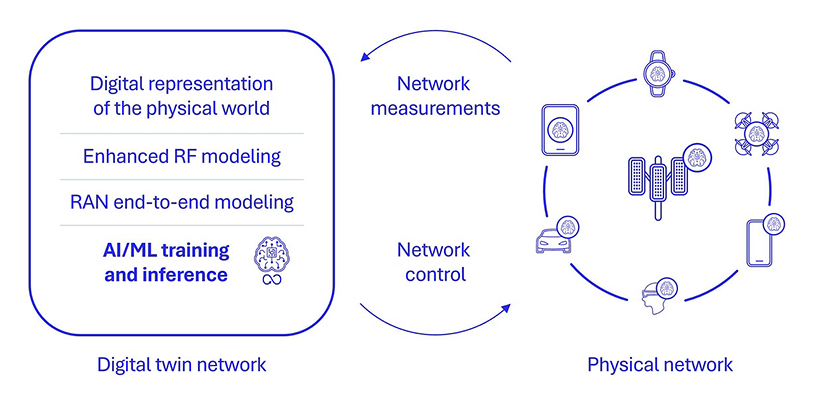
Figure 2. Digital twins can help operators manage networks efficiently and deploy new services.
Learn from the network to improve it and boost operational efficiency
As the vision for 6G evolves, it’s clear that digital twins will play a major role in revolutionizing how 6G networks will be managed. By offering real-time monitoring and analysis, digital representations of wireless systems empower network operators with insight and control. They enable the continual collection and processing of data, essential for informed decisions that optimize network performance for the ever-evolving network. This is especially critical in the 6G era, where networks are expected to grow significantly in capability and scale.
AI and digital twins are complementary tools for improving operational efficiency
The integration of AI with digital twins further enhances their capabilities, making them complementary tools for improving operational efficiency. AI algorithms can model complex network components, providing a deep understanding of network behavior and enabling scalability. These algorithms can analyze the combined set of real data from the network and synthetic data that digital twins can generate to detect patterns, predict performance and optimize resource allocation, all while ensuring reliable user experiences. As an example, site-specific channel models for improved physical layer (PHY) performance and medium access control (MAC) efficiency can be developed using digital twins and AI.
Proactive planning for deploying new services and spectrum
Digital twins can also facilitate proactive planning when deploying new services. By simulating various scenarios, they help operators anticipate the impact of introducing the new service and better manage the network’s performance when the new service is launched. One example would be generative AI applications that have demanding requirements, making performance assurance more critical. This foresight enables more effective capacity planning and resource allocation, ensuring that the network can handle peak loads for various services without compromising performance. Additionally, digital twins can provide valuable insights into spectrum utilization, promoting better coexistence with the incumbent users of spectrum and more efficient spectrum sharing among operators.
Predictive maintenance
The integration of AI and digital twins also facilitates predictive maintenance, reducing the need for costly and disruptive repairs. By constantly monitoring the network, digital twins can identify components at risk of failure and prompt timely maintenance. This proactive approach not only extends the lifespan of network equipment but also minimizes service disruptions, enhancing overall user satisfaction. In essence, digital twins are not just tools for monitoring and analyzing the network; they are dynamic assets that learn from the network to improve it, ultimately boosting operational efficiency and unlocking new value for network operators.

Figure 3. Digital twins and 6G can facilitate a comprehensive physical and digital perception of the urban environment.
Perception at scale can make cities smarter
The successful implementation of smart city initiatives hinges on more than just robust connectivity for IoT; it requires a deep understanding of the physical spaces that comprise urban environments. The comprehensive perception of urban landscapes that digital twins and 6G networks can facilitate — encompassing traffic patterns, resource usage and public space utilization — helps transform cities into intelligent, responsive metropolises.
By leveraging the digital twins and 6G, cities can achieve the necessary scale and precision to map and monitor urban spaces in real-time, enhancing infrastructure deployment, public safety, traffic management and overall quality of life for residents.
6G networks, with their high-order MIMO antennas and integrated sensing and communications (ISAC), can provide a new level of urban perception. These technologies enable the creation of digital twins that are continually updated with data, providing an accurate and dynamic representation of the city. This goes beyond connectivity to include sensing anonymous people and objects in the environment without compromising their privacy. This detailed and responsive monitoring allows operators to use their network presence and scale to offer added services to city agencies (e.g., more efficient urban planning) where resources are allocated based on real-time needs rather than static estimates that are potentially obsolete.
Sustainable, livable and inclusive communities
While cities have adopted many initiatives to improve sustainability, digital twins allow for even more efficiency. By optimizing resource use, cities can create more sustainable and livable environments. For instance, real-time traffic monitoring can reduce congestion and emissions, while smart waste management systems can ensure timely disposal and recycling. Additionally, the data collected by digital twins can foster inclusive decision-making processes, involving communities in urban planning and ensuring that developments meet the needs of all residents. By leveraging digital twins and advanced sensing capabilities, cities can unlock new value and create environments that are not only efficient and safe, but also sustainable and inclusive.
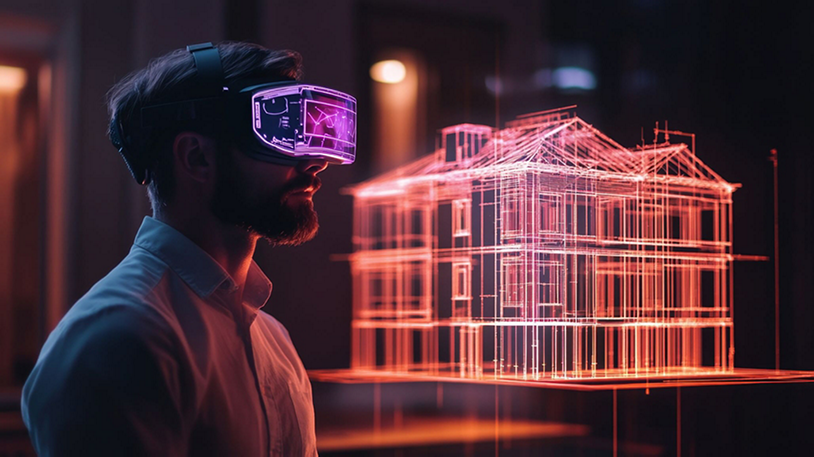
Figure 4. Digital twins will enable location-specific and contextually relevant XR experiences.
Accelerate the adoption of XR with spatial models created by digital twins
Digital twins and 6G can accelerate the adoption of XR technologies by creating more accurate and up-to-date spatial models of physical spaces. These models, which can cover indoor and outdoor environments, are essential for ensuring the precision required to seamlessly merge real and virtual worlds. Whether it’s augmented reality (AR) or virtual reality (VR), the accuracy provided by digital twins will enhance user experiences, making them more immersive and interactive. With 6G connectivity, digital twin information can be delivered to multiple devices for collective experiences. For example, a VR city tour can be updated in real time, providing users with the latest information and visuals based on the continuous data feed from the digital twin. As we advance into the 6G landscape, digital twins will introduce new value for network operators and transform the way we interact with the physical and digital worlds.
Tourism, education and professional training
The potential of digital twins extends to location-specific and contextually relevant XR experiences. Imagine taking a VR tour of a historic site where the digital twin not only replicates the physical structure but also integrates real-time data on visitor traffic, weather conditions and even historical events. This level of detail can also transform educational and training environments, enabling the creation of realistic virtual simulations for professional training in fields like healthcare, engineering, utility management and more. By leveraging digital twins, educators can offer students and trainees a hands-on experience that is both engaging and effective, bridging the gap between theory and practice.
Remote collaboration
Furthermore, digital twins are essential for remote collaboration, particularly in fields like architecture, construction and urban planning. Shared spatial models allow teams to work together from different locations, using the most current data to make decisions. This not only speeds up the design and building processes but also facilitates consensus. Digital twins are also crucial for simulating dangerous situations, especially in manufacturing and construction. By providing spatial context, these simulations can help improve safety and risk management, reducing the likelihood of accidents and increasing operational efficiency.
Improve public safety with 6G and digital twin-enhanced spatial awareness
6G networks with digital twins can integrate spatial models and real-time data from IoT for comprehensive and dynamic models of the physical environments. By understanding the physical layout and potential vulnerabilities in infrastructure, digital twins can help design more resilient infrastructure. Sensors that provide additional data points like temperature, humidity, concentration and other environmental data, can be combined with information on the presence of people, vehicles and the state of physical infrastructure for a range of benefits, such as real-time monitoring of public spaces and identifying and responding to emergencies quickly.
Effective rapid response
The combination of network positioning of 6G devices, network sensing of the spatial environment, digital twin-powered spatial models of physical spaces and 3D perception with XR could be a potential game-changer for emergency services. It can help first responders to quickly and accurately detect emergencies and respond to incidents, especially in complex urban environments.
Managing vehicular and drone traffic
Furthermore, the spatial models and real-time data facilitated by digital twins can address vehicular traffic disruptions and enhance drone management in urban areas. By monitoring traffic flows and anticipating potential bottlenecks, city planners can implement more effective traffic management strategies. Drones flying in controlled airspaces, especially in dense urban areas can be managed more reliably with digital twin-enhanced spatial awareness. Unauthorized drones can be detected by the 6G network and tracked for quicker interception by law enforcement.
The potential of digital twins and 6G networks to transform public safety is clear. By providing advanced spatial awareness and real-time data integration, these technologies can be used to make urban environments safer and emergency services more responsive.
The road ahead: Technology development and standardization for critical mass
The inclusion of digital twins in the 6G vision are a cornerstone in the convergence of the physical and digital worlds. We hope to see digital twins being developed in a standards-compliant manner for the critical mass needed to foster innovation. As we embark on the 6G journey, digital twins are poised to deliver a more interconnected and intelligent future.
Learn more and get the latest updates:
Read more technology perspectives from the 6G foundry
Sign up for our wireless technology newsletter
Follow us on X
Table of Contents