

RCR Wireless
  • News
  • Channels
    • 5G
    • 6G
    • BSS OSS
    • Carriers
    • IoT
    • Network Infrastructure
    • Open RAN
    • Private 5G
    • Telco AI
    • Telco Cloud
    • Test & Measurement
  • Resources
    • Reports
    • Webinars
    • White papers
    • AI Fundamentals
    • Analyst Angle
    • Editorial Calendar
    • Fundamentals
      • 5G NR Release 17
      • AI
        • Telco AI in 2025
    • Podcasts
      • Let’s Get Digital with Carrie Charles
      • Wireless Connectivity to Enable Industry 4.0 for the Middleprise
      • Well Technically…
      • Will 5G Change the World
      • Accelerating Industry 4.0 Digitalization
  • AI Infrastructure
  • Programs
  • Events
  • RCRtv
  • Advertise
  • Subscribe
Monday, August 24, 2026
RCR Wireless
  • News
  • Channels
    • 5G
    • 6G
    • BSS OSS
    • Carriers
    • IoT
    • Network Infrastructure
    • Open RAN
    • Private 5G
    • Telco AI
    • Telco Cloud
    • Test & Measurement
  • Resources
    • Reports
    • Webinars
    • White papers
    • AI Fundamentals
    • Analyst Angle
    • Editorial Calendar
    • Fundamentals
      • 5G NR Release 17
      • AI
        • Telco AI in 2025
    • Podcasts
      • Let’s Get Digital with Carrie Charles
      • Wireless Connectivity to Enable Industry 4.0 for the Middleprise
      • Well Technically…
      • Will 5G Change the World
      • Accelerating Industry 4.0 Digitalization
  • AI Infrastructure
  • Programs
  • Events
  • RCRtv
  • Advertise
  • Subscribe
Add RCR Wireless as a preferred source on Google
  • Qualcomm 6G Insights
  • Huawei Content Hub
  • Qualcomm – 6G Vision
  • OSS/BSS Channel
  • RCRTech Roundtable: AI Infrastructure
RCR Wireless
RCR Wireless
  • Advanced Mimo
  • Mobile mmWave
  • 5G Positioning
  • Green Networks
  • Metaverse
  • Automotive
  • Industrial and Wide-area IoT
Copyright 2021 - All Right Reserved
Home - What is IoT SAFE – and how does it shore-up IoT for a shot at massive scale?
FundamentalsInternet of Things (IoT)IoT

What is IoT SAFE – and how does it shore-up IoT for a shot at massive scale?

by James Blackman October 6, 2023
written by James Blackman October 6, 2023 Share
LinkedinEmail
Share 0LinkedinEmail
private 5G
Image: 123rf
429

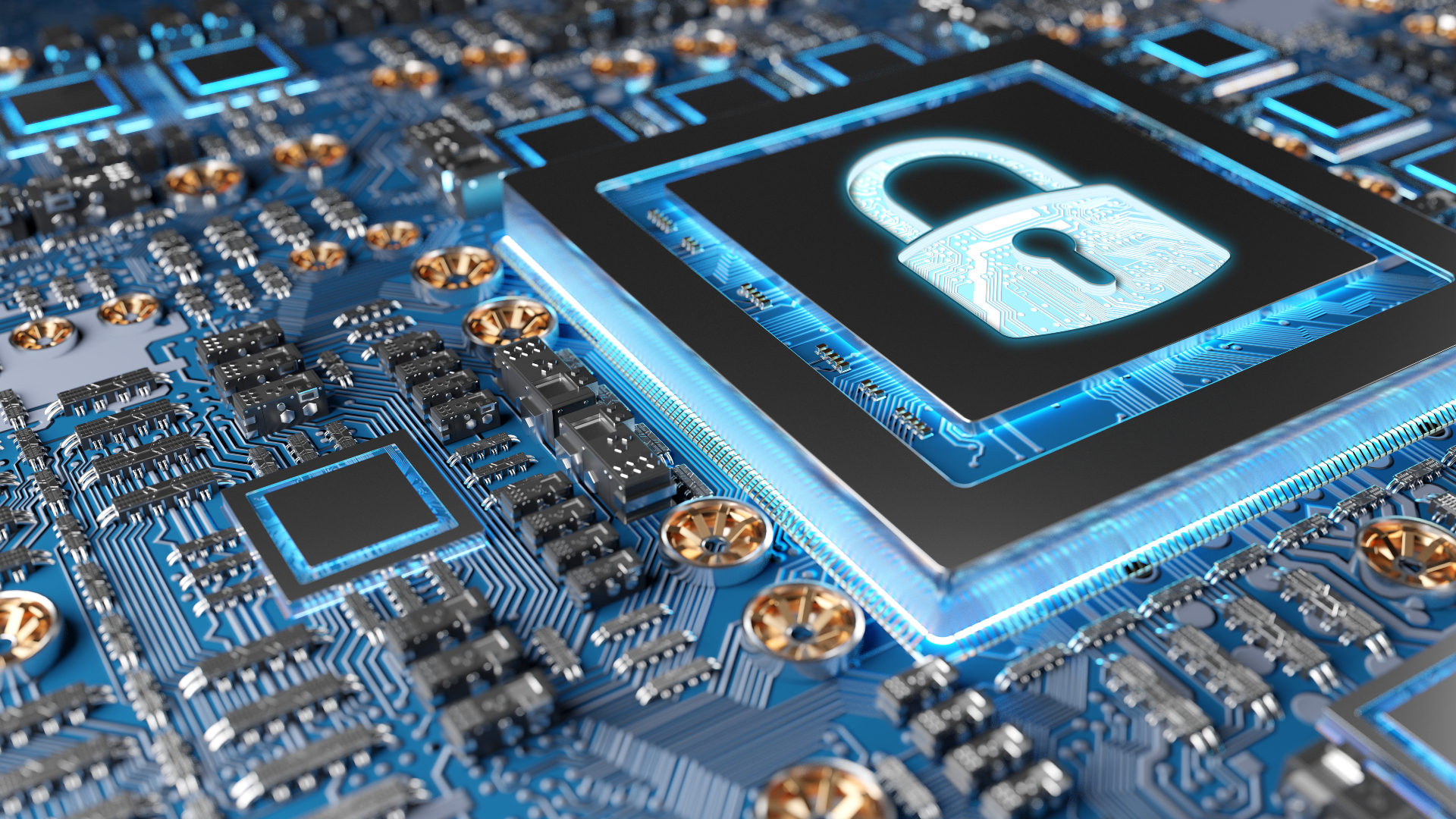
We are a little tardy with this, but it is worth bookmarking in time for the upcoming RCR Wireless report and webinar on smart meters (October 19; sign-up here!), and memorialising for future IoT articles and reports. The GSMA’s new IoT SAFE standard, launched back in 2021, seeks to create some kind of order out of the chaos of IoT security. It enables device makers and service providers to use the cellular SIM as a standardised hardware-based ‘root-of-trust’ to authenticate and authorise IoT devices and protect IoT data.
ARD036 Smart metering %E2%80%93 how IoT has changed up a gear in the utilities market Editorial Banners

A root-of-trust, in the context of digital security, implies a common technical component that can be relied upon to perform critical security functions. The National Institute of Standards and Technology (NIST) defines it as hardware, firmware, or software. The GSMA, representing mobile operators selling mobile comms, has placed this root-of-trust inside the trusty subscriber identity module (SIM), the integrated circuit that stores an international mobile subscriber identity (IMSI) number and related authentication keys, in cellular IoT devices. 

The SAFE in IoT SAFE stands for SIM applet for secure end-to-end communication; developed as a JavaCard application, it works with all SIM form factors, including physical SIMs, embedded SIMs (eSIMs), and integrated SIMs (iSIMs). The point is to make the security mechanism in cellular IoT devices common and consistent, across the industry, in order to make the whole ecosystem more robust – “rather than using proprietary and potentially less trusted hardware secure elements implemented elsewhere within the device”, says the GSMA.

It explains: “The SIM is best suited to function as the hardware root-of-trust in an IoT device as it has advanced security and cryptographic features and is a fully standardised secure element, enabling interoperability across different vendors and consistent use by IoT device makers.” The technical jargon says the SIM integrates a “mini crypto-safe” to securely establish a (datagram) transport layer security (TLS/DTLS) session – designed to prevent eavesdropping, tampering, and forgery – with a corresponding application cloud/server.

DTLS is used for internet telephony, streaming, gaming, and VPNs, among other things. IoT SAFE provides services to enable IoT devices to “securely perform mutual DTLS authentication to a server using either asymmetric or symmetric security schemes”, says the GSMA; it means they can “compute shared secrets and keep long-term keys secret” and be provisioned and managed “from a remote IoT security service”. It means, also, that IoT applications do not need to worry about TLS security handshakes ‘under-the-hood’, says GSMA.

It writes: “Developers are free to focus on their IoT applications, knowing that the lower layers of the device OS Middleware are taking care of the secure connection establishment.” The IoT SAFE applet comes with #1 and #2 (official nomenclature) variants, where the first uses digital certificates for authentication of server and devices, and the second uses pre-shared keys for authentication in more constrained devices.

Luxembourg-based IoT connectivity provider (“with a security focus”) ZARIOT writes on LinkedIn: “Despite the emphasis [in IoT] on end-to-end security, there appears to be a lack of common standards for authentication of IoT devices. Piecemealing different facets of security from various solutions only increases IoT suite complexity. Leading to cost and time implications while hindering scalability and ease of management. This is where IoT SAFE comes in.”

US-based IoT MVNO KORE writes in a blog post: “Despite the importance of IoT security for enterprises, there is a shortage of universal standards for the authentication and authorization of IoT devices. IoT SAFEenables IoT device manufacturers and IoT service providers to use the SIM as a robust, scalable, and standardised hardware root-of-trust to protect IoT data communications.”

Elsewhere, UK-based Wireless Logic explains: “For organisations to protect both their devices and their users, there is a need to ensure data is transmitted securely to/from approved and authentic IoT devices only. This is where IoT SAFE comes in… [It] provides a means to uniquely identify devices for mutual authentication between devices and applications, and also governs the encryption of data to ensure that large-scale IoT and M2M deployments can be kept secure.”

For more on IoT SAFE and IoT security, in the context of smart metering, join the webinar on smart metering on October 19 with Telit Cinterion, Kigen, Transforma Insights, and Ubiik; sign up here, or by clicking on the image below.
ARD036 Smart metering %E2%80%93 how IoT has changed up a gear in the utilities market Editorial Banners v2 1600x900 copy
You Might Also Like
  • Physical AI is exposing a data sovereignty gap (Reader Forum)
  • Japan’s private 5G market is finally moving beyond demo experiments (Analyst Angle)
  • Monday (telco diary) | Sovereign AI for Industry 4.0
  • When the push becomes the pull – private 5G and physical AI
  • Fast-growing private 5G offers blueprint for AI-era telecoms
  • Monday (telco diary) | Consolidation, orchestration, automation
Share 0 LinkedinEmail
James Blackman
James Blackman

James Blackman has been writing about the technology and telecoms sectors for over a decade. He has edited and contributed to a number of European news outlets and trade titles. He has also worked at telecoms company Huawei, leading media activity for its devices business in Western Europe. He is based in London.

previous post
What’s the Open RAN RIC killer app?—if there is one
next post
Private LTE specialist Ubiik signs with Canadian utilities group

White Papers

  • Norton eBook: The 2026 Telco Playbook

  • Enea White Paper: Why Intelligent AAA is the Swiss Army Knife of Telecom

  • CSG White Paper: Telco AI Enabler: Mediation’s Defining Role

  • Enea White Paper: Scalable Database Design for 5G and Beyond

  • Supermicro and NVIDIA Whitepaper: Powering sovereign AI at scale

Editorial Reports

  • Report: Building AI-Era Network Fabrics

  • Quantum Safe Networks Market Pulse Report

  • Report: NTN in motion — evolving standards, expanding services

Webinars

  • Webinar: Building 6G — aligning technology, policy and purpose

  • SIMCom Webinar: Scaling your next deployment – from plastic to provisioning

  • Webinar: Rethinking the RAN as AI, cloud and openness converge

  • Webinar: Scale-Up, Scale-Out, Scale-Across – Building AI-Era Network Fabrics

  • Webinar: NTN in motion – evolving standards, expanding services

Since 1982, RCR Wireless News has been providing wireless and mobile industry news, insights, and analysis to mobile and wireless industry professionals, decision makers, policy makers, analysts and investors.

Facebook Twitter Youtube Linkedin Envelope Rss

Useful Links

  • Subscribe
  • About RCR Wireless News
  • Contact Us
  • Advertise
  • Editorial Calendar
  • Archive
  • RSS
  • Wireless News Archive
  • Subscribe
  • About RCR Wireless News
  • Contact Us
  • Advertise
  • Editorial Calendar
  • Archive
  • RSS
  • Wireless News Archive

Edtior's Picks

ZTE’s computing business drives H1 growth as carrier spending weakens
Planning for next: Black swans during an AI frenzy
AI infrastructure drives Keysight test demand

Latest Articles

ZTE’s computing business drives H1 growth as carrier spending weakens
Planning for next: Black swans during an AI frenzy
AI infrastructure drives Keysight test demand
KT unveils NPU LLM Station, a fully on-premise sovereign AI server

© 2026 RCR Wireless News All Right Reserved. Developed by Eight Hats.

Cookie Policy | Privacy Policy

RCR Wireless
  • News
  • Channels
    • 5G
    • 6G
    • BSS OSS
    • Carriers
    • IoT
    • Network Infrastructure
    • Open RAN
    • Private 5G
    • Telco AI
    • Telco Cloud
    • Test & Measurement
  • Resources
    • Reports
    • Webinars
    • White papers
    • AI Fundamentals
    • Analyst Angle
    • Editorial Calendar
    • Fundamentals
      • 5G NR Release 17
      • AI
        • Telco AI in 2025
    • Podcasts
      • Let’s Get Digital with Carrie Charles
      • Wireless Connectivity to Enable Industry 4.0 for the Middleprise
      • Well Technically…
      • Will 5G Change the World
      • Accelerating Industry 4.0 Digitalization
  • AI Infrastructure
  • Programs
  • Events
  • RCRtv
  • Advertise
  • Subscribe
RCR Wireless
  • News
  • Channels
    • 5G
    • 6G
    • BSS OSS
    • Carriers
    • IoT
    • Network Infrastructure
    • Open RAN
    • Private 5G
    • Telco AI
    • Telco Cloud
    • Test & Measurement
  • Resources
    • Reports
    • Webinars
    • White papers
    • AI Fundamentals
    • Analyst Angle
    • Editorial Calendar
    • Fundamentals
      • 5G NR Release 17
      • AI
        • Telco AI in 2025
    • Podcasts
      • Let’s Get Digital with Carrie Charles
      • Wireless Connectivity to Enable Industry 4.0 for the Middleprise
      • Well Technically…
      • Will 5G Change the World
      • Accelerating Industry 4.0 Digitalization
  • AI Infrastructure
  • Programs
  • Events
  • RCRtv
  • Advertise
  • Subscribe
@2020 - All Right Reserved. Designed and Developed by PenciDesign
