

Nokia has released a couple of notable upgrades to its Mission-Critical Industrial Edge (MXIE) system to afford channel partners and enterprise customers the facility to host legacy non-cloud OT workloads and contemporary third-party Industry 4.0 apps in the platform, to plug into Nokia’s private LTE and 5G portfolio – primarily its Digital Automation Cloud (DAC) networking product. It has also announced a pair of new partnership deals, to offer digital twin software from Siemens and zero-trust security software from Zscaler as part of its pre-loaded edge catalogue.
The main move, to open up the DAC app-tray on the MXIE system to non-native applications, including to both legacy industrial tasks and newer-style container solutions, reasserts Nokia’s claim that its broader Industry 4.0 ecosystem play, which goes adjacent to Nokia-made gear in the Nokia network play, is a vendor-neutral house. Until now, Industry 4.0 content in the DAC/MXIE platform has been something of a closed shop, or at least one that keeps funny hours – with Nokia guarding entry, for all but a few major OT players, plus a few of its own.
Which is perhaps understandable; the MXIE product has only been out for a year, and its app store has required some deliberate stocking. The new announcements say the gating process for new inventory, always intended to be more open-door, has now been relaxed, with Nokia also looking to offer MXIE as a formal sales channel for third-party industrial software vendors – with a fee to be negotiated. Essentially, Nokia is opening the MXIE platform up like an Industry 4.0 app store, for the market to trade software for hard-nosed industrial jobs on private networks.
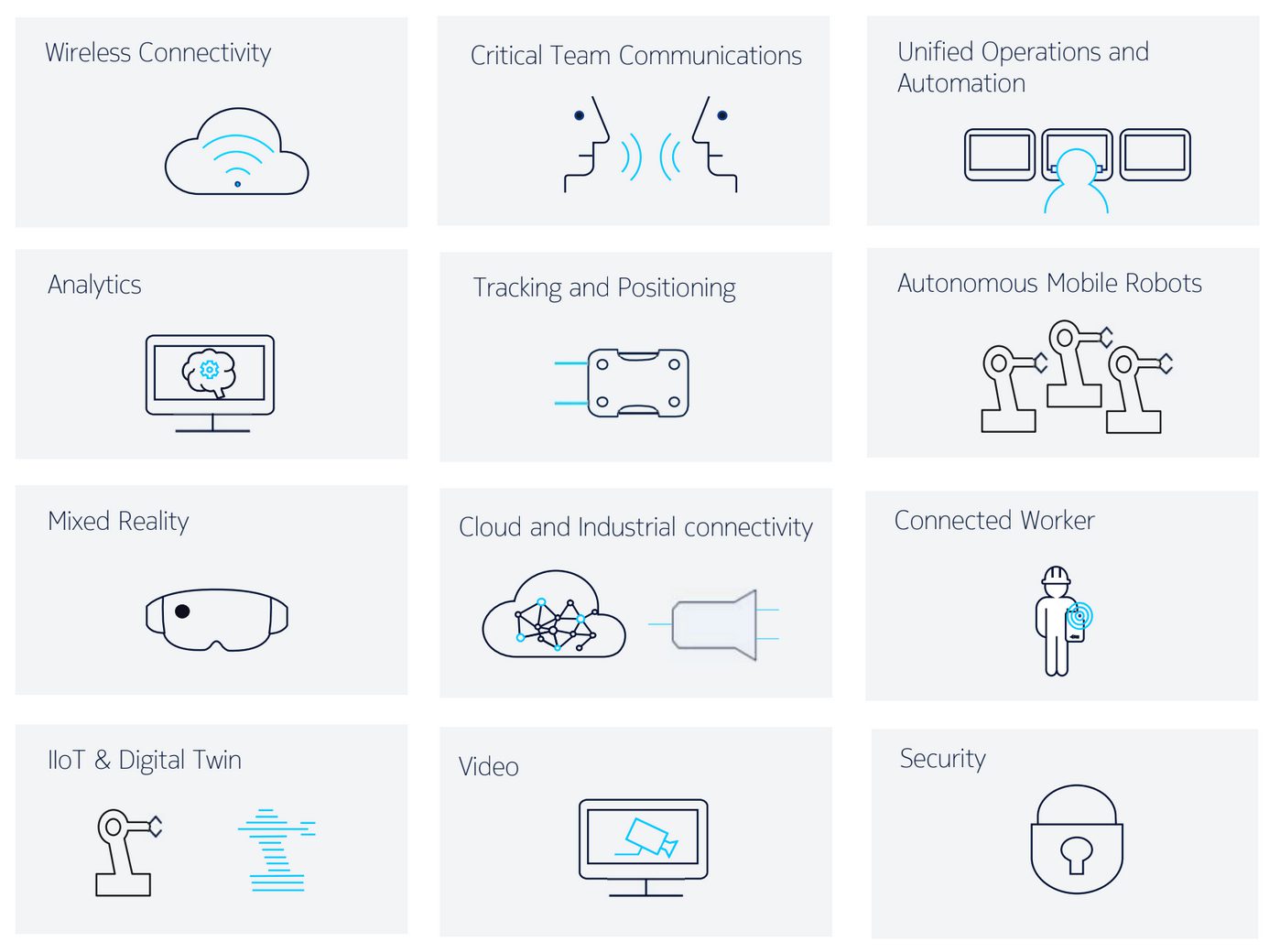
App store – Nokia’s DAC application catalogue running on its MXIE system
The new task-level enhancements mean developers – whether original software developers, or software engineers in enterprise or channel-partner organisations – can use the Kubernetes add-on KubiVert to load legacy workloads in virtual machines, never containerised, onto the MXIE portal – and make use of them as part of a common Industry 4.0 environment.
It means, effectively, old brownfield OT management systems for sundry sensors and machines, still running on antiquated Linux or Windows systems, can now be onboarded and managed in the MXIE platform.
As well, Nokia has opened the door for more-modish born-digital Industry 4.0 apps. It has launched a new developer portal, called MXIE Depo, with various “tools and guides”, plus a “sandbox” playground, so developers – on their own, or on behalf of system integrators and comms providers – can do the hard graft (“test and troubleshoot; make sure the orchestration works”) to onboard their own apps into MXIE/DAC environment. Nokia gets final say, and runs final “mission-critical” tests, but the point is to lighten its own load, and to populate its edge-shop more quickly.
Nokia said in a statement: “The new [KubiVert] capability will enable non-cloud native workloads and applications to run in a safe and controlled environment alongside containerised applications. With this, Nokia MXIE can host a huge variety of applications from different ecosystems, including legacy applications most often found in brownfield industrial campuses… [Meanwhile] MXIE depo will facilitate application development, providing an enhanced developer experience and tools to enable faster and smoother application onboarding.”
Speaking with Enterprise IoT Insights, Stephane Daeuble, in charge of solution marketing for Nokia’s enterprise division, explained: “It removes Nokia from the process, a little bit – so we can onboard more. Before, we were doing everything, pretty much, which consumed a lot of R&D. With this, we give access to the tools to do most of the work. So developers can develop apps straight away to run on MXIE. And we validate things, because MXIE is designed as highly-available and OT-grade, and also discuss terms around the technology and the commercial deal.”
Note; a longer interview with Daeuble will be available next week, going into more detail – on these MXIE enhancements, plus the new MXIE partnerships (detailed below), plus also Nokia’s work to develop an industrial devices portfolio to cover the mish-mash of locally-specified spectrum bands for private cellular. Meanwhile, Nokia’s newly announced partnerships with Siemens and Zscaler effectively continue its old work to embed key applications into its MXIE/DAC system as standard.
The deals are interesting; the Siemens agreement is for catalogue-availability of the German firm’s MindConnect software agent, which establishes the interface between industrial machine data and its MindSphere digital-twin visualisation software. US firm PTC’s digital twin application is already available as-standard on the MXIE server; the bringing Siemens into the fold as well means Nokia has most of the market covered, said Daeuble. “We now have the two big ones – because who is next? We will find out, and we will do one or two more. But we are well covered.”
The Zscaler product, called Zscaler Private Access, is more interesting, perhaps. MXIE customers had been asking for it, apparently – or, more specifically, for zero-trust access on private LTE and 5G networks. The problem is, explained Daeuble, that private networks are secure insofar as they are separated and isolated, but the discipline of factory operations also requires that devices connect, temporarily or discretely, and inadvertently open hard-to-track backdoors and vulnerabilities in the system. The Zscaler service makes the network closed, by default.
Daeuble suggested a couple of scenarios, to explain: where an ancillary Wi-Fi port is left open on LTE-connected IoT sensor, on a roof to monitor environmental conditions in a factory; where a forklift is hired and networked temporarily to cover for maintenance. With the Zscaler product, the idea is these devices have zero access to begin with, and their connections are made only according to deliberate manual approvals – and their activity is recorded when they are online. “It starts with zero access, zero privileges; by default, you have nothing. You enable access for certain devices, and inspect everything they do. That’s zero-trust access; it has been one of the requests from customers.”
A press announcement from Nokia quoted research from Analysys Mason about the role of software applications at the industrial edge, sprung in Nokia’s mind by private LTE and 5G networks. The report predicts growing interest among enterprises for implementing new private wireless Industry 4.0 use cases such as autonomous robots and augmented and virtual reality, it said. “This will grow the enterprise application market rapidly with investments expected to be around$6 billion in 2030.”
The press note also quoted Stephan Litjens, vice president of enterprise solutions at Nokia, and the person, ultimately, in charge of the whole DAC and MXIE stories at the firm. Litjens commented: “We have always subscribed to open innovation to allow developers to accelerate the growth of industry solutions. By extending our ecosystem, enterprises can focus on their core competencies while leveraging capabilities on the MXIE to simplify, secure and advance their digitalisation journey.”


