

RCR Wireless
  • News
  • Channels
    • 5G
    • 6G
    • BSS OSS
    • Carriers
    • IoT
    • Network Infrastructure
    • Open RAN
    • Private 5G
    • Telco AI
    • Telco Cloud
    • Test & Measurement
  • Resources
    • Reports
    • Webinars
    • White papers
    • AI Fundamentals
    • Analyst Angle
    • Editorial Calendar
    • Fundamentals
      • 5G NR Release 17
      • AI
        • Telco AI in 2025
    • Podcasts
      • Let’s Get Digital with Carrie Charles
      • Wireless Connectivity to Enable Industry 4.0 for the Middleprise
      • Well Technically…
      • Will 5G Change the World
      • Accelerating Industry 4.0 Digitalization
  • AI Infrastructure
  • Programs
  • Events
  • RCRtv
  • Advertise
  • Subscribe
Wednesday, July 29, 2026
RCR Wireless
  • News
  • Channels
    • 5G
    • 6G
    • BSS OSS
    • Carriers
    • IoT
    • Network Infrastructure
    • Open RAN
    • Private 5G
    • Telco AI
    • Telco Cloud
    • Test & Measurement
  • Resources
    • Reports
    • Webinars
    • White papers
    • AI Fundamentals
    • Analyst Angle
    • Editorial Calendar
    • Fundamentals
      • 5G NR Release 17
      • AI
        • Telco AI in 2025
    • Podcasts
      • Let’s Get Digital with Carrie Charles
      • Wireless Connectivity to Enable Industry 4.0 for the Middleprise
      • Well Technically…
      • Will 5G Change the World
      • Accelerating Industry 4.0 Digitalization
  • AI Infrastructure
  • Programs
  • Events
  • RCRtv
  • Advertise
  • Subscribe
Add RCR Wireless as a preferred source on Google
  • Qualcomm 6G Insights
  • Huawei Content Hub
  • Qualcomm – 6G Vision
  • OSS/BSS Channel
  • RCRTech Roundtable: AI Infrastructure
RCR Wireless
RCR Wireless
  • Advanced Mimo
  • Mobile mmWave
  • 5G Positioning
  • Green Networks
  • Metaverse
  • Automotive
  • Industrial and Wide-area IoT
Copyright 2021 - All Right Reserved
Home - Overhauling network deployment: The 5G era requires intelligent, data-driven rollout procedures
Network Infrastructure5G

Overhauling network deployment: The 5G era requires intelligent, data-driven rollout procedures

by Andres Torres is a Strategic Product Manager, Nokia September 29, 2021
written by Andres Torres is a Strategic Product Manager, Nokia September 29, 2021 Share
LinkedinEmail
Share 0LinkedinEmail
161

Network deployment was once based on a series of manual and sequential phases such as design, engineering, installation and acceptance. However, the introduction of 5G and cloud-based solutions like network virtualization has increased the complexity of network deployment, and as a result, the end-to-end deployment process is due for an overhaul.

One of the main reasons behind the change we’re seeing in the approach to network deployment is that 5G requires more sites in more places. In addition, the complexity of each of those nodes is increasing because not only are there more sites, but those sites might be combining more frequency bands. The arrival of Cloud RAN can also lead to multi-vendor deployment models. When taken together, these emerging factors have made the entire rollout process more challenging.

The new approach to deployment, then, must be fast, efficient and accurate with a digitized process from design to acceptance. It must be data-driven and holistic.

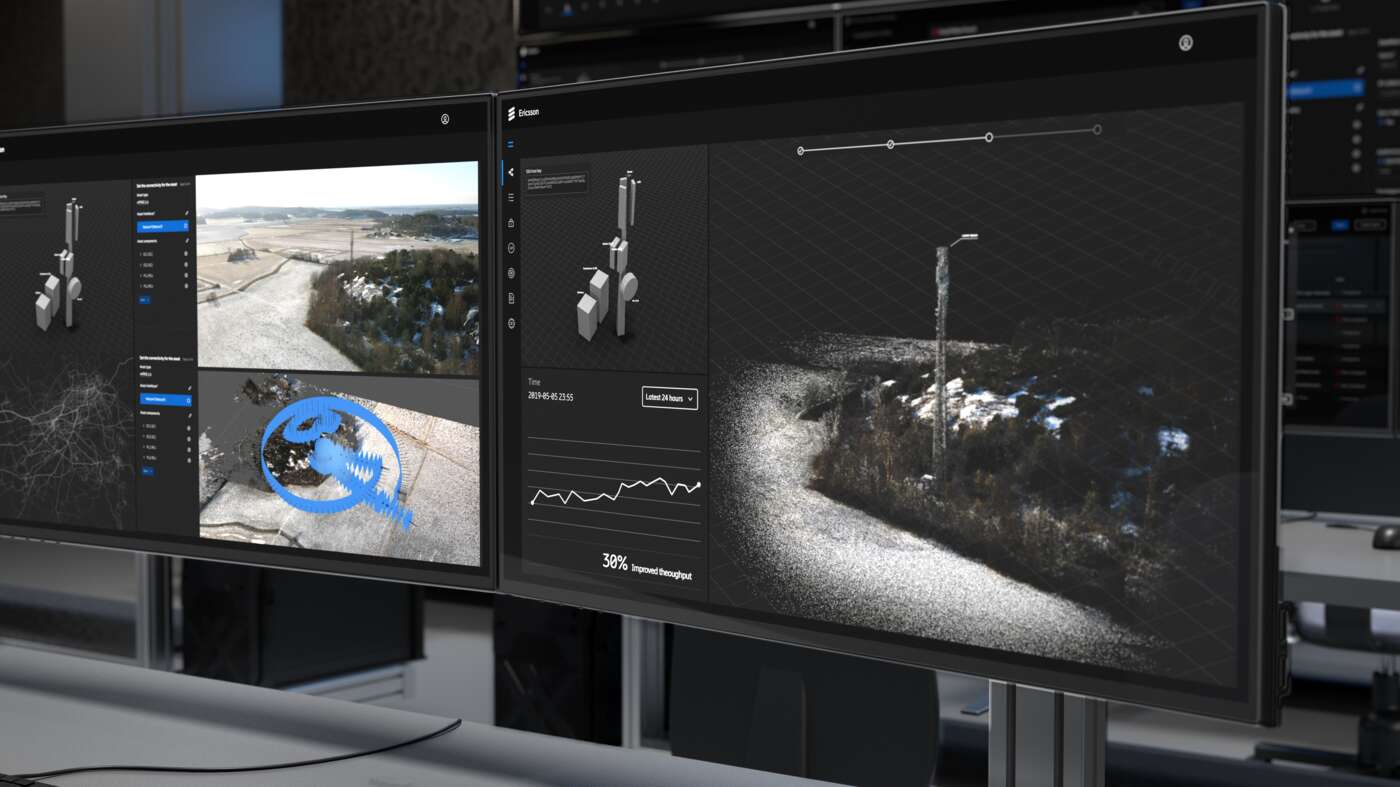
Ericsson Intelligent Deployment is a modular suite of tools and services that leverages Artificial Intelligence (AI), machine learning (ML) and common data sets to create higher value than traditional network rollouts by directly supporting the different steps in the deployment process, from site engineering to customer acceptance.

By leveraging Network Intelligence, it is possible to ensure accurate network deployment from day one: software and hardware changes, as well as any potential deviation from a customer-set baseline can be detected and automatically corrected before issues are even found. Moving from standalone tools to a modular, more flexible suite of tools and services makes it possible for communications service providers (CSPs) to fully capture the value of these tools in the way that suits them best.

Another critical technology used in Intelligent Deployment is the digital twin. Digital twins, or virtual replicas of a site, are created by collecting data from the physical site via inputs such as photographs and videos. Then, a cloud-based application, leveraging AI and ML, blends those inputs and generates digital representations of the site.

Further, input for the digital twin can also be gathered by drones, increasing cost efficiencies and worker safety. Traditionally, anything that needs to be surveyed or examined high up on a tower is done by engineers, who must climb the tower, which is expensive and dangerous. Today, a drone can be piloted from the base of the tower all the way to the top where it can quickly collect the photos and videos needed for anything from checking the serial number of a piece of equipment to identifying rust or loose connectors.

Once a digital twin of a site is created, AI algorithms and models can compare site images to a database of correct installations to identify changes, problems or anomalies.

Because the use of drone and digital twin technologies in this way equals fewer site visits, CO2 emissions can be reduced significantly. In fact, our work with global service providers has shown emission reductions of as much as 30% when using an intelligent deployment approach.

With a digital twin, it is no longer necessary for technicians to visit a physical site when assessing it for deployment activities, expansions or checking for equipment issues. Instead, a multi-skilled team can remotely access a site’s digital twin and use the AI/ML capabilities available in the system to diagnose issues and create proposals for different deployment scenarios, increasing the speed and efficiency of site deployment and integration.

Even network acceptance is made easier, thanks to automated processes that can guarantee a seamless and secure cross-check of requirements using blockchain technology.

With this intelligent approach to deployment, network rollouts become smoother, making it possible for operators to optimize the entire lifecycle management of their networks. They can speed up deployment and cut CAPEX and OPEX, while improving deployment quality, personnel safety and reducing CO2 emissions.

Learn more about how networks can be more efficiently deployed with Intelligent Site Engineering and how service providers can break free of traditional network rollout processes with Ericsson Intelligent Deployment in this insightful blog I co-wrote with my colleagues.

About the Author:

Andres Torres is a Strategic Product Manager within the global Ericsson Services organization. Born in Colombia and based in Australia, Andres has over 20 years of experience in the ICT industry, from product management and strategic marketing to pre-sales and technical customer support. Andres is responsible for stakeholder engagement, best-practice promotion and go-to-market strategy development and execution across several customer-facing activities in addition to digital programs, social media and event management. He has participated in numerous telecommunications projects on four continents, adding unique insights and learnings to his technical, customer, and cultural experiences. 

You Might Also Like
  • The 6G AI uplink panic (Analyst Angle)
  • Tuesday (telco diary) | D2D in 3D – Amazon appeals to telcos
  • Network agents are “ready” for commercial use, but are telcos? (Analyst Angle)
  • Monday (telco diary) | ‘A new telco growth profile’?
  • Verizon strikes $1bn DCI deal with Google; AI cloud and edge sales to ramp in 2027
  • Friday (telco diary) | The AI penny-drop for telcos
Share 0 LinkedinEmail
Andres Torres is a Strategic Product Manager, Nokia

previous post
AT&T, Corning strike domestic fiber deal
next post
Lexmark chases $50bn opportunity with launch of new IoT services business

White Papers

  • Norton eBook: The 2026 Telco Playbook

  • Enea White Paper: Why Intelligent AAA is the Swiss Army Knife of Telecom

  • CSG White Paper: Telco AI Enabler: Mediation’s Defining Role

  • Enea White Paper: Scalable Database Design for 5G and Beyond

  • Supermicro and NVIDIA Whitepaper: Powering sovereign AI at scale

Editorial Reports

  • Market Pulse Report: Telco AI in 2026 – Trends, Challenges and Opportunities

  • Nvidia Report: The State of AI in Telecommunications: 2026 Trends

  • Report: Scaling Optical Networks For The Hyperscale And AI Era

Webinars

  • Webinar: Building 6G — aligning technology, policy and purpose

  • SIMCom Webinar: Scaling your next deployment – from plastic to provisioning

  • Webinar: Rethinking the RAN as AI, cloud and openness converge

  • Webinar: Scale-Up, Scale-Out, Scale-Across – Building AI-Era Network Fabrics

  • Webinar: NTN in motion – evolving standards, expanding services

Since 1982, RCR Wireless News has been providing wireless and mobile industry news, insights, and analysis to mobile and wireless industry professionals, decision makers, policy makers, analysts and investors.

Facebook Twitter Youtube Linkedin Envelope Rss

Useful Links

  • Subscribe
  • About RCR Wireless News
  • Contact Us
  • Advertise
  • Editorial Calendar
  • Archive
  • RSS
  • Wireless News Archive
  • Subscribe
  • About RCR Wireless News
  • Contact Us
  • Advertise
  • Editorial Calendar
  • Archive
  • RSS
  • Wireless News Archive

Edtior's Picks

Beyond the Hype: Ilissa Miller on Responsible Growth, Data Centers and AI
The rise of agentic infra – why NetOps must outpace AI ambitions (Reader...
The 6G AI uplink panic (Analyst Angle)

Latest Articles

Beyond the Hype: Ilissa Miller on Responsible Growth, Data Centers and AI
The rise of agentic infra – why NetOps must outpace AI ambitions (Reader Forum)
The 6G AI uplink panic (Analyst Angle)
Tuesday (telco diary) | D2D in 3D – Amazon appeals to telcos

© 2026 RCR Wireless News All Right Reserved. Developed by Eight Hats.

Cookie Policy | Privacy Policy

RCR Wireless
  • News
  • Channels
    • 5G
    • 6G
    • BSS OSS
    • Carriers
    • IoT
    • Network Infrastructure
    • Open RAN
    • Private 5G
    • Telco AI
    • Telco Cloud
    • Test & Measurement
  • Resources
    • Reports
    • Webinars
    • White papers
    • AI Fundamentals
    • Analyst Angle
    • Editorial Calendar
    • Fundamentals
      • 5G NR Release 17
      • AI
        • Telco AI in 2025
    • Podcasts
      • Let’s Get Digital with Carrie Charles
      • Wireless Connectivity to Enable Industry 4.0 for the Middleprise
      • Well Technically…
      • Will 5G Change the World
      • Accelerating Industry 4.0 Digitalization
  • AI Infrastructure
  • Programs
  • Events
  • RCRtv
  • Advertise
  • Subscribe
RCR Wireless
  • News
  • Channels
    • 5G
    • 6G
    • BSS OSS
    • Carriers
    • IoT
    • Network Infrastructure
    • Open RAN
    • Private 5G
    • Telco AI
    • Telco Cloud
    • Test & Measurement
  • Resources
    • Reports
    • Webinars
    • White papers
    • AI Fundamentals
    • Analyst Angle
    • Editorial Calendar
    • Fundamentals
      • 5G NR Release 17
      • AI
        • Telco AI in 2025
    • Podcasts
      • Let’s Get Digital with Carrie Charles
      • Wireless Connectivity to Enable Industry 4.0 for the Middleprise
      • Well Technically…
      • Will 5G Change the World
      • Accelerating Industry 4.0 Digitalization
  • AI Infrastructure
  • Programs
  • Events
  • RCRtv
  • Advertise
  • Subscribe
@2020 - All Right Reserved. Designed and Developed by PenciDesign
