
RCR Wireless
  • News
  • Channels
    • 5G
    • 6G
    • BSS OSS
    • Carriers
    • IoT
    • Network Infrastructure
    • Open RAN
    • Private 5G
    • Telco AI
    • Telco Cloud
    • Test & Measurement
  • Resources
    • Reports
    • Webinars
    • White papers
    • AI Fundamentals
    • Analyst Angle
    • Editorial Calendar
    • Fundamentals
      • 5G NR Release 17
      • AI
        • Telco AI in 2025
    • Podcasts
      • Let’s Get Digital with Carrie Charles
      • Wireless Connectivity to Enable Industry 4.0 for the Middleprise
      • Well Technically…
      • Will 5G Change the World
      • Accelerating Industry 4.0 Digitalization
  • AI Infrastructure
  • Programs
  • Events
  • RCRtv
  • Advertise
  • Subscribe
Monday, July 20, 2026
RCR Wireless
  • News
  • Channels
    • 5G
    • 6G
    • BSS OSS
    • Carriers
    • IoT
    • Network Infrastructure
    • Open RAN
    • Private 5G
    • Telco AI
    • Telco Cloud
    • Test & Measurement
  • Resources
    • Reports
    • Webinars
    • White papers
    • AI Fundamentals
    • Analyst Angle
    • Editorial Calendar
    • Fundamentals
      • 5G NR Release 17
      • AI
        • Telco AI in 2025
    • Podcasts
      • Let’s Get Digital with Carrie Charles
      • Wireless Connectivity to Enable Industry 4.0 for the Middleprise
      • Well Technically…
      • Will 5G Change the World
      • Accelerating Industry 4.0 Digitalization
  • AI Infrastructure
  • Programs
  • Events
  • RCRtv
  • Advertise
  • Subscribe
Add RCR Wireless as a preferred source on Google
  • Qualcomm 6G Insights
  • Huawei Content Hub
  • Qualcomm – 6G Vision
  • OSS/BSS Channel
  • RCRTech Roundtable: AI Infrastructure
RCR Wireless
RCR Wireless
  • Advanced Mimo
  • Mobile mmWave
  • 5G Positioning
  • Green Networks
  • Metaverse
  • Automotive
  • Industrial and Wide-area IoT
Copyright 2021 - All Right Reserved
Home - Thread vs Bluetooth: The IoT battle of low-power protocols (Reader Forum)
EnterpriseInternet of Things (IoT)OpinionReader Forum

Thread vs Bluetooth: The IoT battle of low-power protocols (Reader Forum)

by Catherine Sbeglia Nin September 24, 2021
written by Catherine Sbeglia Nin September 24, 2021 Share
LinkedinEmail
Share 0LinkedinEmail
Vodafone
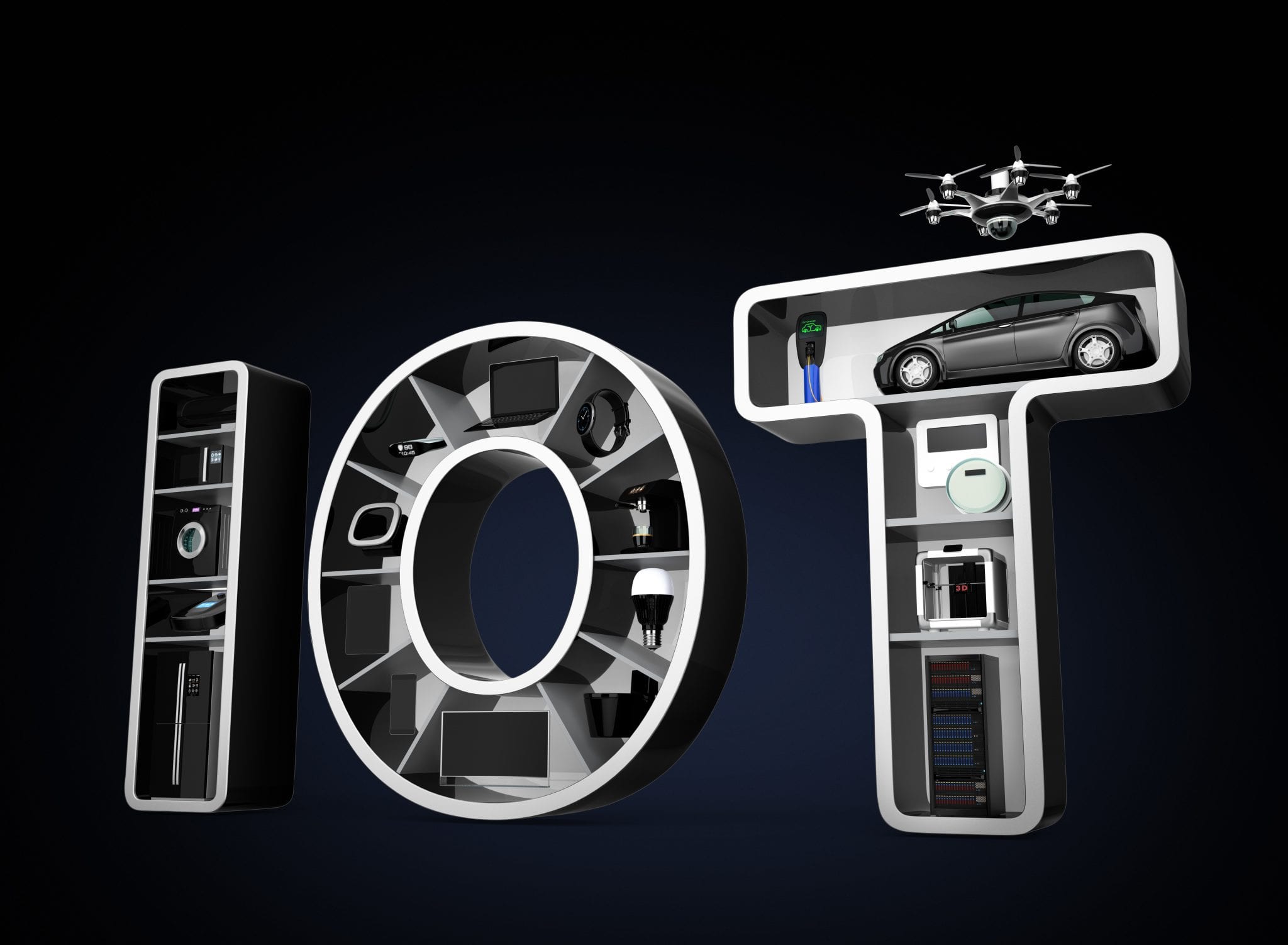
Image courtesy of 123.RF.
336


The war of Internet of Things (IoT) connections is here. Following years of trial and error to connect battery-based devices with Wi-Fi — the ubiquitous yet power-sucking internet access method preferred around the world — the market is finally embracing low-power radio internet protocols.

However, two main competitors are vying for the connection title, and it remains to be seen who will triumph. Let’s take a closer look at this head-to-head between Thread and Bluetooth. 

Why we need low-power connections

There is a good reason that the market is now turning toward more efficient internet connection protocols. IoT is expanding rapidly and creating an environment of devices and sensors that in many cases function entirely on batteries. In some use cases where batteries are difficult or even impossible to change (like environmental sensors, for example), the length of the battery life often determines the useful life of the device.

It is in this context that the growth of smart home appliances further the demand for device internet connections at a fraction of Wi-Fi’s performance and power. Factor this in with the rapid rise of wearables — another basic connected device that grew more than 30 percent in Q2 of 2021 compared to the same quarter of 2020 — and the case for low-power radio internet protocols becomes clear.

The problem, however, is that there is still no leader in this space. The market has long suffered from a plethora of IoT protocols and standards, from X10 and HomeKit, to LightwaveRF, Z-Wave, Weave and Brillo, and the same is true when it comes to low-power radio internet connections.

Who are the challengers?

The first contender looking to fill this gap is Thread. Much like fellow low-power standard Zigbee, Thread is a mesh networking protocol, meaning that all the devices on a single mesh can speak to each other. However, unlike Zigbee, Thread devices are IPv6 addressable to enable end-to-end routing and addressability on the same network or across networks. Further, the devices connect without a single point of failure, which means the network can “self-heal.” So, if one device goes down or a connection becomes spotty, the network can adjust and carry on without breaking.

The second is Bluetooth. As the name suggests, this protocol leverages Bluetooth low energy links to deliver a full-stack connectivity solution for mesh networking. This protocol is a scalable, short-range IoT technology that provides flexible and robust performance. The idea is that adding mesh networking to Bluetooth technology enables low-power sensors to communicate with the remote capillary gateways that can be implemented in any Bluetooth handset.

While similar, there are important distinctions between the two connection challengers. For example, Bluetooth can connect to far more devices in a low-power, wireless mesh network than Thread. On the other hand, Thread counts the backing of a far more organized user group than its counterpart. In fact, it is this point that is already having an important impact when it comes to adoption.

Thread is currently winning the all-important battle for manufacturers with significant buy-in from some of the biggest brands in the world. Google, Apple, LG and Siemens are just some of the star-studded members of Thread Group who continue to experiment with the technology. For example, look no further than Apple TV’s 4K set-top-box which comes locked and loaded with Thread support for smart home builders.

Who will win?

It’s too early to call but Thread has the upper hand. The likes of Apple and Google certainly have the power to sway market adoption and it will be interesting to see how this shifts over the coming years. Likewise, though, Bluetooth technology is already installed on every smartphone and, therefore, counts a massive, built-in ecosystem ready to go. In this way, the protocol shows immense promise as a convenient connectivity gateway.

It’s worth mentioning that Thread and Bluetooth perform similarly in small networks under small payloads. However, Thread does outperform Bluetooth when payload and throughput demands increase, and Thread also has Bluetooth beat when it comes to latency. Despite this, it is tough to say which protocol is better as performance varies greatly based on the application requirements.

Much like the famed home media format war of the 1980s between VHS and Betamax, this battle could take years to settle. With no dominant protocol at this point, users will need to make their own decision and pick a team — Thread or Bluetooth.

One suggestion for those in this predicament is to consider several factors, including the protocol’s wireless range, throughput, power consumption, scalability, security and ease of provisioning, and select that which best suits their use case. For now, only time will tell who takes the connection crown.


You Might Also Like
  • Thursday (telco diary) | Satellite versus terrestrial
  • Fast-growing private 5G offers blueprint for AI-era telecoms
  • Wednesday (telco diary) | What telcos want – and why they wait
  • Tuesday (telco diary) | Ericsson holds the line
  •  VodafoneThree puts P.I. Works’ SMO at the center of network transformation
  • The (agentic) future of AI-to-AI connectivity (Reader Forum)
Share 0 LinkedinEmail
Catherine Sbeglia Nin

Catherine Sbeglia Nin is the Managing Editor for RCR Wireless News, where she covers topics such as Wi-Fi, network infrastructure, AI and edge computing. She also produced and hosted Arden Media's podcast Well, technically... After studying English and Film & Media Studies at The University of Rochester, she moved to Madison, WI. Having already lived on both coasts, she thought she’d give the middle a try. So far, she likes it very much.

previous post
Truphone hooks-up with Sony and Kigen on global iSIM for NB-IoT and LTE-M
next post
Telus inks partnership to expand smart building footprint in Calgary

White Papers

  • Norton eBook: The 2026 Telco Playbook

  • Enea White Paper: Why Intelligent AAA is the Swiss Army Knife of Telecom

  • CSG White Paper: Telco AI Enabler: Mediation’s Defining Role

  • Enea White Paper: Scalable Database Design for 5G and Beyond

  • Supermicro and NVIDIA Whitepaper: Powering sovereign AI at scale

Editorial Reports

  • Nvidia Report: The State of AI in Telecommunications: 2026 Trends

  • Report: Scaling Optical Networks For The Hyperscale And AI Era

  • Test And Measurement Market Pulse Report

Webinars

  • Webinar: Building 6G — aligning technology, policy and purpose

  • SIMCom Webinar: Scaling your next deployment – from plastic to provisioning

  • Webinar: Rethinking the RAN as AI, cloud and openness converge

  • Webinar: Scale-Up, Scale-Out, Scale-Across – Building AI-Era Network Fabrics

  • Webinar: NTN in motion – evolving standards, expanding services

Since 1982, RCR Wireless News has been providing wireless and mobile industry news, insights, and analysis to mobile and wireless industry professionals, decision makers, policy makers, analysts and investors.

Facebook Twitter Youtube Linkedin Envelope Rss

Useful Links

  • Subscribe
  • About RCR Wireless News
  • Contact Us
  • Advertise
  • Editorial Calendar
  • Archive
  • RSS
  • Wireless News Archive
  • Subscribe
  • About RCR Wireless News
  • Contact Us
  • Advertise
  • Editorial Calendar
  • Archive
  • RSS
  • Wireless News Archive

Edtior's Picks

Elisa targets data center growth through fiber connectivity
Subsea shift – ITU and FCC redraw rules for global cable resilience
Red Hat outlines AI-RAN roadmap

Latest Articles

Elisa targets data center growth through fiber connectivity
Subsea shift – ITU and FCC redraw rules for global cable resilience
Red Hat outlines AI-RAN roadmap
Ericsson wins role in £8bn UK’s defense upgrade as private 5G moves to frontline

© 2026 RCR Wireless News All Right Reserved. Developed by Eight Hats.

Cookie Policy | Privacy Policy

RCR Wireless
  • News
  • Channels
    • 5G
    • 6G
    • BSS OSS
    • Carriers
    • IoT
    • Network Infrastructure
    • Open RAN
    • Private 5G
    • Telco AI
    • Telco Cloud
    • Test & Measurement
  • Resources
    • Reports
    • Webinars
    • White papers
    • AI Fundamentals
    • Analyst Angle
    • Editorial Calendar
    • Fundamentals
      • 5G NR Release 17
      • AI
        • Telco AI in 2025
    • Podcasts
      • Let’s Get Digital with Carrie Charles
      • Wireless Connectivity to Enable Industry 4.0 for the Middleprise
      • Well Technically…
      • Will 5G Change the World
      • Accelerating Industry 4.0 Digitalization
  • AI Infrastructure
  • Programs
  • Events
  • RCRtv
  • Advertise
  • Subscribe
RCR Wireless
  • News
  • Channels
    • 5G
    • 6G
    • BSS OSS
    • Carriers
    • IoT
    • Network Infrastructure
    • Open RAN
    • Private 5G
    • Telco AI
    • Telco Cloud
    • Test & Measurement
  • Resources
    • Reports
    • Webinars
    • White papers
    • AI Fundamentals
    • Analyst Angle
    • Editorial Calendar
    • Fundamentals
      • 5G NR Release 17
      • AI
        • Telco AI in 2025
    • Podcasts
      • Let’s Get Digital with Carrie Charles
      • Wireless Connectivity to Enable Industry 4.0 for the Middleprise
      • Well Technically…
      • Will 5G Change the World
      • Accelerating Industry 4.0 Digitalization
  • AI Infrastructure
  • Programs
  • Events
  • RCRtv
  • Advertise
  • Subscribe
@2020 - All Right Reserved. Designed and Developed by PenciDesign
