
RCR Wireless
  • News
  • Channels
    • 5G
    • 6G
    • BSS OSS
    • Carriers
    • IoT
    • Network Infrastructure
    • Open RAN
    • Private 5G
    • Telco AI
    • Telco Cloud
    • Test & Measurement
  • Resources
    • Reports
    • Webinars
    • White papers
    • AI Fundamentals
    • Analyst Angle
    • Editorial Calendar
    • Fundamentals
      • 5G NR Release 17
      • AI
        • Telco AI in 2025
    • Podcasts
      • Let’s Get Digital with Carrie Charles
      • Wireless Connectivity to Enable Industry 4.0 for the Middleprise
      • Well Technically…
      • Will 5G Change the World
      • Accelerating Industry 4.0 Digitalization
  • AI Infrastructure
  • Programs
  • Events
  • RCRtv
  • Advertise
  • Subscribe
Monday, July 6, 2026
RCR Wireless
  • News
  • Channels
    • 5G
    • 6G
    • BSS OSS
    • Carriers
    • IoT
    • Network Infrastructure
    • Open RAN
    • Private 5G
    • Telco AI
    • Telco Cloud
    • Test & Measurement
  • Resources
    • Reports
    • Webinars
    • White papers
    • AI Fundamentals
    • Analyst Angle
    • Editorial Calendar
    • Fundamentals
      • 5G NR Release 17
      • AI
        • Telco AI in 2025
    • Podcasts
      • Let’s Get Digital with Carrie Charles
      • Wireless Connectivity to Enable Industry 4.0 for the Middleprise
      • Well Technically…
      • Will 5G Change the World
      • Accelerating Industry 4.0 Digitalization
  • AI Infrastructure
  • Programs
  • Events
  • RCRtv
  • Advertise
  • Subscribe
Add RCR Wireless as a preferred source on Google
  • Qualcomm 6G Insights
  • Huawei Content Hub
  • Qualcomm – 6G Vision
  • OSS/BSS Channel
RCR Wireless
RCR Wireless
  • Advanced Mimo
  • Mobile mmWave
  • 5G Positioning
  • Green Networks
  • Metaverse
  • Automotive
  • Industrial and Wide-area IoT
Copyright 2021 - All Right Reserved
Home - What’s the role of a digital twin in smart manufacturing?
5GEnterpriseFundamentalsInternet of Things (IoT)Smart Factory

What’s the role of a digital twin in smart manufacturing?

by Juan Pedro Tomás August 4, 2021
written by Juan Pedro Tomás August 4, 2021 Share
LinkedinEmail
Share 0LinkedinEmail
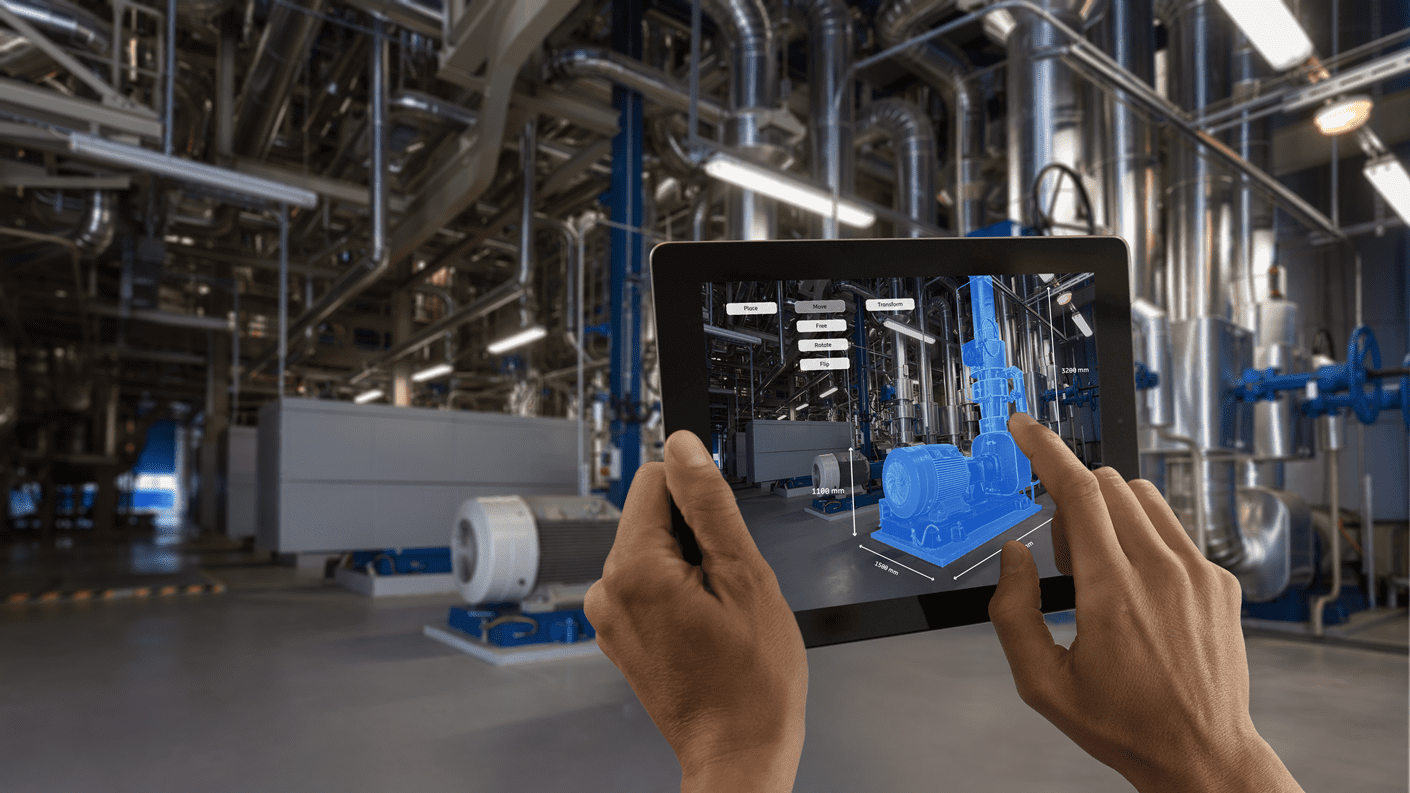
digital twins
Image courtesy of Ericsson
389

To further explore the intersection of 5G and manufacturing, register for the 5G Manufacturing Forum. 

For a deeper dive into the role of a digital twin in manufacturing, download this free report sponsored by Rockwell Automation.

Defining a digital twin

According to the precise definition of the Digital Twin Consortium, digital twins are “virtual models of a process, product or service that allow for data analysis and system monitoring via simulations” to make data-based decisions around maintenance, sustainability, efficiency and performance.

A white paper by Altran highlighted that companies in almost every industry are looking to digital twin technologies to drive meaningful business outcomes across the entire product development life cycle, from ideation and production to manufacturing, support and maintenance. Digital twins integrate geometry, real-time telemetry, engineering analysis, sensors, connectivity, artificial intelligence, machine learning and software analytics in a unified spatial model to create a living digital simulation that can update and change as their physical counterparts change.

“Most offer a virtual UI that let’s operators interact with the model in an immersive, intuitive, and often life-like way. And many can continuously learn and update themselves to represent its near real-time status, working condition or position or integrate historical data from past machine usage to inform trend analyses and diagnostics,” the Altran white paper states.

Altran also noted that digital twins are used to help companies improve a variety of business processes, from validating the expected behavior of a product or system design before it is deployed, to boosting production efficiency of a factory or optimizing the performance or maintenance of products in the field.

What can digital twin technology bring to smart manufacturing?

Specifically in manufacturing, digital twins could be created to focus on a single component within the manufacturing process or to focus on a single piece of equipment within a production line. Also, digital twins could be implemented at a manufacturing site to monitor and improve an entire production line or even monitor the entire manufacturing process from product design and development to production.

GlobalData Principal Disruptive Tech Analyst Kiran Raj sees certain industrial verticals already upping investments around data analysis, IoT, machine learning and, artificial intelligence, increasingly looking to digital twin capabilities to unlock time- and money-saving use cases that nest under the Industry 4.0 umbrella.

In a research note, Raj highlighted the relevancy of digital twin capabilities—using sensor data and software tools to build virtual models of current and future state physical assets or processes—to product iteration, asset monitoring, improving maintenance regiments, and reducing downtime in industrial environments. The researcher specifically called out the oil and gas, automotive, healthcare, and construction verticals as likely drivers of digital twin adoption.

What’s the market outlook?

“The future of the digital twin technology looks bright in many industries, especially in the industry 4.0 set up where the impact of a product can be assessed before it is manufactured,” Raj said. “But increased reliance on it to aggregate massive data from sensors may make it vulnerable to cyber-attacks. Enterprises with advanced threat mitigation strategies can unlock the true potential of digital twins to enhance agility and innovation.”

Firm Markets and Markets reckons the digital twin market will grow from $3.8 billion in 2019 to $35.8 billion by 2025, representing a compound annual growth rate north of 37%. “Major factors surging the demand for digital twin include declining time and cost of product development and unplanned downtime…” The group calls out automotive, transport, oil and gas and manufacturing as key sectors for digital twin adoption.

For more 5G manufacturing content, check out the following:

  • What is 5G manufacturing and what does it mean for productivity? 
  • Top 5 5G manufacturing use cases
  • Three 5G manufacturing case studies: Audi, Haier, Bosch
  • 5G manufacturing use case spotlight: Automated guided vehicles
  • 5G manufacturing use case spotlight: Real-time video analytics
You Might Also Like
  • Huawei outlines AI-centric network roadmap for telecom monetization
  • Indosat outlines AI Grid vision as 5G modernization targets nationwide AI-ready network
  • Huawei shows how 5G and AI are reshaping tourism in China
  • Tuesday | Vertical build-outs, horizontal break-ups (Editorial Diary)
  • ‘You can’t tame it’ – private networks, open standards and the AI proof for IoT
  • Monday | Global enterprise reset (Editorial Diary)

Table of Contents

  • Defining a digital twin
  • What can digital twin technology bring to smart manufacturing?
  • What’s the market outlook?
Share 0 LinkedinEmail
Juan Pedro Tomás

Juan Pedro covers Global Carriers and Global Enterprise IoT. Prior to RCR, Juan Pedro worked for Business News Americas, covering telecoms and IT news in the Latin American markets. He also worked for Telecompaper as their Regional Editor for Latin America and Asia/Pacific. Juan Pedro has also contributed to Latin Trade magazine as the publication's correspondent in Argentina and with political risk consultancy firm Exclusive Analysis, writing reports and providing political and economic information from certain Latin American markets. He has a degree in International Relations and a master in Journalism and is married with two kids.

previous post
Hitachi looks to digital transformation of railways with Thales business unit acquisition
next post
#TBT: Paging consolidation in hyperdrive; AT&T plays its first wireless card; Sprint focuses on PCS … this week in 1995

White Papers

  • Enea White Paper: Why Intelligent AAA is the Swiss Army Knife of Telecom

  • CSG White Paper: Telco AI Enabler: Mediation’s Defining Role

  • Enea White Paper: Scalable Database Design for 5G and Beyond

  • Supermicro and NVIDIA Whitepaper: Powering sovereign AI at scale

  • VIAVI Whitepaper: RAN scenario generators and their critical role for future-proofing AI-native RAN in Advanced 5G and 6G networks

Editorial Reports

  • Report: Scaling Optical Networks For The Hyperscale And AI Era

  • Test And Measurement Market Pulse Report

  • Editorial Report: Securing telecom infrastructure for the quantum era

Webinars

  • Webinar: Rethinking the RAN as AI, cloud and openness converge

  • Webinar: Scale-Up, Scale-Out, Scale-Across – Building AI-Era Network Fabrics

  • Webinar: NTN in motion – evolving standards, expanding services

  • Webinar: Noise-Figure Measurements with RFmx and PXI VSTs

  • Qualcomm Webinar – Building the 6G Standard: Key developments to know

Since 1982, RCR Wireless News has been providing wireless and mobile industry news, insights, and analysis to mobile and wireless industry professionals, decision makers, policy makers, analysts and investors.

Facebook Twitter Youtube Linkedin Envelope Rss

Useful Links

  • Subscribe
  • About RCR Wireless News
  • Contact Us
  • Advertise
  • Editorial Calendar
  • Archive
  • RSS
  • Wireless News Archive
  • Subscribe
  • About RCR Wireless News
  • Contact Us
  • Advertise
  • Editorial Calendar
  • Archive
  • RSS
  • Wireless News Archive

Edtior's Picks

Enea White Paper: Why Intelligent AAA is the Swiss Army Knife of Telecom
Huawei outlines AI-centric network roadmap for telecom monetization
Why consolidation will reshape MDU connectivity (part 3/3) – Analyst Angle

Latest Articles

Enea White Paper: Why Intelligent AAA is the Swiss Army Knife of Telecom
Huawei outlines AI-centric network roadmap for telecom monetization
Why consolidation will reshape MDU connectivity (part 3/3) – Analyst Angle
Quantum Safe Networks Forum 2026

© 2026 RCR Wireless News All Right Reserved. Developed by Eight Hats.

Cookie Policy | Privacy Policy

RCR Wireless
  • News
  • Channels
    • 5G
    • 6G
    • BSS OSS
    • Carriers
    • IoT
    • Network Infrastructure
    • Open RAN
    • Private 5G
    • Telco AI
    • Telco Cloud
    • Test & Measurement
  • Resources
    • Reports
    • Webinars
    • White papers
    • AI Fundamentals
    • Analyst Angle
    • Editorial Calendar
    • Fundamentals
      • 5G NR Release 17
      • AI
        • Telco AI in 2025
    • Podcasts
      • Let’s Get Digital with Carrie Charles
      • Wireless Connectivity to Enable Industry 4.0 for the Middleprise
      • Well Technically…
      • Will 5G Change the World
      • Accelerating Industry 4.0 Digitalization
  • AI Infrastructure
  • Programs
  • Events
  • RCRtv
  • Advertise
  • Subscribe
RCR Wireless
  • News
  • Channels
    • 5G
    • 6G
    • BSS OSS
    • Carriers
    • IoT
    • Network Infrastructure
    • Open RAN
    • Private 5G
    • Telco AI
    • Telco Cloud
    • Test & Measurement
  • Resources
    • Reports
    • Webinars
    • White papers
    • AI Fundamentals
    • Analyst Angle
    • Editorial Calendar
    • Fundamentals
      • 5G NR Release 17
      • AI
        • Telco AI in 2025
    • Podcasts
      • Let’s Get Digital with Carrie Charles
      • Wireless Connectivity to Enable Industry 4.0 for the Middleprise
      • Well Technically…
      • Will 5G Change the World
      • Accelerating Industry 4.0 Digitalization
  • AI Infrastructure
  • Programs
  • Events
  • RCRtv
  • Advertise
  • Subscribe
@2020 - All Right Reserved. Designed and Developed by PenciDesign

