

RCR Wireless
  • News
  • Channels
    • 5G
    • 6G
    • BSS OSS
    • Carriers
    • IoT
    • Network Infrastructure
    • Open RAN
    • Private 5G
    • Telco AI
    • Telco Cloud
    • Test & Measurement
  • Resources
    • Reports
    • Webinars
    • White papers
    • AI Fundamentals
    • Analyst Angle
    • Editorial Calendar
    • Fundamentals
      • 5G NR Release 17
      • AI
        • Telco AI in 2025
    • Podcasts
      • Let’s Get Digital with Carrie Charles
      • Wireless Connectivity to Enable Industry 4.0 for the Middleprise
      • Well Technically…
      • Will 5G Change the World
      • Accelerating Industry 4.0 Digitalization
  • AI Infrastructure
  • Programs
  • Events
  • RCRtv
  • Advertise
  • Subscribe
Friday, August 7, 2026
RCR Wireless
  • News
  • Channels
    • 5G
    • 6G
    • BSS OSS
    • Carriers
    • IoT
    • Network Infrastructure
    • Open RAN
    • Private 5G
    • Telco AI
    • Telco Cloud
    • Test & Measurement
  • Resources
    • Reports
    • Webinars
    • White papers
    • AI Fundamentals
    • Analyst Angle
    • Editorial Calendar
    • Fundamentals
      • 5G NR Release 17
      • AI
        • Telco AI in 2025
    • Podcasts
      • Let’s Get Digital with Carrie Charles
      • Wireless Connectivity to Enable Industry 4.0 for the Middleprise
      • Well Technically…
      • Will 5G Change the World
      • Accelerating Industry 4.0 Digitalization
  • AI Infrastructure
  • Programs
  • Events
  • RCRtv
  • Advertise
  • Subscribe
Add RCR Wireless as a preferred source on Google
  • Qualcomm 6G Insights
  • Huawei Content Hub
  • Qualcomm – 6G Vision
  • OSS/BSS Channel
  • RCRTech Roundtable: AI Infrastructure
RCR Wireless
RCR Wireless
  • Advanced Mimo
  • Mobile mmWave
  • 5G Positioning
  • Green Networks
  • Metaverse
  • Automotive
  • Industrial and Wide-area IoT
Copyright 2021 - All Right Reserved
Home - “From acceptable to poor” – the trouble with AR headsets for industry
Data AnalyticsEnterpriseFundamentalsInternet of Things (IoT)News & Event CoveragePlatformsSensorsSmart FactoryWired Networks, Fiber

“From acceptable to poor” – the trouble with AR headsets for industry

by James Blackman April 28, 2020
written by James Blackman April 28, 2020 Share
LinkedinEmail
Share 0LinkedinEmail
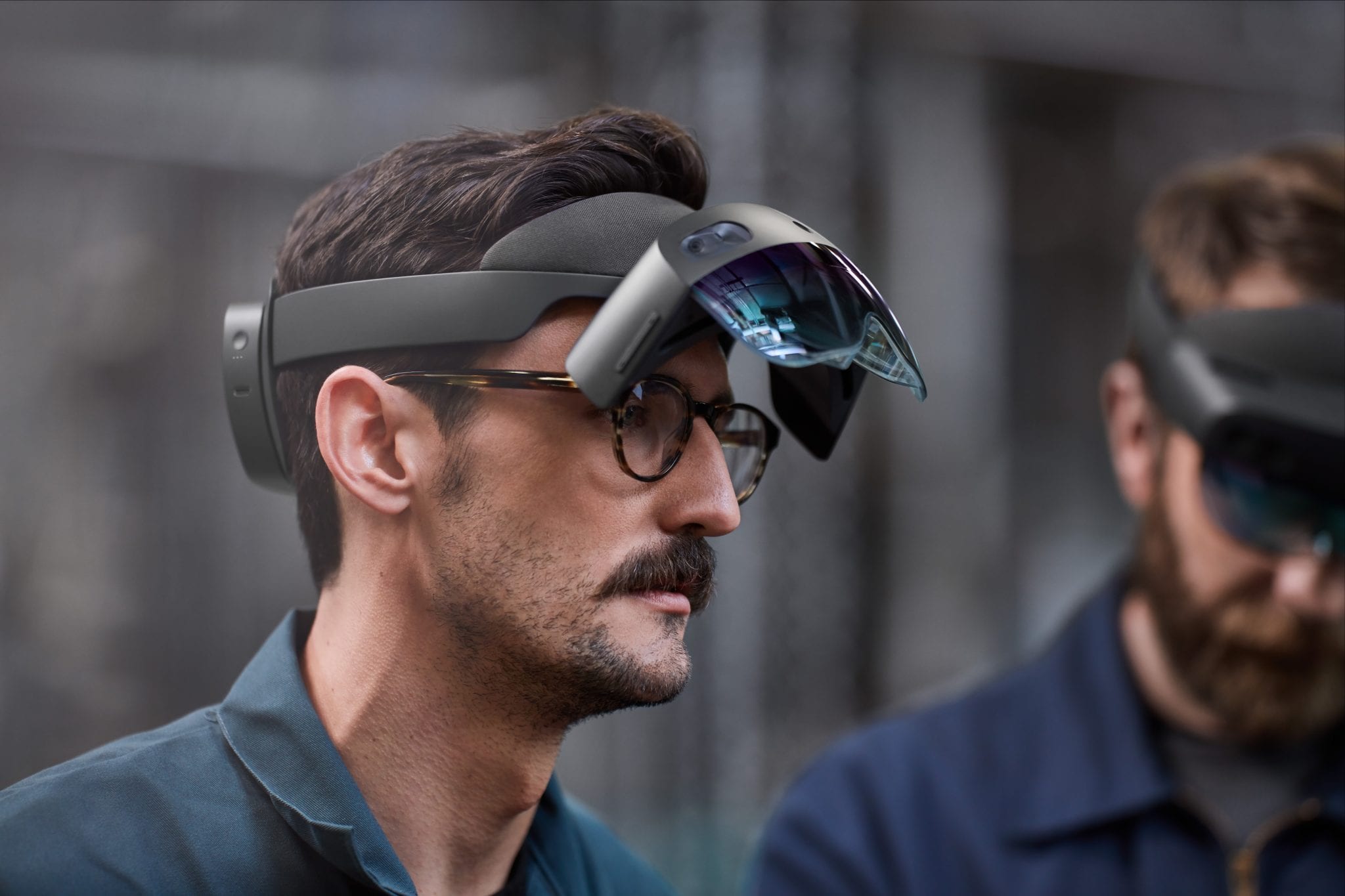
(Image: Microsoft)
(Image: Microsoft)
119

Note, this article is taken from an editorial report on industrial AR, called Industrial AR – and the rise of the workers. The report is available to download here. 

AR hardware has a reputation for being expensive and cumbersome. How is the experience, actually? Not brilliant, it turns out. “It varies by use case and device, but generally the user experience is acceptable-to-poor,” says Eric Abbruzzese, research director at ABI Research.

Even Microsoft’s latest HoloLens 2, arguably the star turn in the AR field, will not stand up to heavy industrial usage, he suggests. “It is a market leader at the high end, and is still heavy, hot, and difficult to focus [with] for extended use.”

Cheaper alternatives to the HoloLens, as well as high-end rival devices like Magic Leap, have their own issues, he implies. “Monocular devices can alleviate weight and discomfort, but small displays with ‘goldilocks zones’, [which require users to balance] the display and their vision are not ideal.”

The industry itself is more polite, although the implication remains that there is massive work to be done to make the experience both affordable and naturalistic. “The experience is good and continuously improving, but there is still room for growth,” says Qualcomm.

Brian Vogelsang, senior director of XR product management at Qualcomm, runs through the fixes, echoing the harsher sentiments from Abbruzzese. “Headsets need to be lighter, more comfortable and not produce any strain so they can be worn for a full shift,” he says.

There is more, too, around miniaturisation and acceleration of computing, which is Qualcomm’s speciality. “Technology needs to be smaller, lighter, more power-efficient – so it can be used for 12 hours without charge, and without adding weight.” It is the tech industry’s take on the Buckminster Fuller quote about doing more with less, until the resource vanishes. The displays and optics need work; more attention needs to be paid to thermal efficiency.

“Particularly in AR, we need to see higher resolution displays with wider fields of view,” he says.

Enterprise costs represent a barrier, as well. Lower prices for smart glasses from the likes of RealWear and Vuzix, at around $1,000, are easier to justify upfront than the high-end fees for HoloLens or Magic Leap devices, rising to $2,000-$4,000.

Abbruzzese says: “While lower costs mean lesser capabilities, there is also an important relationship between the use case and the device, where deployments for things like remote expertise may be able to capture 90 percent of potential ROI, hypothetically, at 50 percent of the price.”

These higher-end products may go down as pioneer devices, showing the way ahead, which will be navigated in time by the kinds of advances Qualcomm suggests. In the meantime, prices continue to fall, as components are sourced from the smartphone market and the consumer sector carries the charge.


You Might Also Like
  • Tuesday (telco diary) | More about ISAC – on battlefields and sportsfields
  • Physical AI is exposing a data sovereignty gap (Reader Forum)
  • Ensuring colocation success by eliminating network observability blind spots (Reader Forum)
  • Japan’s private 5G market is finally moving beyond demo experiments (Analyst Angle)
  • Private 5G – hype, hope, and (some) hard maths 
  • Hollow-core fiber won’t hit cost parity for a decade – regarding HKT’s 3.2Tbps DCI ‘superhighway’
Share 0 LinkedinEmail
James Blackman
James Blackman

James Blackman has been writing about the technology and telecoms sectors for over a decade. He has edited and contributed to a number of European news outlets and trade titles. He has also worked at telecoms company Huawei, leading media activity for its devices business in Western Europe. He is based in London.

previous post
How fast, how near, how private? The role of 5G and AI in industrial AR
next post
5G paired with private network capability key for smart buildings: JMA

White Papers

  • Norton eBook: The 2026 Telco Playbook

  • Enea White Paper: Why Intelligent AAA is the Swiss Army Knife of Telecom

  • CSG White Paper: Telco AI Enabler: Mediation’s Defining Role

  • Enea White Paper: Scalable Database Design for 5G and Beyond

  • Supermicro and NVIDIA Whitepaper: Powering sovereign AI at scale

Editorial Reports

  • Report: NTN in motion — evolving standards, expanding services

  • Market Pulse Report: Telco AI in 2026 – Trends, Challenges and Opportunities

  • Nvidia Report: The State of AI in Telecommunications: 2026 Trends

Webinars

  • Webinar: Building 6G — aligning technology, policy and purpose

  • SIMCom Webinar: Scaling your next deployment – from plastic to provisioning

  • Webinar: Rethinking the RAN as AI, cloud and openness converge

  • Webinar: Scale-Up, Scale-Out, Scale-Across – Building AI-Era Network Fabrics

  • Webinar: NTN in motion – evolving standards, expanding services

Since 1982, RCR Wireless News has been providing wireless and mobile industry news, insights, and analysis to mobile and wireless industry professionals, decision makers, policy makers, analysts and investors.

Facebook Twitter Youtube Linkedin Envelope Rss

Useful Links

  • Subscribe
  • About RCR Wireless News
  • Contact Us
  • Advertise
  • Editorial Calendar
  • Archive
  • RSS
  • Wireless News Archive
  • Subscribe
  • About RCR Wireless News
  • Contact Us
  • Advertise
  • Editorial Calendar
  • Archive
  • RSS
  • Wireless News Archive

Edtior's Picks

Chunghwa Telecom expands AI infra with new DC
Starlink Mobile – what is Musk actually building, beyond the chatter?
Report: NTN in motion — evolving standards, expanding services

Latest Articles

Chunghwa Telecom expands AI infra with new DC
Starlink Mobile – what is Musk actually building, beyond the chatter?
Report: NTN in motion — evolving standards, expanding services
Wednesday (telco diary) | Starlink – a weak hand and a big mouth?

© 2026 RCR Wireless News All Right Reserved. Developed by Eight Hats.

Cookie Policy | Privacy Policy

RCR Wireless
  • News
  • Channels
    • 5G
    • 6G
    • BSS OSS
    • Carriers
    • IoT
    • Network Infrastructure
    • Open RAN
    • Private 5G
    • Telco AI
    • Telco Cloud
    • Test & Measurement
  • Resources
    • Reports
    • Webinars
    • White papers
    • AI Fundamentals
    • Analyst Angle
    • Editorial Calendar
    • Fundamentals
      • 5G NR Release 17
      • AI
        • Telco AI in 2025
    • Podcasts
      • Let’s Get Digital with Carrie Charles
      • Wireless Connectivity to Enable Industry 4.0 for the Middleprise
      • Well Technically…
      • Will 5G Change the World
      • Accelerating Industry 4.0 Digitalization
  • AI Infrastructure
  • Programs
  • Events
  • RCRtv
  • Advertise
  • Subscribe
RCR Wireless
  • News
  • Channels
    • 5G
    • 6G
    • BSS OSS
    • Carriers
    • IoT
    • Network Infrastructure
    • Open RAN
    • Private 5G
    • Telco AI
    • Telco Cloud
    • Test & Measurement
  • Resources
    • Reports
    • Webinars
    • White papers
    • AI Fundamentals
    • Analyst Angle
    • Editorial Calendar
    • Fundamentals
      • 5G NR Release 17
      • AI
        • Telco AI in 2025
    • Podcasts
      • Let’s Get Digital with Carrie Charles
      • Wireless Connectivity to Enable Industry 4.0 for the Middleprise
      • Well Technically…
      • Will 5G Change the World
      • Accelerating Industry 4.0 Digitalization
  • AI Infrastructure
  • Programs
  • Events
  • RCRtv
  • Advertise
  • Subscribe
@2020 - All Right Reserved. Designed and Developed by PenciDesign