

RCR Wireless
  • News
  • Channels
    • 5G
    • 6G
    • BSS OSS
    • Carriers
    • IoT
    • Network Infrastructure
    • Open RAN
    • Private 5G
    • Telco AI
    • Telco Cloud
    • Test & Measurement
  • Resources
    • Reports
    • Webinars
    • White papers
    • AI Fundamentals
    • Analyst Angle
    • Editorial Calendar
    • Fundamentals
      • 5G NR Release 17
      • AI
        • Telco AI in 2025
    • Podcasts
      • Let’s Get Digital with Carrie Charles
      • Wireless Connectivity to Enable Industry 4.0 for the Middleprise
      • Well Technically…
      • Will 5G Change the World
      • Accelerating Industry 4.0 Digitalization
  • AI Infrastructure
  • Programs
  • Events
  • RCRtv
  • Advertise
  • Subscribe
Friday, October 9, 2026
RCR Wireless
  • News
  • Channels
    • 5G
    • 6G
    • BSS OSS
    • Carriers
    • IoT
    • Network Infrastructure
    • Open RAN
    • Private 5G
    • Telco AI
    • Telco Cloud
    • Test & Measurement
  • Resources
    • Reports
    • Webinars
    • White papers
    • AI Fundamentals
    • Analyst Angle
    • Editorial Calendar
    • Fundamentals
      • 5G NR Release 17
      • AI
        • Telco AI in 2025
    • Podcasts
      • Let’s Get Digital with Carrie Charles
      • Wireless Connectivity to Enable Industry 4.0 for the Middleprise
      • Well Technically…
      • Will 5G Change the World
      • Accelerating Industry 4.0 Digitalization
  • AI Infrastructure
  • Programs
  • Events
  • RCRtv
  • Advertise
  • Subscribe
Add RCR Wireless as a preferred source on Google
  • Qualcomm 6G Insights
  • Huawei Content Hub
  • Qualcomm – 6G Vision
  • OSS/BSS Channel
  • RCRTech Roundtable: AI Infrastructure
RCR Wireless
RCR Wireless
  • Advanced Mimo
  • Mobile mmWave
  • 5G Positioning
  • Green Networks
  • Metaverse
  • Automotive
  • Industrial and Wide-area IoT
Copyright 2021 - All Right Reserved
Home - Data Analytics - Making IoT add-up for smart grids: “Reliability is 99.9999% – there isn’t a case for another nine,” says Fingrid
Data AnalyticsEnergyInternet of Things (IoT)News & Event CoverageSensorsSmart CitiesSmart FactoryUse casesWired Networks, Fiber

Making IoT add-up for smart grids: “Reliability is 99.9999% – there isn’t a case for another nine,” says Fingrid

by James Blackman June 27, 2019
written by James Blackman June 27, 2019 Share
LinkedinEmail
Share 0LinkedinEmail
190

Some time back, Finnish transmission operator Fingrid ran due diligence on the sector’s transformation, with the decarbonisation and decentralisation of the power supply, and advancements in digital technologies bringing cheaper hardware and better software to grid operations. “We looked at how we could take advantage of these opportunities,” says Marcus Stenstrand, digitalisation manager at Fingrid.

The answer was to digitise. The trouble with transformation, however, as for any industry with entrenched hardware, is that it does not come cheap, and the business case for digital change is still being pioneered in most markets. Swapping-out infrastructure is not feasible. “The average age of a substation is 40-60 years. These are old assets, and they’re too expensive to replace.”

Instead, Fingrid sought to layer in sensors on top of its trunk network, connecting power plants, industrial plants, and regional distribution networks around the country. But its search for “ready solutions” failed to turn up an easy match.

“The thing is there are no ready solutions out there for the transmission grid. Well, there are some, but they’re from these manufacturing giants, which make all the other equipment for this industry – the the circuit breakers, the disconnectors, the transformers. You know them – ABB, GE, Siemens, and so on. They’re the main players, and their solutions tend to have a price tag that’s not very affordable.” says Stenstrand.

Screenshot 2019 06 27 at 11.57.22

“And meanwhile, my mobile phone has nine or 10 high-tech sensors, and a price of a few hundred euros. So why should you pay €5,000 for a single industrial sensor from one of these? That was the question we asked. And we started to think, well, we could use cheap er sensor technology instead. But we couldn’t find them.”

But hang on. Siemens et al cannot talk enough about industrial IoT, it seems. Just say again, for us: is the utility space stuck, in effect, because heritage industrial providers have priced it out, and its own conservatism stops it from gambling on big-ticket digital upgardes.

“Yes, sure, those companies do a lot. But they are focused on the industrial side – on chemical plants and process plants, and ships, and whatever else they do – and not on the utility side. They haven’t done that much for the energy grid. And I must say, again, that your mobile phone has more sensors than you can imagine, and a price tag that’s ridiculous compared to these industrial sensors. And they’re just as good, or even better.”

INNOVATION
Instead, Fingrid’s digital team, headed by Stenstrand, struck out on its own three years ago to corral local startups to develop affordable and robust sensor solutions to attach to its legacy equipment, in order to troubleshoot and optimise. It has run three innovation competitions, seeking solutions for various maintenance scenarios, mostly around substations; a fourth is in the works.

“Different startups came up with different solutions; some have been super crazy, and others have offered real value.”
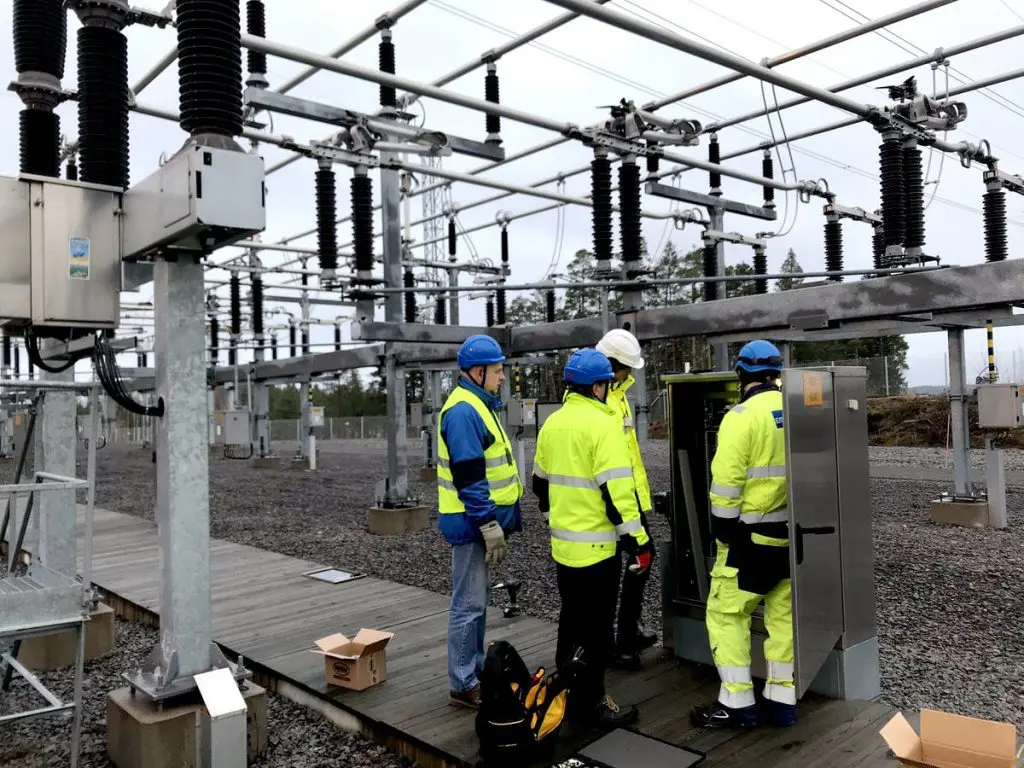
FINGRID2
Substation – installing industrial IoT monitoring devices for circuit breakers and disconnectors

Many have been worked into production, and are being installed currently in a dozen substations – about 10 per cent of its total network of 116 sunstations. Others are in development still. The plan is for around 500 new sensors at each substation, for measuring temperature, vibration, humidity, and acoustics, alongside voltages and amperes, and sundry electrical values.

The system will be tested, extensively, and scaled from there. Details remain scant, as the system is still being finalised. “We just don’t have that much that we can share yet,” he says. But the logic is plain: Fingrid wants to cut maintenance costs by measuring, recording, and comparing every grid-side metric it can.

And while grid balancing helps with green energy targets, automated maintenance of grid infrastructure brings real financial benefits – around 60 per cent of Fingrid’s operational expenditure goes on maintenance, and most is associated with planned outages for assessing grid equipment.

“The way to run maintenance checks has always been to take equipment out of service, and then to stick in probes, run measurements, and get readings about the state of things. And that impacts our customers – and power generators and regional grids have to adapt as well, and make their own changes,” says Stenstrand.

MAINTENANCE
The grid should operate around-the-clock, and week-long outages just for maintenance checks have to be planned years in advance – so the rest of the system can, at length, flex in response.

He goes on: “Yes, I get information about the status of the equipment, but the asset is still in the same condition it was before. Nothing has changed. I haven’t increased its value or performance. That only happens after the inspection, and after the outage.”
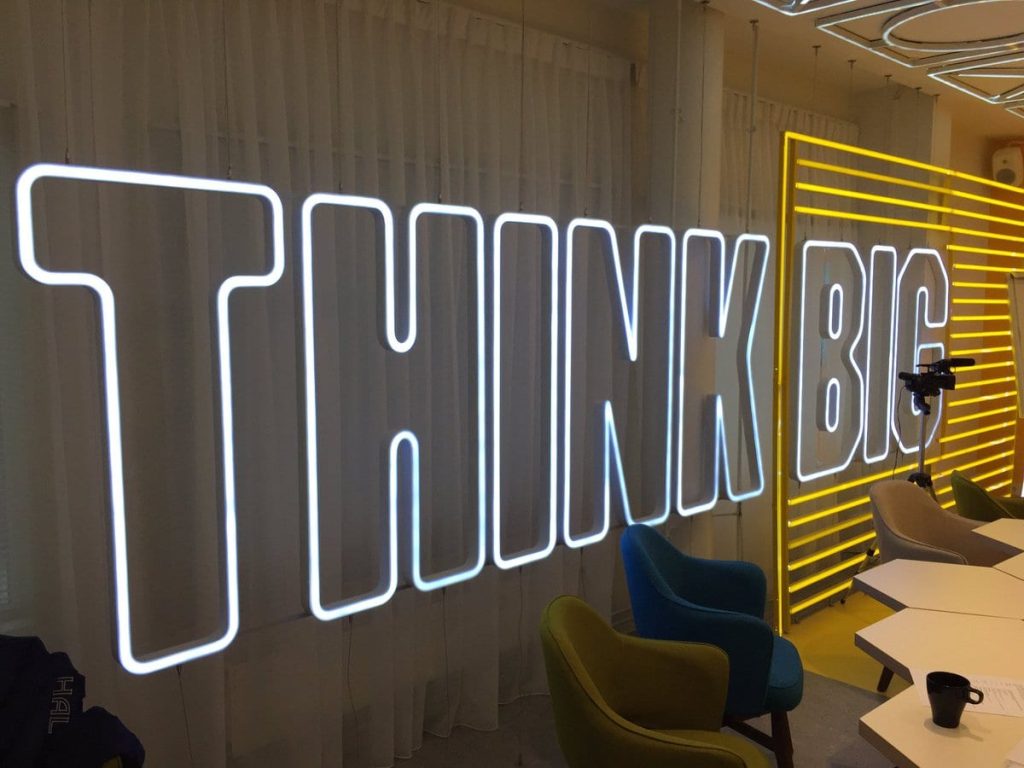
FINGRID garage
Innovation – the signage and lounge area at Fingrid’s ‘garage day’ hackathon

Plus, distributed energy farms cannot be so easily monitored, when the infrastructure itself is scattered so far. The business case was simple, he says: to take part of the spend on speculative checks – a fraction of “this huge barrel of money” that goes on maintenance – to reinvent in sensors and analytics to get live readouts of asset preformance.

The key was to keep costs down. “We’re not searching for things that last 40 years; we hope it lasts 10 years, but we’re good if it lasts five,” says Stenstrand.

But why not 40 years? Surely, any company investing in infrastructure should aim for longer? “Forty years comes at a price. If it lasts 40 years, great; but it was clear the only way we could digitalise our existing assets was to get cheap IoT – and I don’t mean affordable, I mean cheap.”

This needs some qualification. Fingrid claims almost total grid reliability and great value energy prices. “Our grid availability is one of the best in Europe. It’s 99.9999 per cent – six nines. And this industry does a lot of benchmarking. And even at global level, we are one of the most cost-efficient companies on the planet, in terms of maintenance.”

Fingrid was faced with a dilemma: how to fund infrastructure modernisation, when grid reliability cannot be much improved and the business is getting by with a value proposition for customers?

“There isn’t a case for another nine. And there is no pressure to decrease operating expenses,” says Stenstrand. “You don’t want the cheapest, but you want optimal value. We don’t have this most simple business case logic that some other industries have with IoT – which will save money and cut costs. We take it to the next level, and then also improve customer satisfaction.”

This is an excerpt from a new editorial report from Enterprise IoT Insights, called ‘Keeping the lights on – with green power’, which looks at development of IoT technologies in the energy and power market . The full report, free to download, is available here.


You Might Also Like
  • Schneider Electric and PTC consolidate industrial AI stack – but where’s the network? (Telco Diary)
  • AI pushes fiber demand into a new phase, says Zayo
  • Connectivity, on demand – IoT, 5G, fiber (Telco Diary)
  • Ciena launches $200m venture fund as AI networking accelerates
  • Onomondo preps €100m ‘war chest’ to rip-up IoT rule book, tee-up physical AI
  • How RFID-integrated mobile devices boost efficiency and reduce cost (Analyst Angle)
Share 0 LinkedinEmail
James Blackman
James Blackman

James Blackman has been writing about the technology and telecoms sectors for over a decade. He has edited and contributed to a number of European news outlets and trade titles. He has also worked at telecoms company Huawei, leading media activity for its devices business in Western Europe. He is based in London.

previous post
Ondas Networks intros private cellular for ports and utilities in Alaska, Gulf of Mexico
next post
#TBT: Customers willing to cut landlines; Nextel, public safety spectrum shuffle; US Cellular launches picture messaging … this week in 2004

White Papers

  • Norton eBook: The 2026 Telco Playbook

  • Enea White Paper: Why Intelligent AAA is the Swiss Army Knife of Telecom

  • CSG White Paper: Telco AI Enabler: Mediation’s Defining Role

  • Enea White Paper: Scalable Database Design for 5G and Beyond

  • Supermicro and NVIDIA Whitepaper: Powering sovereign AI at scale

Editorial Reports

  • NTN Integration Market Pulse Report

  • Report: Building 6G — Aligning technology, policy and purpose

  • Report: Rethinking the RAN

Webinars

  • Appledore Webinar: Closing the Agent-Ready Data Gap for Autonomous Networks

  • Mimosa Webinar – Build the Right Network

  • Webinar: Building 6G — aligning technology, policy and purpose

  • SIMCom Webinar: Scaling your next deployment – from plastic to provisioning

  • Webinar: Rethinking the RAN as AI, cloud and openness converge

Since 1982, RCR Wireless News has been providing wireless and mobile industry news, insights, and analysis to mobile and wireless industry professionals, decision makers, policy makers, analysts and investors.

Facebook Twitter Youtube Linkedin Envelope Rss

Useful Links

  • Subscribe
  • About RCR Wireless News
  • Contact Us
  • Advertise
  • Editorial Calendar
  • Archive
  • RSS
  • Wireless News Archive
  • Subscribe
  • About RCR Wireless News
  • Contact Us
  • Advertise
  • Editorial Calendar
  • Archive
  • RSS
  • Wireless News Archive

Edtior's Picks

SpaceX grabs “earthquake” 800 MHz deal as Starlink rocks US telcos
Wi-Fi 8 – the defensive frontline for ISPs against AI-driven cyberattacks (Reader Forum)
T-Mobile uses AI to reshape network investment and resilience

Latest Articles

SpaceX grabs “earthquake” 800 MHz deal as Starlink rocks US telcos
Wi-Fi 8 – the defensive frontline for ISPs against AI-driven cyberattacks (Reader Forum)
T-Mobile uses AI to reshape network investment and resilience
Starlink on your tail! Don’t forget the infra build-out (Telco Diary)

© 2026 RCR Wireless News All Right Reserved. Developed by Eight Hats.

Cookie Policy | Privacy Policy

RCR Wireless
  • News
  • Channels
    • 5G
    • 6G
    • BSS OSS
    • Carriers
    • IoT
    • Network Infrastructure
    • Open RAN
    • Private 5G
    • Telco AI
    • Telco Cloud
    • Test & Measurement
  • Resources
    • Reports
    • Webinars
    • White papers
    • AI Fundamentals
    • Analyst Angle
    • Editorial Calendar
    • Fundamentals
      • 5G NR Release 17
      • AI
        • Telco AI in 2025
    • Podcasts
      • Let’s Get Digital with Carrie Charles
      • Wireless Connectivity to Enable Industry 4.0 for the Middleprise
      • Well Technically…
      • Will 5G Change the World
      • Accelerating Industry 4.0 Digitalization
  • AI Infrastructure
  • Programs
  • Events
  • RCRtv
  • Advertise
  • Subscribe
RCR Wireless
  • News
  • Channels
    • 5G
    • 6G
    • BSS OSS
    • Carriers
    • IoT
    • Network Infrastructure
    • Open RAN
    • Private 5G
    • Telco AI
    • Telco Cloud
    • Test & Measurement
  • Resources
    • Reports
    • Webinars
    • White papers
    • AI Fundamentals
    • Analyst Angle
    • Editorial Calendar
    • Fundamentals
      • 5G NR Release 17
      • AI
        • Telco AI in 2025
    • Podcasts
      • Let’s Get Digital with Carrie Charles
      • Wireless Connectivity to Enable Industry 4.0 for the Middleprise
      • Well Technically…
      • Will 5G Change the World
      • Accelerating Industry 4.0 Digitalization
  • AI Infrastructure
  • Programs
  • Events
  • RCRtv
  • Advertise
  • Subscribe
@2020 - All Right Reserved. Designed and Developed by PenciDesign