

What is the internet of nanoscale things?
Nanoscale technology is enabling the development of devices as small as one to a few hundred nanometers (10^-9 meters). To give a sense of scale, a strand of human DNA is roughly 2.5 nanometers in diameter. At this scale, a nanomachine is defined as the most basic functional unit and able to perform simple tasks such as sensing or actuation.
The U.S.’s National Nanotechnology Initiative (NNI) requested $1.5 billion in federal funding in fiscal year (FY) 2016 and has been awarded over $22 billion since FY 2001.
Coordination and information sharing among several nanomachines will expand the potential applications of individual devices both in terms of complexity and range of operation, according to the Georgia Institute of Technology. The resulting nano-networks will be able to cover larger areas, and reach hard-to-reach locations. Moreover, the interconnection of nanoscale devices with classical networks and the internet defines a new networking paradigm, to which Georgia Institute of Technology refers to as the “internet of nano-things.”
Use cases
Some potential applications include:
- In-body networks monitoring real-time blood, sickness, and breath tests,
- Used in public locations to monitor the spread of viruses and diseases,
- Hooked up to wearable health and environmental trackers;
When it arrives, the internet of nanoscale things could provide much more detailed, inexpensive and up-to-date pictures of our cities, homes, factories—even our bodies. Today traffic lights, wearables or surveillance cameras are getting connected to the Internet with billions of expected nanosensors harvesting huge amounts of real-time information and beaming it up to the cloud, according to Scientific American.
Methods of communication
It is still not clear how nanomachines are going to communicate. Georgia Tech presents two main alternatives for communication in the nanoscale, namely, molecular communication and nano-electromagnetic communication:
- Molecular communication
- This is defined as the transmission and reception of information encoded in molecules. Molecular transceivers are expected to be easily integrated in nano-devices due to their size and domain of operation. These transceivers are able to react to specific molecules, and to release others as a response to an internal command or after performing some type of processing.
- Nano-electromagnetic communication:
- This is defined as the transmission and reception of electromagnetic (EM) radiation from components based on novel nanomaterials.
The unique properties observed in these materials will decide the specific bandwidth for emission of electromagnetic radiation, the time lag of the emission and the magnitude of the emitted power for a given input energy.
Network architecture for IoNT
Georgia Institute of Technology proposes the study of the Terahertz band for nano-electromagnetic communication and provides a network architecture for nano devices.
- In intrabody networks, nanomachines such as nanosensors and nanoactuators deployed inside the human body are remotely controlled from the macroscale and over the internet by an external user such as a healthcare provider. The nanoscale is the natural domain of molecules, proteins, DNA, organelles and the major components of cells. Amongst others, existing biological nanosensors and nanoactuators provide an interface between biological phenomena and electronic nano-devices, which can be exploited through this new networking paradigm.
- In the interconnected office, every single element normally found in an office and even its internal components are provided of a nanotransceiver which allows them to be permanently connected to the internet.
The use cases in these different environments shows that nanotechnology has to the ability to create new applications in the biomedical, industrial and military fields as well as in consumer and industrial goods.
Demands for nano IoT
These are factors, according to Georgia Tech, that will increase demand for nano devices:
- Convenience and almost seamless deployment
- Tiny and non-obtrusive devices
- The possibility to harvest vibrational, mechanical or even electromagnetic energy from the environment
- Ultra-low power consumption
- Reasonable computing capabilities
Here are the physical components required for the internet of nano things architecture:
- Nano-nodes
- Smallest and simplest nanomachines. They are able to perform simple computation, have limited memory, and can only transmit over very short distances, mainly because of their reduced energy and limited communication capabilities. Biological nanosensor nodes inside the human body and nanomachines with communication capabilities integrated in all types of things such as books, keys, or paper folders are good examples of nano-nodes.
- Nano-routers
- Comparatively larger computational resources than nano-nodes and are suitable for aggregating information coming from limited nanomachines. In addition, nano-routers can also control the behavior of nano-nodes by exchanging very simple control commands (on/off, sleep, read value, etc.). However, this increase in capabilities involves an increase in their size, and this makes their deployment more invasive. Nano-micro interface devices: these are able to aggregate the information coming from nanorouters, to convey it to the microscale, and vice versa.
- Gateway
- Enables the remote control of the entire system over the Internet. For example, in an intrabody network scenario, an advanced cellphone can forward the information it receives from a nano-micro interface in our wrist to our healthcare provider. In the interconnected office, a modem-router can provided this functionality. Despite the interconnection of microscale devices, the development of gateways and the network management over the Internet are still open research areas, in the remaining of this article we mainly focus on the communication challenges among nanomachines.
Technologies enabling smaller data collection
Scientists have started shrinking sensors from millimeters or microns in size to the nanometer scale, small enough to circulate within living bodies and to mix directly into construction materials. Here are five new developments that are helping enable the shrinking of sensors and collection of data from nano devices, according to Computer Business Review.
Nanotubes
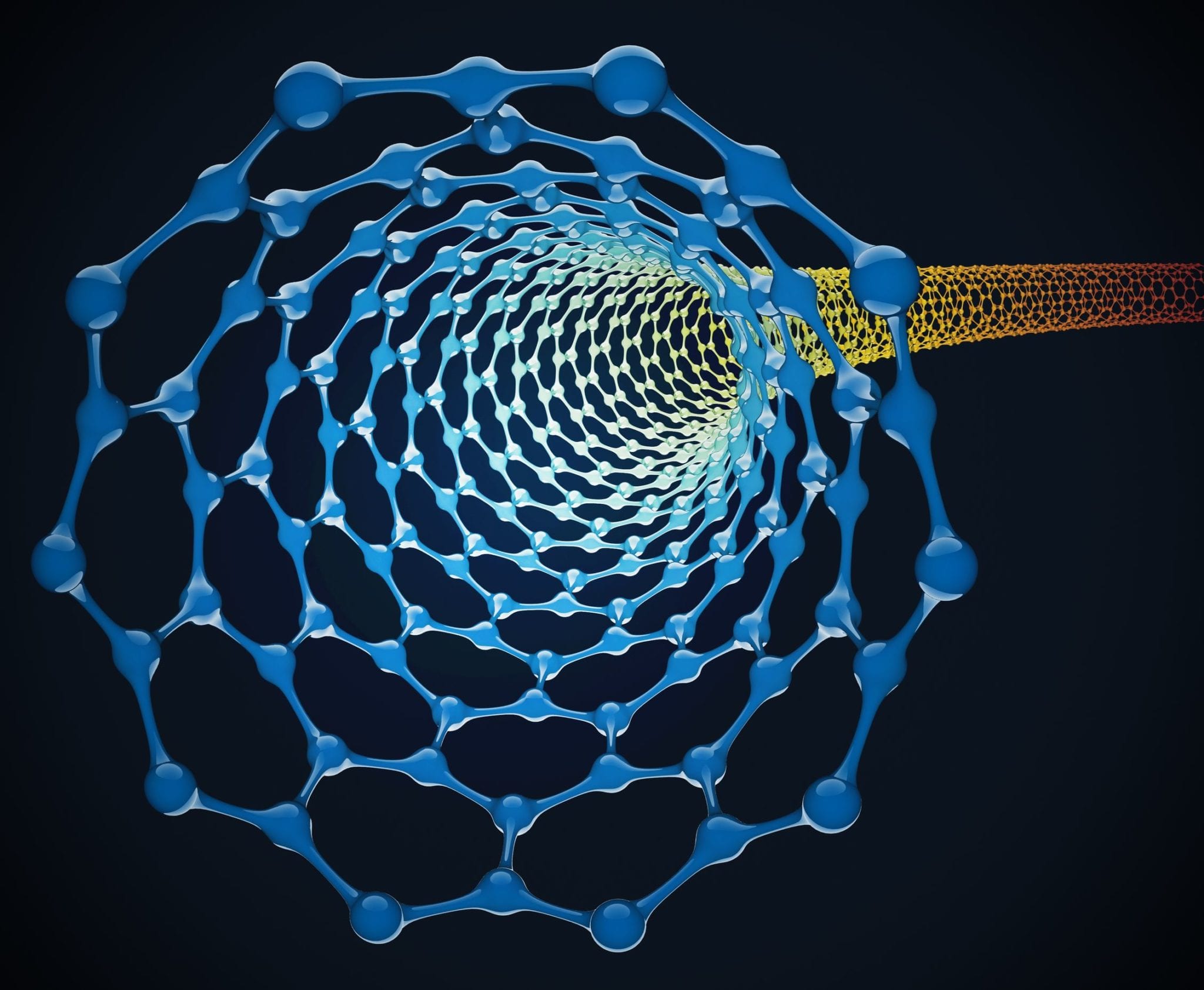
Carbon nanotubes are a nanotechnology constructed with a length-to-diameter ratio of up to 132,000,000:1.
Uses of the solution span from incorporation in portable electronics to help fighting against cancer and creating artificial muscles.
Bleeding plastic
Scientists have also developed a bleeding plastic with self-healing capabilities that could put an end to nearly everything getting broken, including cars, airplanes or everyday devices.
Nano-nodes
Nano-nodes are nanomachines with the capability to perform simple computatio, but could be used in the future to make nearly every object and person connected to the internet.
In a whitepaper from IEEE Wireless Communications, Ian Akyildiz and Josep Jornet from the Georgia Institute of Technology explained that nano-nodes have limited memory, and can only transmit over very short distances, mainly because of their reduced energy and limited communication capabilities.
Nanoantennas
Nanoantennas are a new emerging technology that could help power wearables, smarten up buildings or keep lights on.
Table of Contents

