

RCR Wireless
  • News
  • Channels
    • 5G
    • 6G
    • BSS OSS
    • Carriers
    • IoT
    • Network Infrastructure
    • Open RAN
    • Private 5G
    • Telco AI
    • Telco Cloud
    • Test & Measurement
  • Resources
    • Reports
    • Webinars
    • White papers
    • AI Fundamentals
    • Analyst Angle
    • Editorial Calendar
    • Fundamentals
      • 5G NR Release 17
      • AI
        • Telco AI in 2025
    • Podcasts
      • Let’s Get Digital with Carrie Charles
      • Wireless Connectivity to Enable Industry 4.0 for the Middleprise
      • Well Technically…
      • Will 5G Change the World
      • Accelerating Industry 4.0 Digitalization
  • AI Infrastructure
  • Programs
  • Events
  • RCRtv
  • Advertise
  • Subscribe
Wednesday, August 5, 2026
RCR Wireless
  • News
  • Channels
    • 5G
    • 6G
    • BSS OSS
    • Carriers
    • IoT
    • Network Infrastructure
    • Open RAN
    • Private 5G
    • Telco AI
    • Telco Cloud
    • Test & Measurement
  • Resources
    • Reports
    • Webinars
    • White papers
    • AI Fundamentals
    • Analyst Angle
    • Editorial Calendar
    • Fundamentals
      • 5G NR Release 17
      • AI
        • Telco AI in 2025
    • Podcasts
      • Let’s Get Digital with Carrie Charles
      • Wireless Connectivity to Enable Industry 4.0 for the Middleprise
      • Well Technically…
      • Will 5G Change the World
      • Accelerating Industry 4.0 Digitalization
  • AI Infrastructure
  • Programs
  • Events
  • RCRtv
  • Advertise
  • Subscribe
Add RCR Wireless as a preferred source on Google
  • Qualcomm 6G Insights
  • Huawei Content Hub
  • Qualcomm – 6G Vision
  • OSS/BSS Channel
  • RCRTech Roundtable: AI Infrastructure
RCR Wireless
RCR Wireless
  • Advanced Mimo
  • Mobile mmWave
  • 5G Positioning
  • Green Networks
  • Metaverse
  • Automotive
  • Industrial and Wide-area IoT
Copyright 2021 - All Right Reserved
Home - Analyst Angle: Backhaul isn’t always about fiber
Analyst AngleOpinion

Analyst Angle: Backhaul isn’t always about fiber

by Altantic-ACM October 1, 2014
written by Altantic-ACM October 1, 2014 Share
LinkedinEmail
Share 0LinkedinEmail
169

Editor’s Note: Welcome to our weekly feature, Analyst Angle. We’ve collected a group of the industry’s leading analysts to give their outlook on the hot topics in the wireless industry.

Discussion around the cellular backhaul market in the United States today places a heavy emphasis on fiber and putting more glass in the ground — and for good reason. Ultimately, Atlantic-ACM believes that in order to meet expected growth in bandwidth consumption, fiber will be the backhaul technology of choice at the majority of cell sites. That being said, alternative technologies meet the needs of mobile operators for hard-to-reach places. Today, the primary alternative solution to fiber, other than copper T1-based backhaul, is microwave. With the ecosystem continuing to be crowded with equipment vendors, one often overlooked, but very real question in the wireless space is what will drive microwave business in the United States, and what are the opportunities?

Microwave has deep a history within the U.S. mobile network

Understanding microwave’s historic role helps to shed light onto potential advantages and disadvantages of realizing future opportunities. Microwave has historically played several different roles within U.S. mobile operator networks.

Rural network/off-grid needs: The United States is not covered by copper or fiber networks in all places where wireless towers need connectivity. Solutions can simply consist of a relay from a hard-to-reach cell site to a hub site on the fiber network, or it could consist of a cluster of towers in hard-to-reach locations. For many years microwave has supported backhaul connectivity for off-grid towers and, in areas where operators cannot get backhaul providers to cost-justify copper/fiber builds, microwave provides a compelling alternative solution.

Complete network builds: Microwave played a central role in Clearwire’s nationwide network build, enabling an operating expense-light approach to delivering a WiMAX network. (Clearwire architected its backhaul network to use microwave in the vast majority of its sites, with microwave hub sites backhauling traffic to the core fiber network.) Clearwire represented a test network scenario as the network never was fully loaded. No major U.S. carriers have repeated this deployment scenario since.

Today, the prevailing attitude among U.S. mobile operators it that microwave’s role will be primarily for rural backhaul and for links to off-grid cell sites when fiber and copper connectivity is cost prohibitive.

Microwave has several key weaknesses that prevent it from playing a broader role in the U.S. backhaul ecosystem

Although microwave holds the potential for opex-light backhaul economics (large capital costs revolving around equipment, but minimal ongoing service costs), microwave radio installations require lease amendments for tower contracts, creating an opportunity for tower companies to increase future lease costs at tower sites. Moreover, as towers become more crowded, the addition of more radios drives new engineering requirements, potentially leaving mobile operators exposed to costs for upgrading or adding reinforcement to existing infrastructure. All in, microwave deployments come with the potential for considerable additional cost.

The need to future-proof capacity also prohibits widespread microwave deployment. In metro areas, capacity at macro sites is ramping rapidly. The anticipated five-times ramp in mobile network bandwidth over the next five years will prevent microwave deployments from inclusion in massive, wide-scale network deployments as fiber remains a much better suited alternative to take on the expected capacity requirements of core cell sites. However, these deployments will not prevent it from meeting niche needs in cell sites with lower levels of bandwidth requirements. When tower costs are not prohibitive, or potential capacity constraints do not exist, backhaul will continue to offer a compelling long-term backhaul solution.

Microwave’s network role going forward will hinge upon the ability of vendors to take advantage of three key trends

—Site densification: As macro-site densification moves from core urban areas to suburban and rural areas, look for microwave to potentially play a role in markets where fiber is not available and operators cannot cost-justify fiber builds. This opportunity will only be realized if tower site leasing and engineering cost economics are favorable over the long term (too much increased cost from these factors could drive future-proofing via fiber build partners).

—Small cell expansion: Atlantic-ACM’s 2013 Metro Carrier Report Card Survey found that 13% of small cell backhaul spend will be allocated to microwave solutions. The outdoor small-cell opportunity in the United States remains nascent as operators are looking for ways to make both backhaul and site acquisition economics work. Microwave has the potential to play a role going forward if equipment form factor can meet low weight and size requirements. Operators also will need to make sure they don’t get squeezed for additional lease costs for attachments of additional radios. If these impediments can be overcome, microwave could have a strong future in outdoor small-cell deployments.

—Rural network expansion: Rural LTE coverage in the United States continues to ramp up, translating into opportunities for microwave deployments for all the reasons already discussed. Look for this to be the key to microwave’s future going forward as rural network expansion will drive significant opportunities for microwave vendors.

At the end of the day, fiber will continue to dominate the U.S. wireless backhaul ecosystem as exploding bandwidth demand drives fiber-based connectivity. However, for ubiquitous network coverage, operators will have to look to alternative solutions in rural and hard-to-reach locations. Microwave will continue to play a role in places where its deployment will not face insurmountable bandwidth growth pressure or cell-site attachment economics. The wireless space is heavily colored by price competition, so microwave vendor success will largely be driven by the ability to target opportunities that improve mobile network cost dynamics.

Aaron Blazar Atlantic-ACM

Aaron Blazar works as a VP for Atlantic-ACM on projects ranging from market sizing and forecasting to corporate strategy covering both the wireline and wireless telecom markets. Blazar has a broad perspective on the telecommunications industry and expertise in market segmentation, market analysis, market entry strategies and statistical analysis.

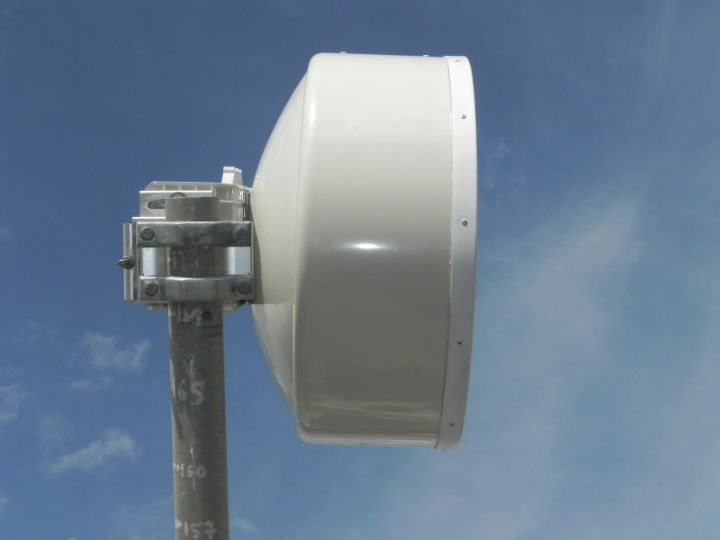
Photo courtesy Telimart

You Might Also Like
  • Tuesday (telco diary) | More about ISAC – on battlefields and sportsfields
  • Wi-Fi carries over 80% of traffic; monetizing it is not a done deal (Analyst Angle)
  • Monday (telco diary) | Network platforms and an AI hill of beans
  • Physical AI is exposing a data sovereignty gap (Reader Forum)
  • Friday (telco diary) | Telcos in AI and ISAC arms race
  • Ensuring colocation success by eliminating network observability blind spots (Reader Forum)

Table of Contents

  • Microwave has deep a history within the U.S. mobile network
  • Microwave has several key weaknesses that prevent it from playing a broader role in the U.S. backhaul ecosystem
  • Microwave’s network role going forward will hinge upon the ability of vendors to take advantage of three key trends
Share 0 LinkedinEmail
Altantic-ACM

Analyst Angle Contributor to RCR Wireless Newswww.atlantic-acm.com For more than two decades, ATLANTIC-ACM has delivered strategic consulting and research services to leading business owners, operators and investors around the world. ATLANTIC-ACM delivers quantitative and qualitative research that provides executives with clear, accurate and actionable strategies for tapping new revenue streams, shoring up existing customer bases, penetrating new markets and navigating changes in market dynamics. Our work incorporates supply-side development strategies, operational evaluation and refinement to increase margins and downstream channel management including brand management, niche and mass market penetration to increase revenues. From market sizing, forecasting and segmentation to customer satisfaction measurement and competitive benchmarking, ATLANTIC-ACM’s information solutions provide key insight into the entire value chain.

previous post
LatAm: Lack of competition, no premium, no new entrants define Brazil’s 700 MHz auction
next post
Analyst Angle: Partnering — telcos that walk the walk

White Papers

  • Norton eBook: The 2026 Telco Playbook

  • Enea White Paper: Why Intelligent AAA is the Swiss Army Knife of Telecom

  • CSG White Paper: Telco AI Enabler: Mediation’s Defining Role

  • Enea White Paper: Scalable Database Design for 5G and Beyond

  • Supermicro and NVIDIA Whitepaper: Powering sovereign AI at scale

Editorial Reports

  • Market Pulse Report: Telco AI in 2026 – Trends, Challenges and Opportunities

  • Nvidia Report: The State of AI in Telecommunications: 2026 Trends

  • Report: Scaling Optical Networks For The Hyperscale And AI Era

Webinars

  • Webinar: Building 6G — aligning technology, policy and purpose

  • SIMCom Webinar: Scaling your next deployment – from plastic to provisioning

  • Webinar: Rethinking the RAN as AI, cloud and openness converge

  • Webinar: Scale-Up, Scale-Out, Scale-Across – Building AI-Era Network Fabrics

  • Webinar: NTN in motion – evolving standards, expanding services

Since 1982, RCR Wireless News has been providing wireless and mobile industry news, insights, and analysis to mobile and wireless industry professionals, decision makers, policy makers, analysts and investors.

Facebook Twitter Youtube Linkedin Envelope Rss

Useful Links

  • Subscribe
  • About RCR Wireless News
  • Contact Us
  • Advertise
  • Editorial Calendar
  • Archive
  • RSS
  • Wireless News Archive
  • Subscribe
  • About RCR Wireless News
  • Contact Us
  • Advertise
  • Editorial Calendar
  • Archive
  • RSS
  • Wireless News Archive

Edtior's Picks

Tuesday (telco diary) | More about ISAC – on battlefields and sportsfields
Intelligent RAN Forum 2026
NTN Integration Forum 2026

Latest Articles

Tuesday (telco diary) | More about ISAC – on battlefields and sportsfields
Intelligent RAN Forum 2026
NTN Integration Forum 2026
From missiles to pizzas – why 6G drone sensing has been fast-tracked for 5G

© 2026 RCR Wireless News All Right Reserved. Developed by Eight Hats.

Cookie Policy | Privacy Policy

RCR Wireless
  • News
  • Channels
    • 5G
    • 6G
    • BSS OSS
    • Carriers
    • IoT
    • Network Infrastructure
    • Open RAN
    • Private 5G
    • Telco AI
    • Telco Cloud
    • Test & Measurement
  • Resources
    • Reports
    • Webinars
    • White papers
    • AI Fundamentals
    • Analyst Angle
    • Editorial Calendar
    • Fundamentals
      • 5G NR Release 17
      • AI
        • Telco AI in 2025
    • Podcasts
      • Let’s Get Digital with Carrie Charles
      • Wireless Connectivity to Enable Industry 4.0 for the Middleprise
      • Well Technically…
      • Will 5G Change the World
      • Accelerating Industry 4.0 Digitalization
  • AI Infrastructure
  • Programs
  • Events
  • RCRtv
  • Advertise
  • Subscribe
RCR Wireless
  • News
  • Channels
    • 5G
    • 6G
    • BSS OSS
    • Carriers
    • IoT
    • Network Infrastructure
    • Open RAN
    • Private 5G
    • Telco AI
    • Telco Cloud
    • Test & Measurement
  • Resources
    • Reports
    • Webinars
    • White papers
    • AI Fundamentals
    • Analyst Angle
    • Editorial Calendar
    • Fundamentals
      • 5G NR Release 17
      • AI
        • Telco AI in 2025
    • Podcasts
      • Let’s Get Digital with Carrie Charles
      • Wireless Connectivity to Enable Industry 4.0 for the Middleprise
      • Well Technically…
      • Will 5G Change the World
      • Accelerating Industry 4.0 Digitalization
  • AI Infrastructure
  • Programs
  • Events
  • RCRtv
  • Advertise
  • Subscribe
@2020 - All Right Reserved. Designed and Developed by PenciDesign
