

RCR Wireless
  • News
  • Channels
    • 5G
    • 6G
    • BSS OSS
    • Carriers
    • IoT
    • Network Infrastructure
    • Open RAN
    • Private 5G
    • Telco AI
    • Telco Cloud
    • Test & Measurement
  • Resources
    • Reports
    • Webinars
    • White papers
    • AI Fundamentals
    • Analyst Angle
    • Editorial Calendar
    • Fundamentals
      • 5G NR Release 17
      • AI
        • Telco AI in 2025
    • Podcasts
      • Let’s Get Digital with Carrie Charles
      • Wireless Connectivity to Enable Industry 4.0 for the Middleprise
      • Well Technically…
      • Will 5G Change the World
      • Accelerating Industry 4.0 Digitalization
  • AI Infrastructure
  • Programs
  • Events
  • RCRtv
  • Advertise
  • Subscribe
Tuesday, July 7, 2026
RCR Wireless
  • News
  • Channels
    • 5G
    • 6G
    • BSS OSS
    • Carriers
    • IoT
    • Network Infrastructure
    • Open RAN
    • Private 5G
    • Telco AI
    • Telco Cloud
    • Test & Measurement
  • Resources
    • Reports
    • Webinars
    • White papers
    • AI Fundamentals
    • Analyst Angle
    • Editorial Calendar
    • Fundamentals
      • 5G NR Release 17
      • AI
        • Telco AI in 2025
    • Podcasts
      • Let’s Get Digital with Carrie Charles
      • Wireless Connectivity to Enable Industry 4.0 for the Middleprise
      • Well Technically…
      • Will 5G Change the World
      • Accelerating Industry 4.0 Digitalization
  • AI Infrastructure
  • Programs
  • Events
  • RCRtv
  • Advertise
  • Subscribe
Add RCR Wireless as a preferred source on Google
  • Qualcomm 6G Insights
  • Huawei Content Hub
  • Qualcomm – 6G Vision
  • OSS/BSS Channel
RCR Wireless
RCR Wireless
  • Advanced Mimo
  • Mobile mmWave
  • 5G Positioning
  • Green Networks
  • Metaverse
  • Automotive
  • Industrial and Wide-area IoT
Copyright 2021 - All Right Reserved
Home - LTE 101: The Small Cell Paradox – What we need vs. what we want
Network InfrastructureSponsored

LTE 101: The Small Cell Paradox – What we need vs. what we want

by RCR Wireless News September 9, 2015
written by RCR Wireless News September 9, 2015 Share
LinkedinEmail
Share 0LinkedinEmail
small cell
1.2K

Most of us are using our mobile devices more than we did a year or two ago, and certainly more than we did 5-10 years ago. As we look around we see others doing exactly the same thing. The places we see this the most are often public spaces, tourist attractions, and event venues – often the last places we want to encounter cables and antennas.

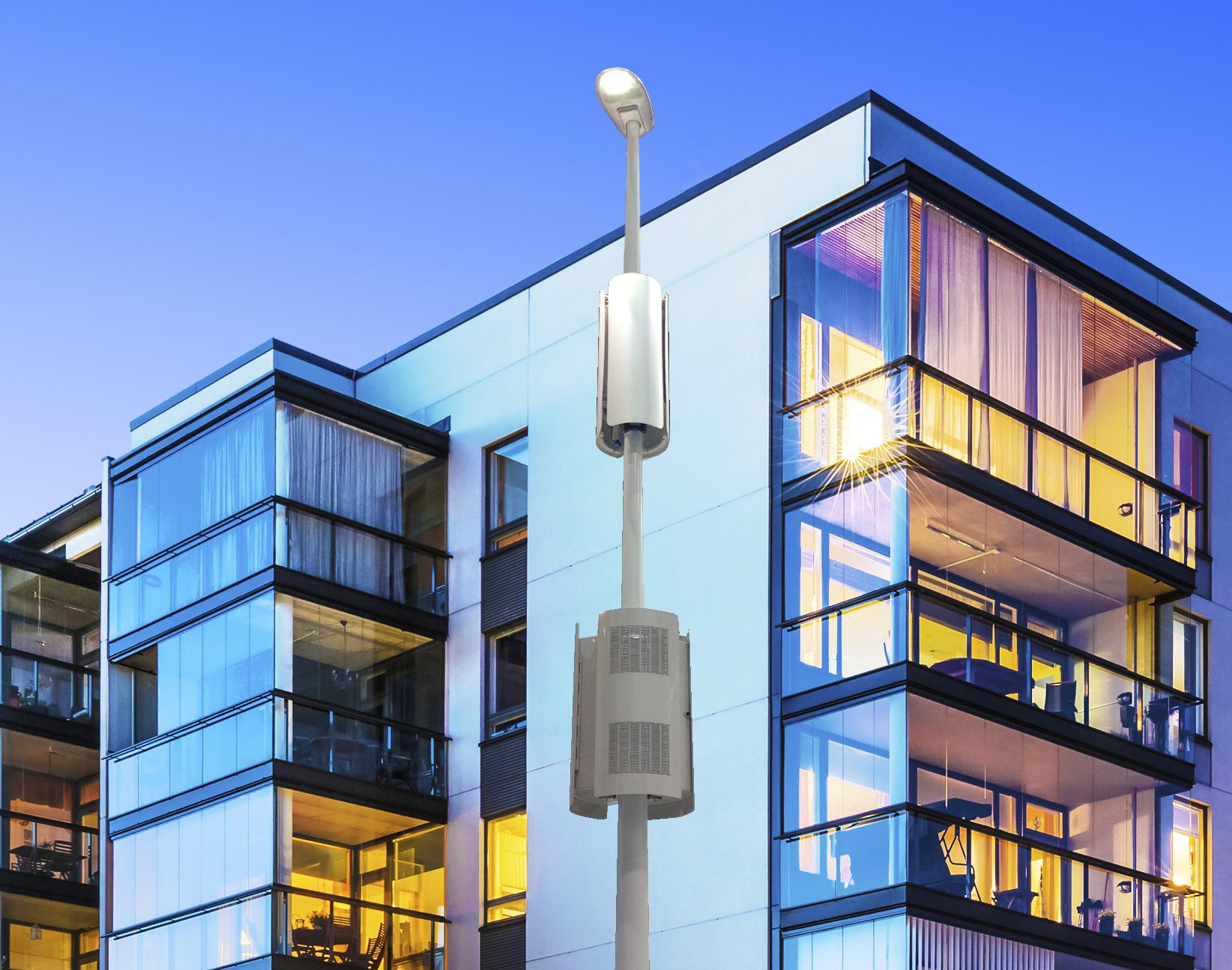
“It might be next to a historic district, it might be next to housing, and people don’t want to look at equipment,” explained Steve Kemp, manager of Small Cell Site Solutions at CommScope. Kemp is the author of CommScope’s recent white paper, Improving Metro Cell Performance with Electrical Downtilt and Upper Sidelobe Suppression.

Upscale neighborhoods, public venues, and downtown centers are often the perfect places for carriers to deploy small cells, from a technical perspective. Instead of adding equipment to the nearest cell tower, a carrier can pinpoint a network trouble spot and solve the problem with a small cell.

The same idea applies on a larger scale across a metropolitan area. Verizon Wireless is deploying a network of 400 small cells in downtown San Francisco that targets the most crowded areas. Putting wireless equipment of any size in suburban or urban areas has its set of challenges, however. The ability to get permitted is high on that list. Aesthetics and equipment concealment play an important role in getting such sites permitted.

“As you get into these places that are very difficult to blend in, like Market Street in San Francisco, you are trying to be as unobtrusive as possible,” said Kemp. Sometimes visibility of a small cell can be inversely related to cost. Kemp said that in some instances operators have built fake lamp posts to support small cells, or replaced wooden utility poles with new poles that can support additional equipment.

But CommScope is learning that concealment does not always have to be costly. Using smaller cabinets that house only the equipment that cannot be outdoors is one way to conceal small cells cost effectively. Radio equipment can be outside the cabinet, often shrouded in a metal case.

Some deployment scenarios call for concealment solutions that do not even show cabinets or casing. Kemp said he has seen a number of deployments in outdoor areas, where cells are designed to blend in with trees and other vegetation.

But the majority of metro cell deployments are likely to be closer to buildings than to trees, in urban areas that need capacity the most, yet often have the least space to accommodate it and the lowest tolerance for obtrusive equipment. Verizon Wireless said that San Franciscans have had numerous questions about the aesthetic impact of its small cell deployment, and that they prefer the (more expensive) deployments on steel poles because the design is cleaner than it is on wooden poles.

Carriers are used to dealing with community concerns, and have at times relocated proposed macro sites to accommodate a community. But with small cells, changing a proposed location is likely to impact the service that the carrier can ultimately deliver. Metro cells are meant to solve capacity issues at specific locations.

“Because they are very small radius devices, generally anywhere between 5 and 10 watts, you have to hit the latitude and longitude of where these things go pretty precisely,” said Kemp. “It’s not like you can be off by a half a mile and everything is going to be OK.”

Instead, operators need to focus on deployments that blend in with their surroundings, in order to give communities the connectivity they need in the environment they want.

For more on this topic, download CommScope’s white paper.

You Might Also Like
  • Wednesday | Telco agents and smash hits (Editorial Diary)
  • Tuesday | Vertical build-outs, horizontal break-ups (Editorial Diary)
  • From autonomous networks to intelligent telcos – the next evolution of telecom
  • BT and Verizon merge international arms in $4bn global enterprise JV
  • Friday | Starlink raises the stakes (Editorial Diary)
  • Thursday | Tokenomics is not new telco economics (Editorial Diary)
Share 0 LinkedinEmail
RCR Wireless News

previous post
3 reasons tower climber safety is improving
next post
Huawei: Bringing Fiber-to-the-Home Gigabit Service to Rural Oregon

White Papers

  • Enea White Paper: Why Intelligent AAA is the Swiss Army Knife of Telecom

  • CSG White Paper: Telco AI Enabler: Mediation’s Defining Role

  • Enea White Paper: Scalable Database Design for 5G and Beyond

  • Supermicro and NVIDIA Whitepaper: Powering sovereign AI at scale

  • VIAVI Whitepaper: RAN scenario generators and their critical role for future-proofing AI-native RAN in Advanced 5G and 6G networks

Editorial Reports

  • Report: Scaling Optical Networks For The Hyperscale And AI Era

  • Test And Measurement Market Pulse Report

  • Editorial Report: Securing telecom infrastructure for the quantum era

Webinars

  • Webinar: Rethinking the RAN as AI, cloud and openness converge

  • Webinar: Scale-Up, Scale-Out, Scale-Across – Building AI-Era Network Fabrics

  • Webinar: NTN in motion – evolving standards, expanding services

  • Webinar: Noise-Figure Measurements with RFmx and PXI VSTs

  • Qualcomm Webinar – Building the 6G Standard: Key developments to know

Since 1982, RCR Wireless News has been providing wireless and mobile industry news, insights, and analysis to mobile and wireless industry professionals, decision makers, policy makers, analysts and investors.

Facebook Twitter Youtube Linkedin Envelope Rss

Useful Links

  • Subscribe
  • About RCR Wireless News
  • Contact Us
  • Advertise
  • Editorial Calendar
  • Archive
  • RSS
  • Wireless News Archive
  • Subscribe
  • About RCR Wireless News
  • Contact Us
  • Advertise
  • Editorial Calendar
  • Archive
  • RSS
  • Wireless News Archive

Edtior's Picks

Enea White Paper: Why Intelligent AAA is the Swiss Army Knife of Telecom
Huawei outlines AI-centric network roadmap for telecom monetization
Why consolidation will reshape MDU connectivity (part 3/3) – Analyst Angle

Latest Articles

Enea White Paper: Why Intelligent AAA is the Swiss Army Knife of Telecom
Huawei outlines AI-centric network roadmap for telecom monetization
Why consolidation will reshape MDU connectivity (part 3/3) – Analyst Angle
Quantum Safe Networks Forum 2026

© 2026 RCR Wireless News All Right Reserved. Developed by Eight Hats.

Cookie Policy | Privacy Policy

RCR Wireless
  • News
  • Channels
    • 5G
    • 6G
    • BSS OSS
    • Carriers
    • IoT
    • Network Infrastructure
    • Open RAN
    • Private 5G
    • Telco AI
    • Telco Cloud
    • Test & Measurement
  • Resources
    • Reports
    • Webinars
    • White papers
    • AI Fundamentals
    • Analyst Angle
    • Editorial Calendar
    • Fundamentals
      • 5G NR Release 17
      • AI
        • Telco AI in 2025
    • Podcasts
      • Let’s Get Digital with Carrie Charles
      • Wireless Connectivity to Enable Industry 4.0 for the Middleprise
      • Well Technically…
      • Will 5G Change the World
      • Accelerating Industry 4.0 Digitalization
  • AI Infrastructure
  • Programs
  • Events
  • RCRtv
  • Advertise
  • Subscribe
RCR Wireless
  • News
  • Channels
    • 5G
    • 6G
    • BSS OSS
    • Carriers
    • IoT
    • Network Infrastructure
    • Open RAN
    • Private 5G
    • Telco AI
    • Telco Cloud
    • Test & Measurement
  • Resources
    • Reports
    • Webinars
    • White papers
    • AI Fundamentals
    • Analyst Angle
    • Editorial Calendar
    • Fundamentals
      • 5G NR Release 17
      • AI
        • Telco AI in 2025
    • Podcasts
      • Let’s Get Digital with Carrie Charles
      • Wireless Connectivity to Enable Industry 4.0 for the Middleprise
      • Well Technically…
      • Will 5G Change the World
      • Accelerating Industry 4.0 Digitalization
  • AI Infrastructure
  • Programs
  • Events
  • RCRtv
  • Advertise
  • Subscribe
@2020 - All Right Reserved. Designed and Developed by PenciDesign
