

What is a distributed antenna system?
A distributed antenna system is a way to bolster cellular coverage and capacity by installing managed hubs and multiband antennas precisely where demand is greatest. A DAS installation increases the likelihood of strong reception given proximity to the end user and improved line-of-sight conditions. DAS’ are becoming increasingly important given the booming demand for mobile data, which is compounded by growing use of data-intensive applications like video and music streaming. The antenna systems, which can be shared by multiple carriers, provide enterprise owners with a value-added service in increased data and voice connectivity and are often invisible to customers.
In an interview with RCR Wireless News, Bobby McClung, CEO of AWS Communications, highlighted the need for building owners and property developers to install DASs.
“We are getting a lot of requests for the smaller venues” in the 150,000- to 500,000-square-foot range, McClung said. “That has been a little bit of a black hole. They are too small for the carriers to take advantage of them, but the building owners are desperate for some type of service. They are losing tenants and losing clients by not having good coverage.”
Distributed antenna systems rely on licensed radio frequency spectrum to operate. The technology has been around for more than 20 years, but has recently seen an increase in demand from carriers and enterprises looking to add coverage and capacity in high-value areas.
How does it work? Active vs. passive
Morgan Kurk, SVP in charge of wireless at Commscope, explained how a DAS is set up and operates in this video from RCRtv.
The implementation of a DAS starts when it is determined that a building or outdoor area has insufficient cellular reception. At that point, a base station is installed and connected back to the cellular signal source. Often installed nearby and connected to the base station is the DAS head-end, which takes in the base station’s RF signals.
The head-end converts the RF signals it receives from the base station and connects to remote radio heads. Those units are often located on each floor of a building or strategically located in high-traffic spots. At the remote units, signals are transformed back into RF signals; the remote radio heads are placed near the end users, decreasing the amount of potential interference. This results in stable data and call reception.
There are two main types of DAS: active and passive. Active DAS requires power in the form of managed remote hubs, which gather signals through fiber optic cables. An active setup is more commonly used when there is a large area to cover as remote hubs can be placed away from the base station.
A passive DAS, on the other hand, does not use any electronic components between the antennas and base station, only a coaxial cable. Because there is no amplification, antennas gradually lose signal strength the farther they get from the base station.
Who is using a DAS?
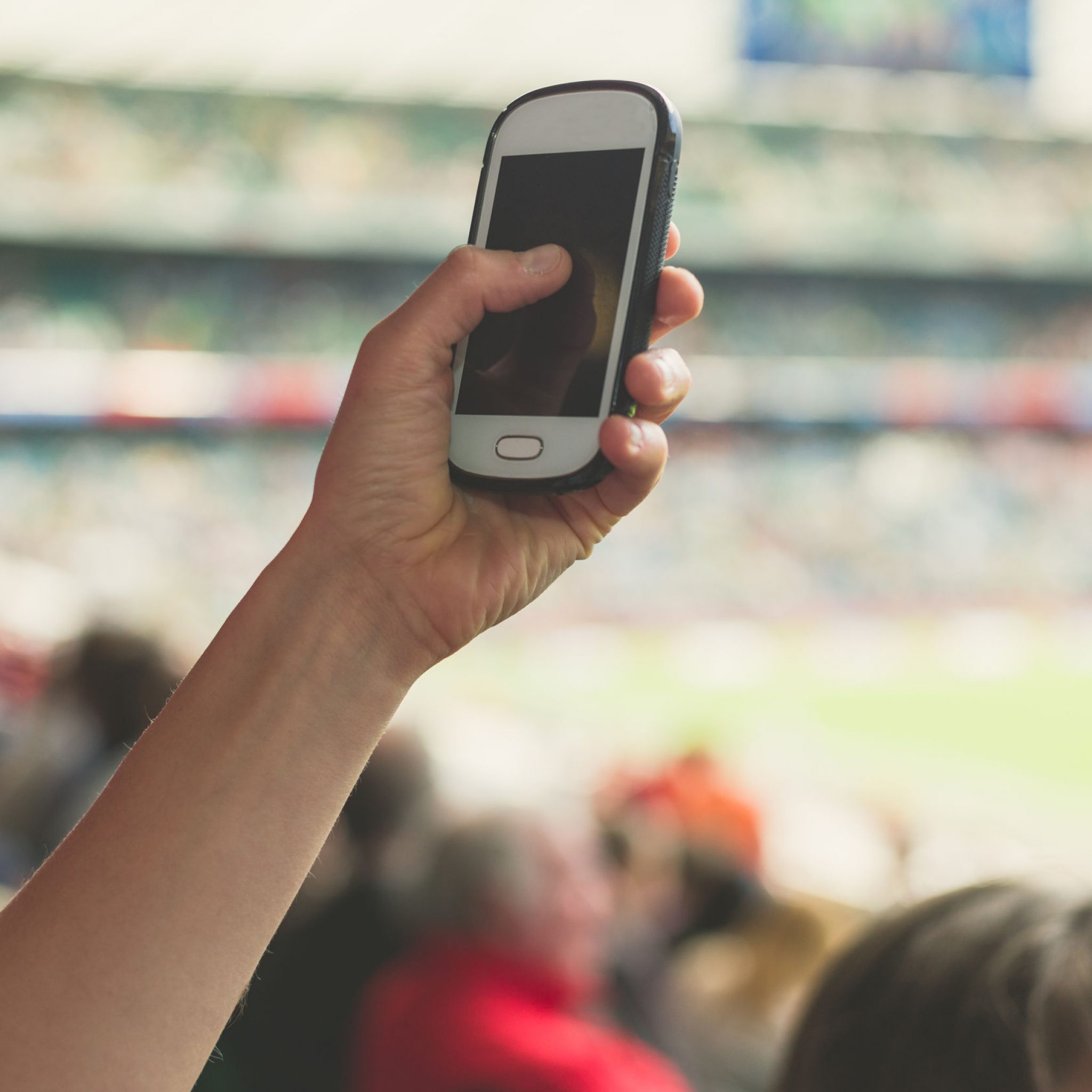
DAS networks are flexible with their ability to scale to different-sized coverage areas both indoors and outdoors. Distributed antenna systems can help provide a stronger signal to individual households as well as stadiums packed with thousands of people. Hospitals, schools, colleges and concert halls around the world use this technology.
The 2016 Kentucky Derby at the historic Churchill Downs is an example of a sporting event that needed the assistance of a DAS to overcome the congestion of the 300,000 attendees who came to see and record the most exciting two minutes in sports. AT&T Mobility and Mobilitie came together to enhance the already-existing network by increasing the LTE capacity by more than 50%, according to the companies.
AT&T Mobility’s larger installations also include AT&T Park in San Francisco, the Mercedes-Benz Superdome in New Orleans, MetLife Stadium in New Jersey, and upcoming projects like the Minnesota Vikings’ U.S. Bank Stadium in Minneapolis.
“In late 2010 we really realized that, from an in-building perspective, our traditional ways of coverage were not going to get it done from what we knew was going to happen from a data perspective,” said Paula Doublin, assistant VP of network services at AT&T. “So we set up the antenna solutions group with the expressed purpose that we were going to go in and cover our bench venues, which at the time we referred to them as airports, stadiums and arenas. That evolved to tall commercial buildings and large malls, basically anywhere people are going to gather. We went from a small universe of venues to adding hundreds [of venues] a week that our clients felt needed an in-building enhancement.”
Another great example of an outdoor DAS is the deployment of Cobham Wireless’s digital DAS in Berlin’s Fan Mile, a meeting point for more than 100,000 residents during events and celebrations. The installation, a partnership between Vodafone and Telefónica, came just in time for New Year’s Eve 2016.
Beyond the sheer demand for capacity, there are other reasons to deploy a DAS. For instance, it is not uncommon for buildings, especially those made of metalized glass or concrete, to be effective at blocking out signals. Such an infrastructure would benefit from having on-site antennas.
Congestion, particularly on the upload side, is another problem that festival-goers or sports fans are all too familiar with. But the installation of multiple antennas help create smaller, more manageable groups of data consumption to help reduce congestion.
“We have seen tremendous increases in our customer’s data consumption habits in the years,” Doublin said. “As a result, our capacity models have increased so we are putting much more capacity into venues than we ever had before. For those we have already filled out we have added considerable capacity.”
DAS also is becoming an integral part in the safety of institutions and events. As the concerns for safety grow within schools and public venues, the need for a strong cellular signal heightens.
“It becomes critical to have inside cell signal,” said Bill Rogers, owner of Seamless Cellular. “A lot of companies are going away from landlines and going to cellular only, so it is a concern for people to have that coverage.”
CPRI: A new interface for DAS
A DAS offers flexibility with its support for multiple carriers, but establishing connectivity between a service provider’s base station and a DAS head-end can be time-consuming and expensive. The problem stems from the processing of RF signals and an incompatibility in power output. A carrier’s base station puts out around 40 watts of power, about four times the amount a main hub can take in. The common public radio interface was established to avoid this complexity by allowing the base unit and main hub to be connected using a digital optical link, bypassing any RF processing needed and eliminating equipment. CPRI also provides the benefit of wireless delivery from multiple bands, protocols and operators, as well as being a solution for 2G, 3G and 4G. Companies currently backing CPRI include Ericsson, Huawei, NEC, Nokia Siemens Networks and Alcatel-Lucent.
Advantages of a DAS
- Significant increase in signal strength and coverage area with relatively low power usage.
- Can handle data-intensive applications and is compatible with large or small environments as well as varying user numbers and multiple carriers.
- Complies with rules and regulations requiring buildings and outdoor areas to have strong network reception in case of emergency.
Disadvantages of a DAS
- Scalability could be held back by requirements to support many resources – bands, operators and standards.
- The installation of equipment, particularly in venues with old infrastructure.
- “If a venue is older, say you wanted to take Wrigley Field, what we have to go through in order to make modifications within Wrigley, that could take months to work through,” Doublin said. “Once we get through that, depending on how much structures are put together – I think the fastest we’ve ever done one is 34 days, and then some have taken us three or four months to complete.”
- The expenses that come with that equipment
- “A residential application, typically you can pick up a decent amplifier for as low as $500,” Rogers said. “It is going to cover both your 3G and 4G voice and data, and it’s going to cover multiple carriers. You start getting up into 50,000-square-foot buildings, now your price can become $50,000 to $80,000. Then, as you get into 1 million-square-foot buildings, obviously economy of scale kicks in, but you are still looking at a $400,000 to $500,000 investment.”
The DAS market is looking up
The global DAS market is expected to reach $9.18 billion by 2020, at a 7.11% compound annual growth rate between 2015 and 2020, according to research firm Markets and Markets.
Additionally, Iain Gilliot, founder and president of iGR Research, projected five-year U.S. DAS capital expense to exceed $19 billion.
Table of Contents

